Investment Strategies for a Volatile 2026
Protecting your capital and achieving a 15% diversified portfolio growth in a volatile 2026 requires strategic asset allocation, embracing alternative investments, and vigilant risk management amidst evolving global economic shifts.
As we approach 2026, the financial landscape continues to present a mix of opportunities and formidable challenges. Navigating this environment demands a proactive and well-informed approach to safeguard your wealth. This article delves into robust investment strategies for a volatile 2026: protecting your capital with a diversified portfolio by 15%, offering insights to help you not only weather market fluctuations but also aim for substantial growth.
Understanding the 2026 Economic Outlook and Market Volatility
The year 2026 is projected to be characterized by continued economic evolution, influenced by geopolitical shifts, technological advancements, and evolving consumer behaviors. Understanding these underlying currents is paramount for any investor seeking to protect and grow their capital. Market volatility, once an intermittent concern, is now a persistent feature that demands continuous adaptation.
Several factors contribute to this heightened volatility. Global supply chains remain susceptible to disruptions, inflation pressures can resurface unexpectedly, and central bank policies are constantly recalibrating. Furthermore, the rapid pace of innovation, particularly in areas like AI and green energy, creates both immense opportunities and potential for speculative bubbles. Investors must remain agile, continuously monitoring these macro trends to make informed decisions.
Geopolitical Influences on Global Markets
Geopolitical tensions, trade disputes, and regional conflicts can significantly impact global markets. These events often lead to sudden shifts in investor sentiment, affecting commodity prices, currency valuations, and international trade flows. A robust investment strategy for 2026 must account for these unpredictable elements.
- Monitoring international relations and policy changes.
- Assessing the impact of trade agreements and sanctions.
- Understanding the implications of regional instabilities on specific sectors.
In conclusion, the 2026 economic outlook requires a nuanced understanding of interconnected global forces. Acknowledging and preparing for market volatility, driven by both economic and geopolitical factors, is the first step toward building a resilient investment portfolio designed for capital protection and growth.
The Core Principle: Diversification as Your Shield
Diversification is not just a buzzword; it is the cornerstone of any sound investment strategy, especially when aiming to protect capital and achieve growth targets like 15% in a volatile 2026. Spreading investments across various asset classes, industries, and geographies reduces overall portfolio risk. This principle ensures that a downturn in one area does not decimate your entire portfolio, providing a crucial buffer against market shocks.
True diversification goes beyond simply owning different stocks. It involves a thoughtful allocation across equities, fixed income, real estate, commodities, and alternative investments. Each asset class reacts differently to economic cycles and market events, meaning a well-diversified portfolio can maintain stability and even capture gains when others are faltering. The goal is to create a portfolio whose components do not move in perfect lockstep, thereby smoothing out returns over time.
Strategic Asset Allocation for 2026
For 2026, strategic asset allocation means favoring sectors and regions poised for growth while maintaining exposure to defensive assets. This includes a careful balance between growth-oriented investments and those that offer stability and income. Considering the potential for inflation and interest rate fluctuations, adjusting your allocation to fixed-income instruments becomes critical.
- Balancing growth stocks with value stocks.
- Allocating to both domestic and international markets.
- Considering short-term versus long-term fixed income.
Ultimately, a truly diversified portfolio acts as a shield against the inherent uncertainties of the market. By carefully selecting and balancing various assets, investors can significantly enhance their chances of protecting capital while still pursuing ambitious growth targets, even in a volatile 2026 environment.
Embracing Alternative Investments for Enhanced Returns
In a landscape defined by volatility and evolving market dynamics, traditional investment avenues alone may not suffice to achieve a 15% growth target while simultaneously protecting capital. This is where alternative investments come into play, offering unique opportunities for diversification and enhanced returns that are often uncorrelated with conventional markets. These assets can provide a vital hedge against inflation and market downturns, adding a layer of resilience to a diversified portfolio.
Alternative investments encompass a broad spectrum, including private equity, hedge funds, venture capital, real estate, commodities, and even digital assets like cryptocurrencies and NFTs. While they often come with higher liquidity risks and require a more sophisticated understanding, their potential for outsized returns and portfolio stabilization makes them increasingly attractive for forward-thinking investors in 2026. The key is to thoroughly research and understand the specific risks and rewards associated with each alternative asset class before committing capital.
Real Estate and Infrastructure
Real estate, particularly in growth-oriented urban centers or specialized sectors like logistics and data centers, continues to be a robust alternative. Infrastructure projects, often backed by long-term contracts and government support, offer stable cash flows and inflation protection. These investments provide tangible assets that can appreciate over time.
- Exploring Real Estate Investment Trusts (REITs).
- Investing in private real estate funds.
- Considering infrastructure development bonds.
The Rise of Digital Assets and FinTech
The digital asset space, including cryptocurrencies and blockchain-based ventures, remains a high-growth area, albeit with significant volatility. For 2026, carefully selected digital assets as a small portion of a diversified portfolio could offer substantial upside. Similarly, FinTech innovations are reshaping financial services, presenting investment opportunities in companies at the forefront of this transformation.
In summary, integrating alternative investments into your strategy for 2026 is no longer an option but a necessity for those seeking to protect capital and achieve ambitious growth. Their unique risk-return profiles can significantly enhance portfolio resilience and provide pathways to returns that traditional assets might struggle to deliver in a volatile market.
Leveraging Technology and AI in Investment Decisions
The year 2026 heralds an era where technology and artificial intelligence (AI) are not merely tools but integral components of sophisticated investment strategies. Leveraging these advancements can provide investors with a significant edge in protecting capital and identifying opportunities for a 15% diversified portfolio growth. AI-driven analytics can process vast amounts of data at speeds impossible for humans, uncovering patterns, predicting market movements, and optimizing asset allocation with unprecedented precision.
From algorithmic trading to personalized financial planning tools, AI is democratizing access to advanced investment insights. Machine learning models can analyze news sentiment, social media trends, and economic indicators to forecast market shifts, helping investors react more swiftly and strategically to volatility. Furthermore, AI can assist in constructing highly diversified portfolios tailored to individual risk tolerances and financial goals, ensuring a more scientific approach to capital protection.
AI-Powered Portfolio Optimization
AI algorithms can continuously monitor and rebalance portfolios, identifying underperforming assets or emerging opportunities. This dynamic optimization ensures that the portfolio remains aligned with its objectives, even as market conditions evolve rapidly.
- Utilizing predictive analytics for market trends.
- Automated rebalancing based on pre-set parameters.
- Risk assessment and stress testing through AI simulations.
Embracing FinTech Solutions
FinTech platforms are increasingly offering AI-powered solutions to individual investors, providing access to sophisticated tools that were once exclusive to institutional players. Robo-advisors, for instance, use algorithms to manage portfolios, often at lower costs than traditional human advisors, making advanced investment strategies more accessible.
In conclusion, integrating technology and AI into your investment decision-making process for 2026 is crucial. These tools enhance analytical capabilities, improve reaction times to market changes, and ultimately contribute to more robust capital protection and the pursuit of higher, more consistent returns within a diversified portfolio.
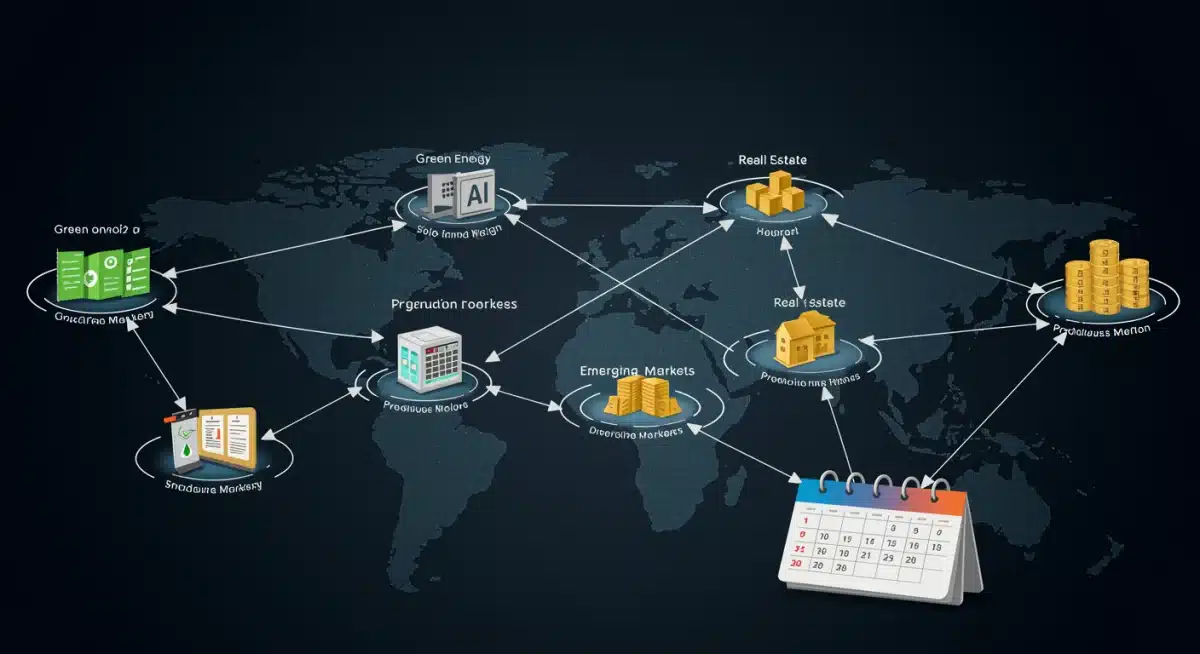
Risk Management and Hedging Strategies for 2026
Effective risk management and strategic hedging are indispensable components of any successful investment plan, particularly when navigating the potential volatility of 2026 and aiming for a 15% diversified portfolio growth. Protecting capital isn’t solely about choosing the right assets; it’s equally about implementing mechanisms to mitigate potential losses. A comprehensive risk management framework involves identifying, assessing, and prioritizing risks, followed by coordinated application of resources to minimize, monitor, and control the probability or impact of unfortunate events.
In a volatile market, unforeseen events can quickly erode gains. Therefore, employing various hedging strategies becomes critical. Hedging involves taking an offsetting position in a related security or asset to reduce the risk of adverse price movements. While hedging often incurs costs or limits upside potential, it provides a crucial safety net, allowing investors to sleep better at night knowing their capital is better protected against significant downturns.
Implementing Stop-Loss Orders and Options
Stop-loss orders are a fundamental risk management tool, automatically selling an asset if it falls below a specified price, thereby limiting potential losses. Options contracts, such as put options, can serve as a form of insurance, providing the right to sell an asset at a predetermined price, regardless of its market value, offering protection against declining prices.
- Setting realistic stop-loss percentages based on volatility.
- Understanding the cost and expiration of options contracts.
- Using options to protect gains in a highly appreciated asset.
Currency Hedging and Interest Rate Management
For investors with international exposure, currency fluctuations can significantly impact returns. Currency hedging strategies, such as forward contracts or currency options, can lock in exchange rates. Additionally, managing interest rate risk, especially with fixed-income investments, involves understanding the duration of bonds and potentially using interest rate swaps to mitigate adverse movements.
In conclusion, a proactive approach to risk management and the judicious use of hedging strategies are paramount for investors in 2026. These measures not only protect capital from unforeseen market turbulence but also create a more stable foundation from which a diversified portfolio can pursue its growth objectives.
Long-Term Vision: Sustainability and Ethical Investing
Beyond the immediate concerns of market volatility and short-term gains, a critical element of a resilient investment strategy for 2026 and beyond is the integration of a long-term vision, particularly through sustainability and ethical investing. This approach, often referred to as Environmental, Social, and Governance (ESG) investing, is no longer a niche trend but a mainstream imperative. Companies with strong ESG credentials are increasingly recognized for their resilience, innovation, and potential for sustained growth, making them attractive for both capital protection and achieving a 15% diversified portfolio growth.
Investing in ethical and sustainable enterprises aligns financial goals with societal values. These companies tend to have better risk management practices, are more adaptive to regulatory changes, and often attract a loyal customer base, contributing to long-term stability and profitability. As global awareness of climate change, social equity, and corporate governance intensifies, portfolios that prioritize these factors are likely to outperform in the long run, offering both financial returns and positive impact.
Identifying ESG Leaders
Identifying ESG leaders involves thorough research into a company’s environmental impact, labor practices, community involvement, and board diversity. Various rating agencies and investment platforms now provide comprehensive ESG scores, helping investors make informed choices.
- Utilizing ESG ratings and reports for company analysis.
- Focusing on sectors committed to renewable energy and sustainable practices.
- Investing in companies with strong corporate governance frameworks.
Impact Investing for Societal Benefit
Impact investing takes ESG a step further, actively seeking investments that generate measurable social and environmental benefits alongside financial returns. This can include anything from investing in affordable housing to supporting clean technology startups. For 2026, impact investing offers a powerful way to contribute to a better future while building a robust and ethically sound portfolio.
In conclusion, integrating a long-term vision centered on sustainability and ethical investing is not just about doing good; it’s about smart financial strategy. Companies committed to ESG principles are better positioned for enduring success, offering investors a pathway to protect capital and achieve consistent growth in an ever-evolving world.
Continuous Learning and Adaptability in 2026
The financial landscape of 2026, marked by its inherent volatility, underscores the critical importance of continuous learning and adaptability for investors. The strategies that proved effective in past years may not be sufficient for the challenges and opportunities ahead. To successfully protect capital and achieve an ambitious 15% diversified portfolio growth, investors must commit to staying informed, re-evaluating their assumptions, and being prepared to pivot their strategies as new information emerges. The pace of change, driven by technological innovation and geopolitical shifts, demands an active and engaged approach to investing.
This commitment to learning extends beyond merely reading financial news; it involves understanding complex economic theories, analyzing market data, and critically assessing expert opinions. Adaptability means having the flexibility to adjust asset allocations, explore new investment vehicles, and even reconsider risk tolerance in response to evolving market conditions. Stagnation in investment thinking can be detrimental in a volatile environment, making proactive learning a key differentiator for successful investors.
Staying Informed on Emerging Trends
Keeping abreast of emerging trends, such as advancements in quantum computing, new energy sources, or shifts in global trade policies, can provide early indicators of future market movements. This foresight allows investors to position their portfolios advantageously.
- Subscribing to reputable financial news and analysis platforms.
- Attending webinars and seminars on future economic trends.
- Engaging with expert communities and financial advisors.
Regular Portfolio Review and Adjustment
A static portfolio is a vulnerable portfolio in a volatile market. Regular, perhaps quarterly or semi-annual, reviews are essential. These reviews should assess performance against goals, re-evaluate risk exposure, and make necessary adjustments to maintain diversification and alignment with current market realities.
In conclusion, continuous learning and adaptability are not optional but essential virtues for investors in 2026. By embracing a mindset of ongoing education and strategic flexibility, individuals can significantly enhance their ability to protect their capital, navigate market volatility, and achieve their desired investment growth within a diversified portfolio.
| Key Investment Area | Brief Description for 2026 |
|---|---|
| Diversification | Spread investments across varied assets (equities, bonds, alternatives) to mitigate risk in volatile markets. |
| Alternative Investments | Explore private equity, real estate, and digital assets for uncorrelated returns and capital protection. |
| Technology & AI Integration | Utilize AI for predictive analytics, portfolio optimization, and risk assessment to gain a competitive edge. |
| Risk Management | Implement stop-loss orders, hedging strategies, and regular portfolio reviews to protect against downturns. |
Frequently Asked Questions About 2026 Investment Strategies
Primary risks include persistent inflation, geopolitical instability impacting global supply chains, unpredictable central bank policies, and the potential for speculative bubbles in rapidly innovating tech sectors. These factors contribute to market volatility, demanding vigilant monitoring and adaptive strategies.
Diversification spreads investments across various asset classes, industries, and geographies. This reduces overall risk by ensuring that a downturn in one area does not severely impact the entire portfolio, providing a crucial buffer against market shocks and smoothing returns over time.
Alternative investments, while offering unique opportunities, often come with higher liquidity risks and require sophisticated understanding. They are generally more suitable for investors with a higher risk tolerance and a longer investment horizon, as well as those who have thoroughly researched these asset classes.
AI provides advanced analytics, processes vast data, and optimizes asset allocation with precision. It can predict market movements, assist in automated rebalancing, and enhance risk assessment through simulations, offering a significant edge in navigating and profiting from market volatility.
Sustainable (ESG) investing is crucial because companies with strong ESG credentials tend to show greater resilience, innovation, and sustained growth. They often have better risk management, adapt well to regulations, and attract loyal customers, leading to long-term stability and profitability.
Conclusion
Navigating the complex and potentially volatile financial markets of 2026 demands a sophisticated and multi-faceted approach. Protecting capital while aiming for a 15% diversified portfolio growth is an ambitious yet achievable goal, rooted in strategic planning and continuous adaptation. By embracing robust diversification across traditional and alternative asset classes, leveraging cutting-edge technology and AI for informed decision-making, and implementing diligent risk management and hedging strategies, investors can build resilient portfolios. Furthermore, integrating a long-term vision centered on sustainability and ethical investing not only aligns portfolios with future global trends but also enhances their inherent stability and growth potential. The key to success in 2026 lies in a commitment to ongoing learning, flexibility, and a proactive stance in an ever-evolving economic landscape.