2026 Economic Forecasts: 3.2% GDP Growth & Job Market Impact
The new 2026 economic forecasts project a robust 3.2% GDP growth, signaling a dynamic shift in the U.S. job market with significant implications for various sectors and future employment opportunities.
The latest 2026 economic forecasts are painting an encouraging picture for the United States, with a projected GDP growth of 3.2%. This isn’t just a number; it represents a significant momentum shift with profound implications for the job market, shaping employment opportunities and career paths across the nation. Understanding these projections is crucial for individuals, businesses, and policymakers alike as we navigate the evolving economic landscape.
Understanding the 3.2% GDP Growth Projection
The anticipated 3.2% GDP growth for 2026 is a robust indicator of economic health and expansion. Gross Domestic Product, or GDP, measures the total value of goods and services produced within a country over a specific period. A healthy growth rate like this suggests increased economic activity, which typically translates into more business investment, higher consumer spending, and, most importantly, job creation. This projection is a result of several converging factors, including sustained technological innovation, resilient consumer demand, and strategic government policies aimed at fostering long-term stability.
Economists and analysts rely on a complex array of data points and models to arrive at such forecasts. These include current inflation rates, interest rate trajectories, global trade dynamics, and domestic policy shifts. The 3.2% figure indicates a confident outlook, suggesting that the economy is not only recovering from past challenges but is also poised for a period of sustained expansion. Such growth can act as a powerful engine, pulling various sectors forward and creating a ripple effect throughout the entire labor market.
Key drivers of economic expansion
- Technological Advancements: Continuous innovation in AI, automation, and digital transformation fuels productivity and opens new market segments.
- Consumer Confidence: A steady increase in consumer spending, backed by stable wages and decreasing inflation, drives demand for goods and services.
- Government Investment: Strategic infrastructure projects and incentives in key industries stimulate economic activity and create jobs.
This growth isn’t uniform; certain sectors are expected to benefit more profoundly than others. The manufacturing sector, for instance, is seeing a resurgence due to reshoring initiatives and advancements in automation, leading to specialized job roles. Similarly, the service industry, driven by increased consumer discretionary spending, is likely to experience significant expansion. The interplay of these forces creates a dynamic environment where new skills are in demand and adaptability becomes a key asset for the workforce. Understanding these underlying drivers provides a clearer view of where future opportunities will emerge.
Impact on the U.S. Job Market: A Broad Overview
A 3.2% GDP growth rate is highly significant for the U.S. job market, translating into a substantial increase in employment opportunities. Historically, periods of strong economic expansion correlate directly with lower unemployment rates and higher job creation across diverse industries. This growth isn’t just about adding more jobs; it’s also about creating a more competitive labor market, potentially leading to wage increases and improved working conditions as companies vie for talent. Businesses, fueled by increased demand and revenue, are more likely to invest in expansion, research, and development, all of which require a larger workforce.
The nature of job creation is also evolving. While traditional sectors will see growth, the emphasis is increasingly shifting towards roles that require specialized skills, particularly in technology and green industries. This means that while overall employment numbers will rise, there will also be a pronounced need for upskilling and reskilling initiatives to match the available talent with the emerging demands of the market. The economic buoyancy can also encourage entrepreneurship, as new businesses emerge to fill gaps and capitalize on new opportunities created by a growing economy.
Anticipated job creation trends
- Increased Hiring: Businesses, driven by higher demand and revenue, will expand their workforces across various departments.
- Wage Growth: A more competitive labor market, coupled with increased productivity, could lead to upward pressure on wages.
- Sectoral Shifts: Growth will be uneven, with certain industries like tech, healthcare, and renewable energy seeing accelerated job creation.
Moreover, the projected growth can positively affect job security and career mobility. A thriving economy often means less uncertainty for employees, as companies are less prone to layoffs and more inclined to invest in employee development. This creates an environment where individuals can pursue career advancement, change roles, or even transition into entirely new fields with greater confidence. The broad overview suggests a vibrant and dynamic job market in 2026, offering numerous pathways for professional growth and economic stability for many Americans.
Key Sectors Poised for Significant Job Growth
The 3.2% GDP growth is expected to act as a powerful catalyst for several key sectors, leading to significant job creation and transformation. Identifying these sectors is vital for job seekers, educational institutions, and policymakers to align strategies with future economic realities. Technology, healthcare, renewable energy, and advanced manufacturing are at the forefront of this projected expansion, each driven by unique factors and contributing differently to the overall job landscape.
The technology sector continues its relentless pace of innovation, with artificial intelligence, cybersecurity, and data analytics creating entirely new categories of jobs. Healthcare is experiencing sustained growth due to an aging population, advancements in medical technology, and an increased focus on personalized care. Renewable energy is booming, propelled by global commitments to sustainability and significant investments in green infrastructure. Advanced manufacturing is undergoing a renaissance, with automation and smart factories demanding a new breed of highly skilled technical workers.
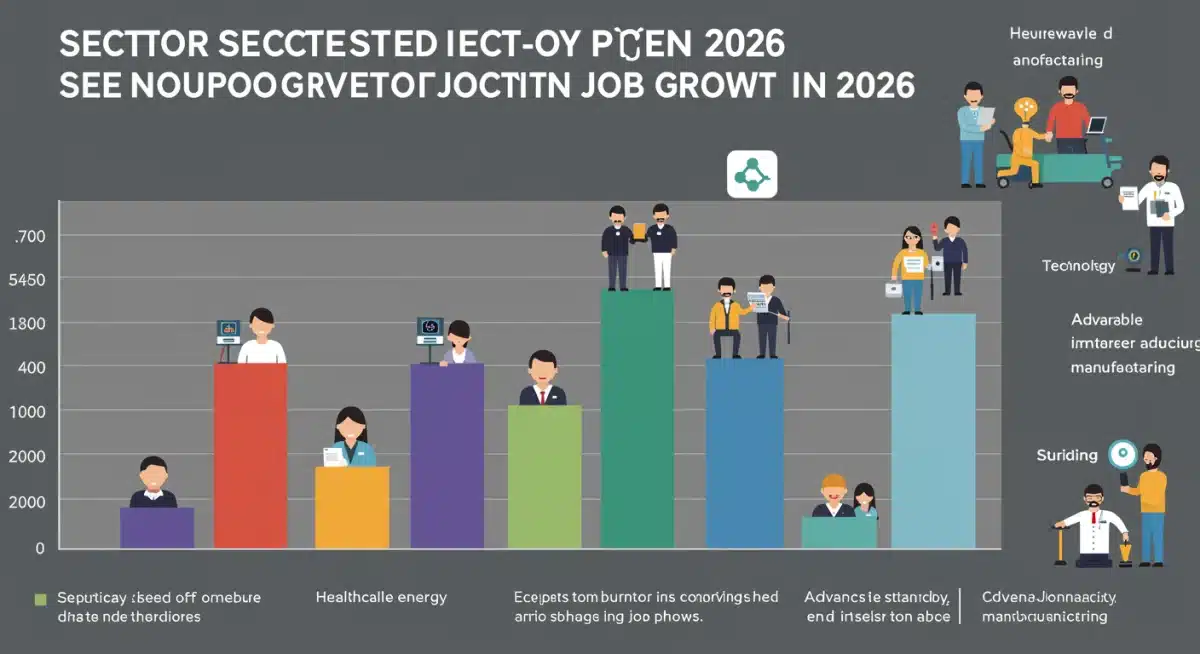
These sectors are not just growing in terms of sheer numbers; they are also evolving in the types of roles they offer. Demand for specialized skills, interdisciplinary knowledge, and adaptability will be paramount. For instance, a role in advanced manufacturing might require expertise in robotics, data analysis, and supply chain management. Similarly, healthcare roles are increasingly integrating technology, requiring professionals to be proficient in digital tools and data interpretation. The growth in these areas signifies a shift towards a more knowledge-based and technologically driven economy.
Emerging hotbeds of employment
- Technology: AI specialists, data scientists, cybersecurity analysts, and cloud architects will be in high demand.
- Healthcare: Nurses, medical technicians, home health aides, and specialized therapists will see robust growth.
- Renewable Energy: Solar panel installers, wind turbine technicians, energy storage engineers, and sustainability consultants.
- Advanced Manufacturing: Robotics engineers, automation specialists, and skilled technicians for smart factories.
The sustained growth in these sectors also creates indirect job opportunities in support services, logistics, and education. For example, the expansion of tech companies necessitates more administrative support, marketing professionals, and educators to train the next generation of workers. This interconnectedness ensures that the benefits of concentrated growth in these key areas will ripple out, positively impacting the broader economy and offering a diverse range of employment pathways for individuals entering or transitioning within the workforce.
Challenges and Opportunities for Workforce Development
While the projected 3.2% GDP growth offers exciting prospects, it also brings significant challenges for workforce development. The rapid evolution of technology and industry demands a highly adaptable and skilled labor force. One of the primary challenges is the skills gap, where the available workforce may not possess the specific expertise required for the emerging jobs. This necessitates a concerted effort in education, training, and reskilling programs to ensure that individuals can meet the demands of the 2026 job market.
Opportunities, however, abound for those proactive in acquiring new skills and embracing lifelong learning. Educational institutions, vocational schools, and corporate training programs are increasingly aligning their curricula with industry needs, focusing on digital literacy, critical thinking, and specialized technical skills. Government initiatives, such as grants for workforce training and partnerships with private industry, are also playing a crucial role in bridging the skills gap and preparing the workforce for future roles. The emphasis is on creating a flexible and resilient labor pool capable of adapting to technological shifts and economic changes.
Addressing the skills gap
- Upskilling and Reskilling: Programs focused on teaching new technologies and specialized skills to existing workers.
- STEM Education: Increased investment in science, technology, engineering, and mathematics education from an early age.
- Industry Partnerships: Collaborations between businesses and educational institutions to create relevant training programs.
Furthermore, the growth forecast presents an opportunity to address long-standing issues of workforce diversity and inclusion. As new jobs emerge, there is a chance to intentionally create pathways for underrepresented groups to enter high-growth sectors, ensuring that the benefits of economic expansion are broadly shared. This involves not only training but also mentorship programs, equitable hiring practices, and supportive work environments. By proactively tackling these challenges, the U.S. can maximize the potential of its 3.2% GDP growth, fostering a more inclusive and skilled workforce ready for the opportunities of 2026 and beyond.
Regional Economic Disparities and Job Market Implications
While the national outlook for a 3.2% GDP growth in 2026 is positive, it’s crucial to acknowledge that economic growth often manifests differently across various regions of the United States. Regional economic disparities can significantly influence job market implications, with some areas experiencing booming employment while others face slower growth or even stagnation. Factors such as dominant industries, local policies, access to resources, and demographic shifts all contribute to these localized economic landscapes. For example, tech hubs like Silicon Valley or Austin might see accelerated job creation in specialized fields, while regions reliant on traditional manufacturing might experience a slower, more deliberate recovery.
Understanding these regional nuances is essential for both individuals and policymakers. Job seekers might find more robust opportunities in areas specializing in high-growth sectors, while businesses might strategically locate based on the availability of skilled labor and local economic incentives. Policymakers, in turn, need to develop targeted strategies to support regions that might not immediately benefit from national growth trends, ensuring equitable distribution of economic prosperity. This could involve investments in infrastructure, educational programs tailored to local industry needs, or incentives for businesses to establish operations in underserved areas.
Factors influencing regional job growth
- Industry Concentration: Regions with a strong presence of high-growth sectors (e.g., tech, biotech) will likely outperform others.
- Local Investment: State and local government initiatives, as well as private sector investments, can stimulate regional job markets.
- Demographic Trends: Population growth or decline, and the age structure of the workforce, influence labor supply and demand.
- Infrastructure Development: Access to robust transportation, energy, and digital infrastructure supports business growth and job creation.
The disparity also highlights the importance of mobility and adaptability for the workforce. Individuals in regions with slower job growth might need to consider relocating or acquiring skills that are transferable to more dynamic economies. Conversely, regions experiencing rapid growth might face challenges related to housing affordability and infrastructure strain, requiring careful planning to sustain their expansion. Addressing these regional differences through thoughtful policy and individual preparation will be key to ensuring that the overall 3.2% GDP growth translates into widespread job opportunities and economic stability across the entire nation.
The Role of Government Policies and Business Strategies
The projected 3.2% GDP growth in 2026 is not solely a result of market forces; it is significantly influenced by both government policies and strategic business decisions. Government policies play a critical role in shaping the economic environment, through fiscal measures, regulatory frameworks, and investments in key areas. For instance, tax incentives for research and development, funding for infrastructure projects, and support for small businesses can stimulate economic activity and encourage job creation. Policies aimed at promoting competitiveness and innovation also contribute to a dynamic economy.
On the business side, strategic decisions regarding investment, automation, and talent acquisition are paramount. Companies that anticipate future market demands, invest in sustainable practices, and prioritize workforce development are better positioned to capitalize on economic growth. The adoption of new technologies, such as AI and automation, can increase productivity and create new, higher-skilled jobs, even as some routine tasks are automated. Furthermore, businesses’ commitment to corporate social responsibility and ethical practices can enhance consumer trust and contribute to long-term economic stability. The collaboration between government and the private sector is essential for maximizing the benefits of a growing economy.
Government initiatives supporting growth
- Fiscal Stimulus: Targeted spending and tax policies to boost demand and investment.
- Regulatory Reform: Streamlining regulations to reduce burdens on businesses and encourage innovation.
- Infrastructure Investment: Funding for roads, bridges, broadband, and green energy projects creating jobs and improving efficiency.
Businesses are also increasingly focusing on resilience and adaptability in their strategies. Supply chain diversification, investment in cybersecurity, and flexible work arrangements are becoming standard practices, allowing companies to navigate economic uncertainties more effectively. Moreover, the emphasis on a skilled workforce means businesses are investing more in employee training and development programs, recognizing that human capital is a key driver of growth. The synergy between supportive government policies and forward-thinking business strategies creates a robust foundation for sustained economic expansion and a thriving job market in 2026, ensuring that the 3.2% GDP growth translates into tangible opportunities for individuals and businesses alike.
Long-Term Economic Outlook Beyond 2026
While the 3.2% GDP growth projected for 2026 offers an encouraging immediate outlook, it’s equally important to consider the long-term economic trajectory beyond this period. The foundation laid by current growth and policy decisions will significantly influence the sustainability and nature of economic expansion in the years that follow. Factors such as demographic shifts, environmental challenges, global geopolitical stability, and the pace of technological advancement will continue to shape the U.S. economy and its job market far into the future. A sustained commitment to innovation, education, and adaptability will be crucial for maintaining momentum.
The long-term outlook suggests a continued evolution of the job market, with an increasing demand for skills that are uniquely human, such as creativity, critical thinking, emotional intelligence, and complex problem-solving. As automation and AI become more integrated into various industries, roles requiring repetitive tasks will likely diminish, while those involving strategic oversight, interpersonal communication, and innovative design will flourish. This necessitates a proactive approach to education and training, ensuring that the workforce is prepared not just for 2026, but for the decades to come.
Future economic considerations
- Sustainability: The transition to a green economy will create new industries and jobs while transforming existing ones.
- Global Interconnectedness: Geopolitical stability and international trade agreements will heavily influence economic growth and market access.
- Demographic Changes: An aging population and evolving birth rates will impact labor supply, consumer demand, and social welfare systems.
- Technological Singularity: The accelerating pace of AI and automation could fundamentally reshape the nature of work and productivity.
Furthermore, addressing structural economic issues, such as income inequality and access to affordable healthcare and education, will be vital for long-term prosperity. An inclusive economy where opportunities are accessible to all segments of society tends to be more resilient and dynamic. The long-term economic outlook, therefore, is not just about GDP numbers; it’s about building a sustainable, equitable, and adaptable economic system that can withstand future shocks and continue to generate high-quality jobs. The 2026 forecast serves as a positive milestone, but the real work lies in leveraging this growth to secure a prosperous and stable future for generations to come.
| Key Point | Brief Description |
|---|---|
| 3.2% GDP Growth | Indicates robust economic health and expansion, driven by innovation and consumer demand. |
| Job Market Expansion | Expected to lead to increased hiring, potential wage growth, and lower unemployment rates. |
| Key Growth Sectors | Technology, healthcare, renewable energy, and advanced manufacturing are poised for significant job creation. |
| Workforce Challenges | Skills gap requires upskilling and reskilling initiatives to meet evolving job demands. |
Frequently Asked Questions About 2026 Economic Forecasts
A 3.2% GDP growth typically means more job opportunities, potentially higher wages, and increased consumer confidence. This can lead to greater financial stability, improved access to goods and services, and a general sense of economic well-being for many families across the United States.
Key sectors poised for significant job growth include technology (AI, cybersecurity), healthcare (aging population, medical tech), renewable energy (sustainability investments), and advanced manufacturing (automation, reshoring). These industries will drive much of the new employment in 2026.
Preparation involves continuous learning, upskilling in digital literacy, and acquiring specialized technical skills. Exploring vocational training programs, online courses, and industry certifications aligned with high-growth sectors can significantly enhance career prospects.
While strong growth can sometimes put upward pressure on prices, economic forecasts for 2026 aim for sustainable expansion. Central banks closely monitor inflation and may adjust interest rates to maintain stability, balancing growth with price control to prevent overheating.
Government policies are crucial through fiscal measures, regulatory frameworks, and strategic investments. These include tax incentives for innovation, infrastructure spending, and support for education and workforce development, all designed to foster a stable and prosperous economic environment.
Conclusion
The new 2026 economic forecasts, highlighting a robust 3.2% GDP growth, signal a period of significant opportunity and transformation for the U.S. job market. This projected expansion underlines the resilience and dynamism of the American economy, driven by innovation, strategic investments, and evolving consumer demands. While challenges such as regional disparities and the skills gap require proactive solutions, the overall outlook points towards a vibrant employment landscape. By understanding these trends, individuals and businesses can better prepare, adapt, and thrive, ensuring that the benefits of this economic momentum are widely shared across the nation, fostering sustained prosperity and professional growth for years to come.