Federal Benefits Programs 2026: 5 Key Financial Opportunities
The new federal benefits programs for 2026 introduce five significant opportunities for financial assistance and support, aiming to bolster economic stability and well-being for a broad spectrum of American citizens.
As we navigate the evolving economic landscape, understanding the latest government support systems becomes paramount. The year 2026 brings forth a suite of new initiatives, and exploring these new federal benefits programs for 2026 is essential for anyone seeking financial assistance and robust support. These programs are designed to address a variety of needs, from housing and education to healthcare and economic stability, offering crucial lifelines to millions of Americans.
Understanding the Shift in Federal Aid Landscape
The federal aid landscape is constantly evolving, reflecting shifts in economic priorities, societal needs, and technological advancements. For 2026, significant legislative and administrative changes have been enacted, reshaping how individuals and families can access vital support. These changes are not merely incremental adjustments but represent a strategic pivot towards more targeted and efficient assistance, aiming to maximize impact and reach across diverse communities.
The primary driver behind these new programs is a comprehensive assessment of current demographic trends and economic challenges facing the United States. Policy makers have focused on creating programs that are not only responsive to immediate needs but also foster long-term resilience and upward mobility. This proactive approach ensures that federal benefits remain relevant and effective in a rapidly changing world.
Key Legislative Amendments
- Social Security Modernization Act: Enhancements to benefit calculations and accessibility for digital applications.
- Affordable Housing Initiative: Increased funding and expanded eligibility for rental assistance and homeownership programs.
- Future Workforce Development Act: New grants for vocational training and skill-building in emerging industries.
Understanding these foundational shifts is crucial for any American looking to leverage federal support. The focus on digital accessibility, for instance, means that many application processes have been streamlined, making it easier for eligible individuals to apply and receive benefits without unnecessary bureaucratic hurdles. This commitment to efficiency underscores a broader effort to make federal aid more user-friendly and impactful.
In essence, the 2026 federal aid landscape is characterized by a blend of innovation and necessity. The programs are designed to be more inclusive, more responsive, and ultimately, more effective in supporting the diverse needs of the American populace. Staying informed about these changes is the first step towards unlocking the potential benefits available.
Opportunity 1: Enhanced Housing Assistance Initiatives
Housing remains a critical concern for many American households, and the federal government has responded with significantly enhanced housing assistance initiatives for 2026. These programs aim to address both affordability and stability, providing a safety net for those struggling to secure or maintain adequate housing. The focus is on expanding access to safe, affordable homes, particularly for low-income families, seniors, and individuals with disabilities.
A major component of these initiatives is the expansion of rental assistance programs, making it easier for eligible individuals to receive subsidies that reduce their housing costs. Beyond rental support, there are also new grants and loan programs designed to promote homeownership, particularly in underserved communities. These programs often include financial literacy training and counseling to ensure long-term success for new homeowners.
New Rental Support Programs
- Flexible Rent Relief Program: Offers temporary rent subsidies based on local housing market conditions and income.
- Emergency Housing Voucher Expansion: Increases the number of available vouchers for individuals and families facing homelessness or imminent eviction.
- Tenant Rights and Education Fund: Provides legal aid and educational resources to tenants regarding their rights and responsibilities.
Furthermore, the 2026 housing initiatives emphasize sustainable housing solutions. This includes incentives for landlords to adopt energy-efficient practices and for developers to build affordable housing units using eco-friendly materials. The integration of sustainability into housing policy reflects a broader commitment to environmental responsibility while addressing social needs.
These enhanced housing assistance initiatives are designed to create a more equitable and stable housing market across the United States. By combining direct financial aid with educational resources and sustainable practices, the federal government aims to provide comprehensive support that improves the quality of life for countless Americans.
Opportunity 2: Advanced Educational and Workforce Development Grants
In a rapidly evolving global economy, continuous learning and skill development are more important than ever. The federal government’s 2026 programs include advanced educational and workforce development grants designed to equip Americans with the skills needed for future jobs. These grants target a wide range of individuals, from high school graduates seeking vocational training to experienced professionals looking to reskill or upskill.
The emphasis is on bridging the skills gap in critical sectors such as technology, green energy, and healthcare. These grants are not just about tuition assistance; many also cover living expenses, childcare, and transportation, removing significant barriers to education and training. The goal is to create a more competitive and adaptable workforce, ensuring that American workers can thrive in the industries of tomorrow.
Targeted Skill Development Areas
- AI and Data Science Scholarships: Full tuition and living stipends for programs in artificial intelligence and data analytics.
- Renewable Energy Training Grants: Funding for certifications and apprenticeships in solar, wind, and geothermal energy.
- Digital Health Informatics Fellowships: Support for professionals entering the growing field of healthcare technology.
Beyond individual grants, there’s also significant investment in community colleges and vocational schools, strengthening their capacity to offer high-quality, industry-aligned programs. Partnerships between educational institutions and local businesses are encouraged, ensuring that training programs meet the specific demands of regional job markets. This collaborative approach ensures that the skills acquired through these grants are directly applicable and lead to meaningful employment opportunities.
The advanced educational and workforce development grants for 2026 represent a forward-thinking investment in human capital. By making education and training more accessible and relevant, these programs are set to empower a new generation of skilled workers, driving innovation and economic growth across the nation.
Opportunity 3: Expanded Healthcare Access and Mental Health Support
Access to affordable and comprehensive healthcare remains a cornerstone of well-being, and the 2026 federal benefits programs significantly expand support in this area. These initiatives focus on broadening insurance coverage, reducing out-of-pocket costs, and crucially, enhancing mental health services. The aim is to ensure that all Americans, regardless of income or pre-existing conditions, can receive the care they need without facing insurmountable financial burdens.
One of the key enhancements is the expansion of subsidies for health insurance premiums, making plans on various marketplaces more affordable. There’s also a renewed focus on preventive care, with more services covered at no additional cost. Recognizing the growing mental health crisis, substantial funding has been allocated to integrate mental health support into primary care settings, making it easier to access psychological services.
Key Healthcare Improvements
- Integrated Mental Health Services: Funding for primary care clinics to offer on-site mental health counseling and referrals.
- Prescription Drug Cost Reduction Program: Caps on out-of-pocket spending for essential prescription medications.
- Telehealth Expansion Initiative: Increased coverage for virtual doctor visits and remote monitoring, especially in rural areas.
Furthermore, the programs address disparities in healthcare access, particularly for rural and underserved urban communities. Mobile health clinics, increased recruitment of healthcare professionals in critical shortage areas, and enhanced digital health infrastructure are all part of this comprehensive strategy. The goal is to create a more equitable healthcare system where geographical location does not dictate the quality or availability of care.
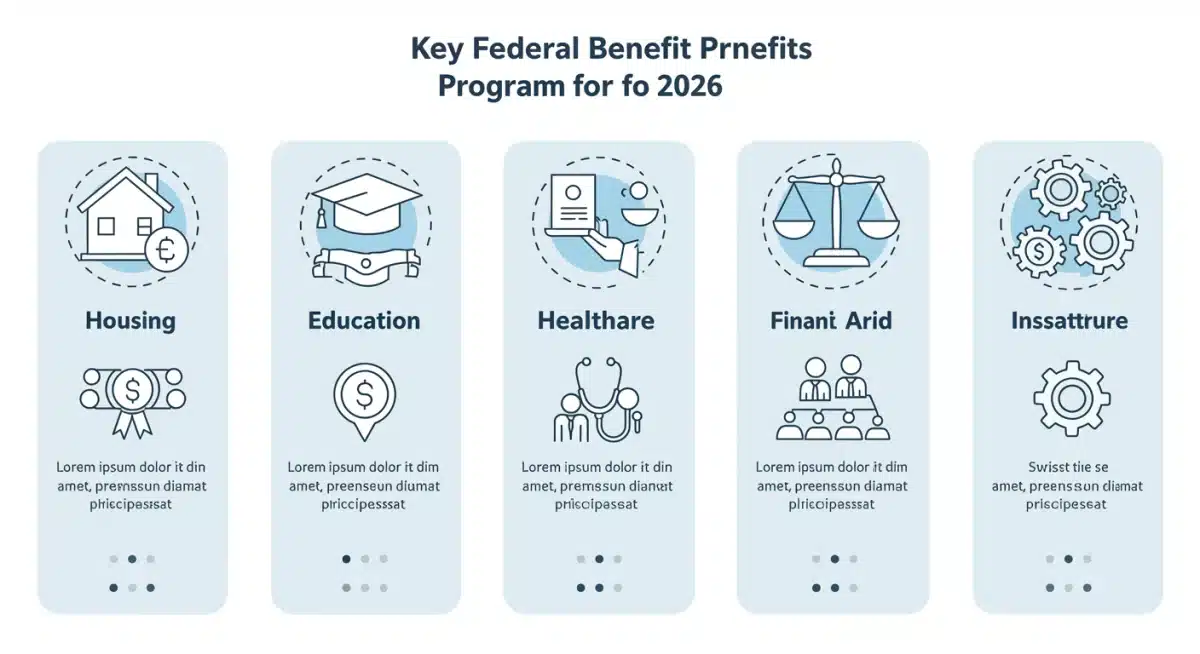
These expanded healthcare access and mental health support initiatives for 2026 are a testament to the federal government’s commitment to the holistic well-being of its citizens. By making healthcare more affordable, accessible, and comprehensive, these programs contribute significantly to a healthier and more productive society.
Opportunity 4: Small Business and Entrepreneurship Incentives
Small businesses are the backbone of the American economy, driving innovation and creating jobs. Recognizing their vital role, the 2026 federal benefits programs include robust incentives for small businesses and aspiring entrepreneurs. These initiatives are designed to foster growth, encourage innovation, and provide critical support to new and established ventures, particularly those in disadvantaged communities or emerging industries.
A significant aspect of these incentives is the expansion of accessible capital. This includes new low-interest loan programs, increased access to venture capital for startups, and grants specifically for businesses focused on research and development. The goal is to reduce the financial barriers that often hinder new business formation and expansion, allowing entrepreneurs to turn their ideas into successful enterprises.
Entrepreneurial Support Programs
- Micro-Enterprise Development Grants: Small grants and mentorship for very small businesses and sole proprietorships.
- Innovation Accelerator Fund: Matching funds for startups developing disruptive technologies in key sectors.
- Small Business Digital Transformation Program: Subsidies for small businesses to adopt new digital tools and e-commerce strategies.
Beyond financial aid, these programs also emphasize mentorship and technical assistance. Small business development centers will receive enhanced funding to offer free consulting, business planning assistance, and training workshops. This holistic approach ensures that entrepreneurs not only have the capital they need but also the knowledge and guidance to succeed in a competitive marketplace.
The small business and entrepreneurship incentives for 2026 are a strategic investment in economic dynamism. By empowering entrepreneurs and supporting small businesses, the federal government aims to stimulate job creation, foster innovation, and build a more resilient and diverse economy for the future.
Opportunity 5: Climate Resilience and Green Economy Programs
Addressing climate change and transitioning to a green economy are pressing national priorities. The 2026 federal benefits programs introduce significant initiatives focused on climate resilience and green economy development. These programs offer financial assistance and support to individuals, communities, and businesses engaged in activities that mitigate climate risks, promote renewable energy, and foster sustainable practices.
One key area is funding for community-led climate resilience projects, such as upgrading infrastructure to withstand extreme weather events, restoring natural ecosystems, and developing local clean energy solutions. For individuals, there are expanded rebates and tax credits for adopting energy-efficient home improvements, purchasing electric vehicles, and installing solar panels. These incentives make it more affordable for average citizens to contribute to environmental sustainability.
Green Initiatives and Benefits
- Residential Energy Efficiency Rebates: Significant rebates for insulation, window upgrades, and high-efficiency appliance installations.
- Community Climate Action Grants: Funding for local governments and non-profits to implement climate adaptation strategies.
- Green Jobs Training Subsidies: Support for individuals seeking careers in renewable energy installation, environmental conservation, and sustainable agriculture.
Furthermore, the programs encourage innovation in green technologies. Grants are available for research and development in areas like carbon capture, advanced battery storage, and sustainable manufacturing processes. This not only helps combat climate change but also creates new industries and high-tech jobs, positioning the United States as a leader in the global green economy.
The climate resilience and green economy programs for 2026 represent a dual benefit: they protect communities from environmental threats while simultaneously stimulating economic growth through sustainable practices. These initiatives empower Americans to be part of the solution to climate change, offering tangible rewards for their contributions.
Navigating Eligibility and Application Processes
Understanding the intricacies of eligibility and the application processes for these new federal benefits programs is crucial for successful access. While the government has made strides in streamlining procedures, each program typically has specific criteria that must be met. These often include income thresholds, residency requirements, and sometimes even specific educational or professional backgrounds, depending on the nature of the benefit.
It is highly recommended to consult official government websites, such as USA.gov, and specific agency portals like HUD.gov for housing or ED.gov for education, to get the most accurate and up-to-date information. Many programs now offer online application portals, which can significantly simplify the submission process. However, for those who prefer or require assistance, local community centers and government offices often provide help with applications.
Tips for a Smooth Application
- Gather All Documentation: Have income statements, identification, and any relevant certifications ready.
- Check Eligibility Carefully: Review all criteria before starting an application to save time and effort.
- Seek Assistance When Needed: Don’t hesitate to contact program helplines or local support organizations for guidance.
The federal government is also investing in outreach programs to ensure that eligible individuals are aware of the benefits available to them. This includes public information campaigns and partnerships with non-profit organizations to reach underserved populations. The aim is to reduce barriers to access and ensure that the benefits reach those who need them most.
By diligently researching eligibility requirements and utilizing available resources, navigating the application processes for the 2026 federal benefits programs can be a straightforward endeavor. Proactive engagement with official channels and support networks will significantly increase the likelihood of a successful application.
| Key Program Area | Brief Description of Opportunity |
|---|---|
| Housing Assistance | Expanded rental subsidies and homeownership grants for affordability and stability. |
| Education & Workforce | Grants and scholarships for high-demand skills in tech, green energy, and healthcare. |
| Healthcare & Mental Health | Increased insurance subsidies, reduced drug costs, and integrated mental health support. |
| Green Economy | Rebates and grants for climate resilience projects and sustainable living practices. |
Frequently Asked Questions About 2026 Federal Benefits
Eligibility for 2026 housing assistance typically depends on income levels, household size, and residency. Programs target low-income families, seniors, and individuals with disabilities, with specific criteria varying by state and local housing authorities. It’s best to check official HUD.gov resources for detailed requirements.
Applications for workforce development grants are usually processed through educational institutions, vocational schools, or direct federal portals. Start by identifying the specific grant that aligns with your desired training or upskilling, then visit the administering agency’s website for application forms and deadlines.
Yes, the federal mental health support expansions for 2026 are designed to improve access nationwide. While implementation may vary by state and local healthcare providers, the funding and policy changes aim to integrate mental health services more broadly into primary care and community health centers across the United States.
The 2026 small business incentives target a broad range of ventures, often prioritizing startups, businesses in underserved communities, and those focusing on innovation or specific growth sectors like technology and green energy. Eligibility criteria, including revenue and employee count, will be outlined by the Small Business Administration (SBA) and other relevant agencies.
Individual homeowners can benefit from climate resilience programs through various rebates and tax credits. These incentives encourage energy-efficient home improvements, such as better insulation, solar panel installation, and the purchase of electric vehicles, ultimately reducing energy costs and promoting sustainable living practices while protecting against climate impacts.
Conclusion
The array of new federal benefits programs for 2026 represents a substantial commitment to the well-being and economic prosperity of American citizens. From enhanced housing and educational opportunities to critical healthcare expansions, small business support, and vital climate initiatives, these programs offer diverse pathways to financial assistance and comprehensive support. Staying informed and actively engaging with these opportunities can significantly impact individual and community resilience, fostering a more stable and equitable future for all Americans.