2026 Trade Agreements: 5% Consumer Price Shift Analysis
The 2026 trade agreements are poised to introduce significant economic shifts, potentially leading to a 5% change in consumer prices across various sectors within the United States.
The year 2026 looms as a pivotal moment for the global economy, especially for consumers in the United States, as new international trade agreements are set to reshape markets. The anticipated
Understanding the New Global Trade Landscape of 2026
The global trade landscape is in a constant state of evolution, driven by geopolitical shifts, technological advancements, and evolving economic priorities. As we approach 2026, a series of newly negotiated trade agreements are set to come into effect, promising to redefine international commerce.
These agreements are not merely technical adjustments; they represent a concerted effort by nations to navigate complex economic challenges, foster new partnerships, and secure strategic advantages. For the United States, these agreements hold particular significance, given its position as a major player in global trade and its reliance on both exports and imports for economic stability.
Key Drivers Behind the 2026 Trade Agreements
Several factors have converged to necessitate these new trade agreements. Economic nationalism, the push for resilient supply chains post-pandemic, and climate change considerations are all playing a role. Nations are seeking to protect domestic industries while also ensuring access to critical goods and resources.
- Geopolitical Realignment: Shifting alliances and rivalries are influencing trade policies, leading to new bilateral and multilateral agreements.
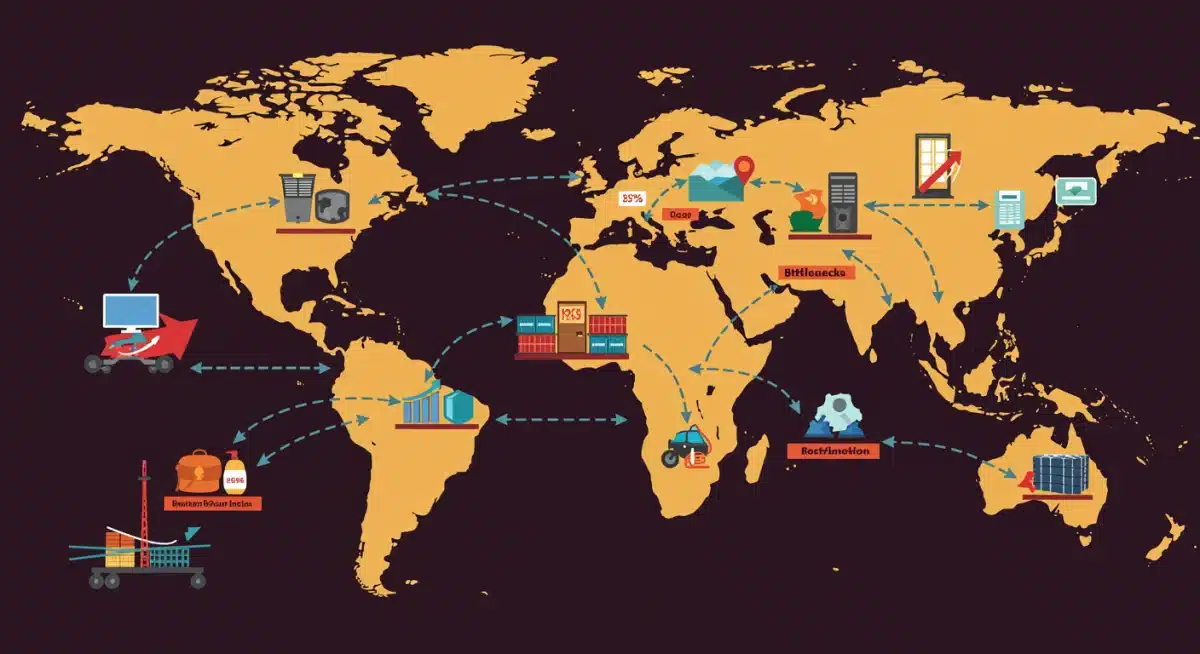
- Supply Chain Resilience: Lessons learned from recent global disruptions are driving efforts to diversify sources and reduce dependencies.
- Digital Trade Standards: The increasing importance of e-commerce and data flows necessitates new rules for digital trade.
- Environmental and Labor Standards: A growing emphasis on sustainable and ethical practices is being integrated into trade pacts.
The implications of these drivers are far-reaching, affecting not just the flow of goods but also the cost of doing business and, ultimately, the prices consumers pay. The intricate web of tariffs, quotas, and regulatory standards embedded within these agreements will determine the economic ripple effects felt across the nation.
These agreements are designed to address both historical trade imbalances and emerging economic realities. While proponents argue for increased market access and economic growth, critics often raise concerns about potential job displacement and the impact on domestic industries. Understanding the underlying motivations and framework of these agreements is the first step in assessing their broader economic consequences.
The Mechanism of Price Shifts: Tariffs, Quotas, and Regulations
When new trade agreements are enacted, they introduce a variety of mechanisms that directly and indirectly influence consumer prices. The most prominent of these are tariffs, import quotas, and new regulatory standards. Each of these components plays a crucial role in shaping the cost structure of goods and services available to consumers.
Tariffs, essentially taxes on imported goods, are a direct way to raise the price of foreign products. This can make domestically produced alternatives more competitive, but it can also lead to higher overall prices if domestic production cannot meet demand or if there are no viable domestic alternatives. The exact percentage of a tariff directly translates to an increase in the cost base, which retailers often pass on to consumers.
How Tariffs Influence Consumer Costs
Tariffs are a primary tool in trade policy, aiming to protect local industries or generate revenue. However, their immediate effect is often an increase in the price of imported goods. When a 10% tariff is placed on imported electronics, for example, the cost of those electronics to the importer rises by 10%, which is then typically reflected in the retail price.
- Direct Price Increases: Tariffs add directly to the cost of imported goods, passed on to consumers.
- Reduced Competition: Higher import costs can reduce the number of foreign competitors, potentially allowing domestic producers to raise prices.
- Retaliatory Tariffs: Other countries may impose their own tariffs, hurting US exports and potentially increasing prices for US consumers on goods made with imported components.
Import quotas, on the other hand, limit the quantity of specific goods that can be brought into a country. By restricting supply, quotas can drive up prices, even without a direct tax. If demand remains constant but supply is artificially constrained, the market price will naturally rise. Regulatory changes, such as new safety standards or environmental requirements, can also add to the cost of production for both domestic and imported goods, eventually contributing to higher consumer prices.
The interplay of these mechanisms creates a complex economic environment where predicting precise price movements can be challenging. However, historical data and economic models suggest that a broad application of such measures, as anticipated with the 2026 agreements, could certainly lead to an average 5% shift in prices across various sectors.
Sector-Specific Impacts: Where the 5% Shift Will Be Felt Most
While a 5% shift in consumer prices might seem like a broad average, its impact will not be uniformly distributed across all sectors of the economy. Certain industries, due to their reliance on international supply chains, import/export volumes, or sensitivity to regulatory changes, are likely to experience more pronounced effects. Understanding these sector-specific nuances is key to anticipating the overall economic ripple.
The electronics industry, for instance, heavily depends on components manufactured globally. Any new tariffs or restrictions on these components could significantly increase production costs, leading to higher retail prices for gadgets, appliances, and computing devices. Similarly, the automotive sector, with its intricate global supply networks for parts and raw materials, could see vehicle prices climb.
Industries Most Vulnerable to Price Adjustments
Several key sectors are particularly exposed to the forthcoming trade agreement changes. Their globalized nature makes them susceptible to shifts in tariffs, labor costs, and raw material availability. These industries often operate on thin margins, making them highly sensitive to any increase in operational expenses.
- Electronics and Technology: High reliance on imported components and manufacturing in various global hubs.
- Apparel and Textiles: Extensive use of overseas manufacturing and raw material sourcing.
- Automotive: Complex global supply chains for parts, assembly, and raw materials like steel and rare earth elements.
- Food and Agriculture: Dependence on imported produce, fertilizers, and agricultural machinery, as well as export markets for US crops.
- Pharmaceuticals: Sourcing of active pharmaceutical ingredients (APIs) from international suppliers.
Conversely, sectors with predominantly domestic supply chains or those that benefit from increased export opportunities due to the new agreements might experience less severe price increases, or even some reductions in niche areas. However, even these sectors could face indirect impacts if their customers or suppliers are affected by changes in other industries. The overall consumer price index is an aggregate, and the 5% shift represents a weighted average of these diverse sectoral movements.
For consumers, this means that while some purchases might become noticeably more expensive, others could remain relatively stable. The key will be to observe which specific product categories are most affected and adjust purchasing habits accordingly. Businesses, too, must conduct thorough analyses to identify their vulnerabilities and opportunities within these shifting trade dynamics.
Consumer Behavior and Purchasing Power in a Changing Market
A potential 5% shift in consumer prices, while seemingly modest, can have a substantial impact on household budgets and overall purchasing power, leading to significant changes in consumer behavior. When the cost of living increases, consumers typically react by adjusting their spending habits, prioritizing essential goods and services, and seeking out more affordable alternatives.
This adjustment often manifests as a shift from discretionary spending to necessities. For instance, families might reduce outlays on entertainment, dining out, or luxury items to accommodate higher costs for groceries, utilities, or transportation. The psychological effect of rising prices can also lead to increased caution and a more conservative approach to financial planning.
Strategies for Navigating Price Increases
In response to anticipated price shifts, consumers can adopt several strategies to mitigate the impact on their finances. Being proactive and informed will be crucial in maintaining purchasing power.
- Budget Reassessment: Reviewing and adjusting household budgets to account for higher costs in specific categories.
- Comparison Shopping: Intensifying efforts to compare prices across different retailers and brands for both goods and services.
- Seeking Alternatives: Exploring generic brands, store brands, or domestically produced goods that may be less affected by import costs.
- Bulk Buying (where appropriate): Purchasing non-perishable items in larger quantities when sales or favorable prices are available.
- Investing in Durability: Opting for higher-quality, longer-lasting products to reduce replacement frequency, even if the initial cost is higher.
Businesses will also need to adapt to these changes in consumer behavior. Companies that can offer value, innovate with more affordable product lines, or improve efficiency to absorb some of the cost increases may be better positioned to retain their customer base. The market will likely become more competitive as consumers become more price-sensitive and discerning in their purchasing decisions.
Ultimately, the 5% price shift will test the resilience of both consumers and businesses. Those who can anticipate, adapt, and innovate will be better equipped to not only weather the changes but potentially thrive in the new economic environment. Understanding the interplay between trade policy and individual spending is vital for economic stability.
Economic Implications for US Businesses and the Labor Market
The ripple effects of the 2026 trade agreements extend far beyond consumer prices, deeply influencing the operational strategies of US businesses and the dynamics of the labor market. Companies will face new challenges and opportunities, requiring strategic adjustments to their supply chains, production methods, and competitive positioning. The magnitude of the
For import-reliant businesses, higher tariffs or restricted quotas could translate into increased input costs, potentially squeezing profit margins or necessitating price increases for their products. This pressure might force some companies to seek new suppliers, reshore production, or invest in automation to offset rising labor costs. Export-oriented businesses, conversely, might find new markets opening up or existing market access improving under the new agreements, leading to increased sales and production.
Business Adaptation Strategies
To navigate the evolving trade landscape, US businesses will need to be agile and forward-thinking. Proactive planning and diversification will be critical for maintaining competitiveness and profitability.
- Supply Chain Diversification: Reducing reliance on single-country suppliers to mitigate risks from tariffs or geopolitical tensions.
- Reshoring or Nearshoring: Evaluating the feasibility of bringing production closer to home or to neighboring countries to reduce logistical costs and lead times.
- Technological Investment: Adopting automation and advanced manufacturing techniques to improve efficiency and reduce labor costs.
- Market Expansion/Contraction: Identifying new international markets with favorable trade terms or consolidating operations in existing, more profitable markets.
- Strategic Partnerships: Forming alliances with other businesses to share risks and leverage collective resources in international trade.
The labor market will also experience shifts. While some sectors might see job losses due to increased import competition or automation, others could experience growth as domestic production expands or new export opportunities emerge. The demand for specific skills, particularly in areas like supply chain management, data analytics, and advanced manufacturing, is likely to increase. Policymakers will need to consider retraining and support programs to help workers adapt to these changes, ensuring a smooth transition and minimizing economic disruption.
Ultimately, the 2026 trade agreements will serve as a catalyst for significant restructuring within the US business landscape. Companies that can effectively adapt their strategies and embrace innovation will be best positioned to thrive, while those that fail to respond may face considerable challenges.
Policy Responses and Future Economic Outlook
In anticipation of and response to the 2026 trade agreements, policymakers in the United States will play a critical role in shaping the economic outlook. Government interventions, ranging from targeted subsidies to regulatory adjustments and international negotiations, will be crucial in mitigating negative impacts and leveraging potential benefits for the US economy and its citizens.
One key area of focus will be supporting industries most affected by the changes, whether through adjustment assistance programs for workers or incentives for domestic production. Simultaneously, policies aimed at enhancing competitiveness, fostering innovation, and strengthening infrastructure will be vital in ensuring long-term economic resilience. The government’s ability to engage in ongoing, constructive dialogue with trading partners will also influence the stability and predictability of future trade relations.
Governmental and Economic Policy Adjustments
To navigate the complexities introduced by the new trade agreements, a multi-faceted approach to policy will be required. These adjustments will aim to protect consumers, support businesses, and maintain economic stability.
- Worker Retraining Programs: Investing in education and training to equip the workforce with skills needed for emerging industries and roles.
- Industry Subsidies and Tax Incentives: Providing financial support or tax breaks to strategic domestic industries facing increased foreign competition.
- Consumer Protection Measures: Monitoring price gouging and ensuring fair market practices to protect consumers from undue price hikes.
- Infrastructure Investment: Enhancing ports, transportation networks, and digital infrastructure to improve supply chain efficiency.
- Diplomatic Engagement: Continuously negotiating and refining trade terms to address unforeseen challenges and secure advantageous positions.
The future economic outlook for the US in the wake of the 2026 trade agreements is a blend of caution and opportunity. While the potential for a 5% shift in consumer prices presents challenges, it also serves as a powerful impetus for domestic innovation and economic restructuring. The emphasis on robust, resilient supply chains could lead to a stronger domestic manufacturing base, reducing vulnerability to external shocks.
Ultimately, the success of these agreements will depend on a combination of effective policy responses, the adaptability of businesses, and the resilience of consumers. The coming years will be defined by how well these stakeholders can collaborate to navigate the evolving global economic landscape, ensuring that the US remains competitive and prosperous.
| Key Impact Area | Brief Description of Shift |
|---|---|
| Consumer Prices | Anticipated average 5% shift, varying by sector due to tariffs and regulations. |
| Sectoral Exposure | Electronics, automotive, apparel, and food sectors are most vulnerable to cost increases. |
| Business Operations | Challenges in supply chains, potential for reshoring, and demand for new skills. |
| Government Response | Policy adjustments, subsidies, and retraining programs to mitigate negative impacts. |
Frequently Asked Questions About 2026 Trade Agreements
The primary drivers include geopolitical realignments, the pursuit of more resilient supply chains post-pandemic, the need for updated digital trade standards, and increasing integration of environmental and labor considerations into global commerce policies.
Sectors heavily reliant on global supply chains, such as electronics, automotive, apparel, and food, are expected to experience the most significant impacts due to new tariffs, quotas, and regulatory changes affecting import and export costs.
Consumers can prepare by reassessing their budgets, engaging in more diligent comparison shopping, exploring domestic or generic alternatives, and potentially purchasing non-perishable goods in bulk when prices are favorable.
Businesses should focus on supply chain diversification, evaluating reshoring or nearshoring options, investing in technology and automation, and strategically expanding or consolidating market presence to adapt to the new trade landscape effectively.
Government policies will be crucial, including worker retraining programs, targeted industry subsidies, consumer protection measures, infrastructure investments, and ongoing diplomatic engagement to ensure stable and beneficial trade relations for the US economy.
Conclusion
The 2026 trade agreements impact is poised to usher in a transformative period for the US economy, with a potential 5% shift in consumer prices reflecting the complex interplay of new tariffs, quotas, and regulatory frameworks. This shift, while presenting challenges for both consumers and businesses, also underscores the dynamic nature of global trade and the necessity for adaptability. Proactive measures from policymakers, strategic adjustments by companies, and informed decisions by consumers will collectively determine how effectively the nation navigates this evolving economic landscape. Ultimately, these agreements will test the resilience and innovative capacity of the American market, fostering a reevaluation of supply chains and a renewed focus on domestic economic strengths.