Early 2026 Economic Forecast: 5 Critical Indicators for Personal Finance
Understanding the Early 2026 Economic Forecast: 5 Critical Indicators for Personal Finance Planning in the Next 12 Months is crucial for sound personal finance planning, as key indicators like inflation, interest rates, and employment will significantly influence investment, savings, and spending decisions over the next 12 months.
As we step into early 2026, the economic landscape continues its dynamic evolution, presenting both challenges and opportunities for individual financial well-being. This comprehensive guide will delve into the Early 2026 Economic Forecast: 5 Critical Indicators for Personal Finance Planning in the Next 12 Months, offering insights that can help you navigate the coming year with confidence and strategic foresight. Understanding these pivotal economic forces is not just for experts; it’s essential for anyone looking to secure and grow their personal finances.
Inflationary Pressures and Consumer Spending Habits
Inflation remains a central theme in economic discussions, and its trajectory in early 2026 will profoundly impact the purchasing power of your dollar. Understanding whether inflation is cooling down or heating up is paramount for budgeting and investment decisions. Steady, moderate inflation can signal a healthy economy, but persistent high inflation erodes savings and increases the cost of living.
Consumer spending, closely linked to inflationary pressures, also provides vital clues about economic health. When consumers feel confident about their financial future, they spend more, stimulating economic growth. Conversely, fear of rising prices or economic uncertainty can lead to reduced spending, potentially slowing down the economy.
The inflation-consumer spending feedback loop
The relationship between inflation and consumer spending is a delicate balance. High inflation can force consumers to prioritize essential goods, cutting back on discretionary purchases. This shift can impact various sectors of the economy differently. Monitoring these trends allows for more informed personal financial decisions, from grocery budgets to major purchases.
- Budget adjustments: Be prepared to re-evaluate your household budget regularly to account for changing prices of goods and services.
- Savings strategies: Consider inflation-protected assets or high-yield savings accounts to mitigate the erosion of your savings’ value.
- Debt management: High inflation can make fixed-rate debt more manageable in real terms, but variable-rate debt becomes riskier.
Looking ahead, economists anticipate a gradual normalization of inflation rates, but vigilance is still advised. Consumer sentiment reports and retail sales figures will be key data points to watch. A proactive approach to managing your spending and savings in response to these indicators can safeguard your financial stability.
Interest Rates and Their Impact on Borrowing and Savings
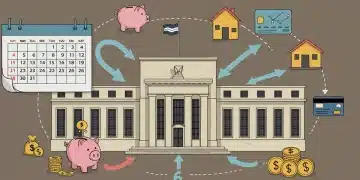
The Federal Reserve’s stance on interest rates will continue to be a dominant factor shaping the financial landscape in early 2026. These rates directly influence the cost of borrowing for everything from mortgages and car loans to credit card debt, and they also dictate the returns on savings accounts and certificates of deposit (CDs).
Higher interest rates generally aim to cool down an overheating economy by making borrowing more expensive, thereby reducing demand. For savers, this can be a boon, offering more attractive returns on their deposits. However, for those looking to borrow, higher rates mean increased monthly payments and overall loan costs.
Navigating a fluctuating interest rate environment
Understanding the direction of interest rates is crucial for optimizing your debt and savings strategies. If rates are expected to rise, locking in lower fixed rates on loans might be prudent. Conversely, if rates are projected to fall, waiting to refinance or take out new loans could save you money.
- Mortgage impact: Fluctuations affect new mortgage rates and the attractiveness of refinancing existing loans.
- Credit card debt: Variable-rate credit cards become more expensive as benchmark rates increase, emphasizing the need for timely payments.
- Savings growth: Higher rates can significantly boost the returns on savings accounts, money market accounts, and CDs, making them more appealing.
The Fed’s communications, particularly after Federal Open Market Committee (FOMC) meetings, will be critical for predicting rate movements. Keeping a close eye on these announcements and adjusting your personal financial strategy accordingly can lead to substantial long-term benefits. Being agile in this environment is key to maximizing your financial potential.
Employment Figures and Wage Growth Trends
The health of the job market is a foundational pillar of economic stability and directly impacts personal finance. Strong employment figures signify a robust economy where people have jobs, earn income, and contribute to consumer spending. Conversely, rising unemployment can lead to reduced spending, increased financial hardship, and a slowdown in economic activity.
Beyond just the number of jobs, wage growth is another critical indicator. When wages increase, individuals have more disposable income, which can fuel economic expansion and improve living standards. However, if wage growth lags significantly behind inflation, workers’ purchasing power diminishes, even if they are employed.
The nuances of the labor market in 2026
In early 2026, the labor market is expected to continue its rebalancing act, with some sectors experiencing robust growth and others facing adjustments. Automation and technological advancements will play an increasing role, potentially shifting demand for certain skills. Understanding these trends can help individuals adapt their career paths and skill sets.
- Job security: A strong job market generally offers greater job security, but staying adaptable to market changes is always wise.
- Income potential: Wage growth directly influences your ability to save, invest, and meet financial goals.
- Economic resilience: High employment and healthy wage growth contribute to overall economic resilience, benefiting everyone.
Key reports such as the monthly jobs report from the Bureau of Labor Statistics (BLS) and the Employment Cost Index (ECI) will provide valuable insights into these trends. For personal finance planning, a stable job market with consistent wage growth allows for more aggressive savings and investment strategies, while a weakening market might call for increased emergency fund contributions and a more conservative approach.
Geopolitical Stability and Global Supply Chain Dynamics
In our interconnected world, geopolitical events and the stability of global supply chains exert a significant influence on the domestic economy and, by extension, personal finances. Conflicts, trade disputes, and natural disasters in one part of the world can ripple through supply chains, affecting the availability and cost of goods and services in the United States.
Disruptions can lead to price volatility for commodities like oil and food, directly impacting household budgets. They can also create uncertainty in financial markets, leading to increased volatility in investment portfolios. Understanding these external factors is crucial for holistic financial planning.
Preparing for global economic tremors
While individuals have little control over geopolitical events, they can prepare for their potential financial fallout. Diversifying investments globally, maintaining a robust emergency fund, and staying informed about international developments are key strategies. Supply chain resilience, a major focus for businesses since the early 2020s, will continue to evolve.
- Investment diversification: Spreading investments across different regions and asset classes can mitigate risks associated with localized geopolitical events.
- Commodity price sensitivity: Be aware of how global events can affect prices of essentials like gasoline and groceries.
- Emergency preparedness: A strong emergency fund is your best defense against unexpected price spikes or economic downturns caused by global issues.
Monitoring major international news outlets and economic analyses from global institutions can provide early warnings of potential disruptions. For personal finance, this means having a flexible budget and a diversified portfolio that can withstand external shocks. It’s about building financial resilience in an increasingly globalized world.
Technological Advancement and Productivity Growth
Technological advancement, particularly in fields like artificial intelligence (AI), automation, and biotechnology, is not just transforming industries but also influencing macroeconomic productivity and individual financial opportunities. Increased productivity, driven by innovation, can lead to higher wages, lower production costs, and overall economic growth. However, it also brings questions about job displacement and the need for workforce reskilling.
For personal finance, understanding these trends means recognizing emerging job markets, potential investment opportunities in innovative companies, and the importance of continuous learning to remain competitive in the evolving job landscape. The pace of technological change in early 2026 is expected to accelerate, creating both opportunities and challenges.
Harnessing innovation for personal financial gain
Investing in companies at the forefront of technological innovation can offer significant returns, though it often comes with higher risk. More broadly, understanding which sectors are poised for growth due to technological shifts can inform career decisions and skill development. The gig economy, further enabled by technology, continues to offer flexible income streams.
- Investment opportunities: Research and consider investing in sectors benefiting from AI, renewable energy, and advanced manufacturing.
- Career adaptability: Focus on acquiring skills that are in high demand in technologically advanced industries.
- Entrepreneurial ventures: Technology lowers barriers to entry for many new businesses, offering avenues for additional income.
Looking ahead, the integration of AI in the classroom into various aspects of the economy is a critical indicator. Its impact on productivity, job creation, and the competitive landscape will be profound. For individuals, staying informed about these advancements and proactively adapting personal and professional strategies can unlock new avenues for financial growth and security.
Government Fiscal Policy and Debt Levels
Government fiscal policy, encompassing taxation, government spending, and debt management, significantly shapes the economic environment. In early 2026, decisions made by policymakers regarding federal budgets, infrastructure projects, and social programs will have direct and indirect effects on individuals’ wallets. Increased government spending can stimulate economic activity, but if unfunded, it can lead to higher national debt and potentially inflationary pressures.
Taxation policies, whether changes to income tax rates, corporate taxes, or new levies, directly impact disposable income and investment incentives. Understanding the direction of these policies is crucial for tax planning, retirement contributions, and overall financial strategy.
The interplay of policy and personal finance
The level of national debt also plays a role, as servicing this debt can consume a significant portion of the federal budget, potentially limiting future government spending or necessitating tax increases. A sustainable fiscal path is vital for long-term economic stability. For personal finance, understanding these dynamics helps anticipate future economic conditions and plan accordingly.
- Tax planning: Be aware of potential changes in tax laws that could affect your income, investments, and estate planning.
- Investment implications: Government spending on specific sectors (e.g., green energy, infrastructure) can create investment opportunities.
- Economic stability: Responsible fiscal policy contributes to a stable economic environment, which benefits all financial planning efforts.
Keeping an eye on legislative developments, congressional budget debates, and statements from the Treasury Department will provide insights into the government’s fiscal intentions. Adapting your financial plan to potential shifts in fiscal policy, such as adjusting your investment portfolio based on tax incentives or preparing for changes in social security benefits, is a prudent approach for the coming year.
| Key Indicator | Personal Finance Impact |
|---|---|
| Inflation Rates | Affects purchasing power, budgeting, and the real value of savings. |
| Interest Rates | Influences borrowing costs for loans and returns on savings/investments. |
| Employment & Wages | Impacts job security, disposable income, and overall economic confidence. |
| Geopolitical Stability | Affects commodity prices, market volatility, and global supply chains. |
Frequently Asked Questions About the 2026 Economic Forecast
Inflation in 2026 will directly impact your daily expenses by influencing the prices of goods and services. If inflation remains elevated, you may see higher costs for groceries, gas, and utilities, requiring adjustments to your household budget to maintain purchasing power and financial stability.
If interest rates rise in 2026, consider moving your savings into high-yield savings accounts, money market accounts, or certificates of deposit (CDs). These options typically offer better returns in a rising rate environment, helping your money grow more effectively and mitigating the impact of inflation on your capital.
The job market’s strength in 2026 will depend on various factors, including technological advancements and economic growth. While some sectors may see robust hiring, others might face shifts due to automation. Continuous skill development and staying informed about industry trends are crucial for maintaining career stability and growth.
Geopolitical events in 2026 can introduce market volatility, affecting investment returns. Conflicts or trade disputes can disrupt supply chains, impacting company profits and stock prices. Diversifying your investment portfolio across different asset classes and geographies can help mitigate these risks and protect your financial health.
Technology, especially AI and automation, will play a significant role in the 2026 economic forecast by driving productivity growth and reshaping industries. This creates new investment opportunities and alters job market demands. Adapting to these technological shifts is essential for personal financial advancement and career resilience.
Conclusion
The Early 2026 Economic Forecast: 5 Critical Indicators for Personal Finance Planning in the Next 12 Months provides a vital roadmap for navigating the evolving financial landscape. By closely monitoring inflation, interest rates, employment figures, geopolitical stability, technological advancements, and government fiscal policy, individuals can make more informed decisions regarding their budgeting, savings, investments, and debt management. Proactive engagement with these indicators is not just about reacting to change, but about strategically positioning your finances to thrive amidst economic shifts. The coming year promises continued dynamism, and an informed approach will be your greatest asset in achieving financial serenity and growth.