Bridging the Gap: US Vocational Training Evolves for Future Workforce Needs
Bridging the Gap: US Vocational Training Evolves for Future Workforce Needs
The landscape of work is undergoing a profound transformation. Automation, artificial intelligence, and global interconnectedness are reshaping industries at an unprecedented pace. In this dynamic environment, the United States faces a critical challenge: a widening skills gap. Businesses across various sectors report difficulties finding qualified candidates to fill essential roles, hindering innovation and economic growth. This is where US Vocational Training steps in, evolving rapidly to meet the demands of the future workforce in 2026 and beyond.
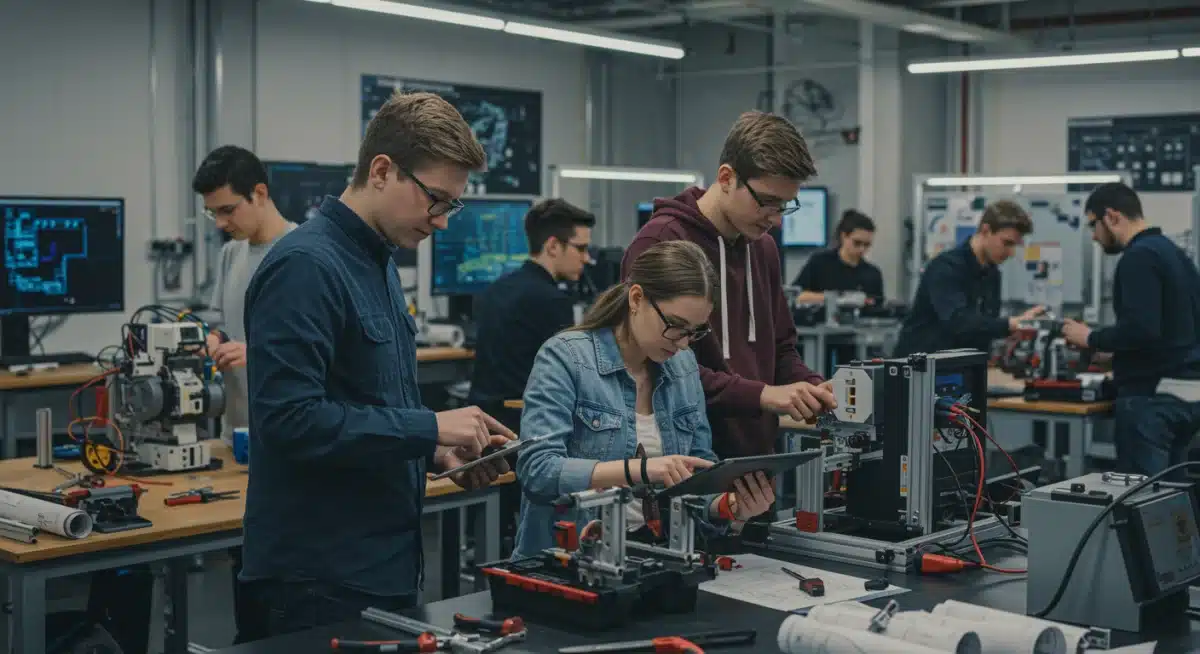
For decades, vocational training, often relegated to a secondary status compared to traditional four-year degrees, has been the backbone of American industry. It has consistently provided pathways to skilled trades and technical professions. However, the nature of these professions is no longer static. The plumber of today needs to understand smart home technology, the auto mechanic must be proficient in electric vehicle diagnostics, and the manufacturing technician works alongside sophisticated robotics. Recognizing this shift, US Vocational Training programs are undergoing a significant metamorphosis, adapting curricula, embracing new technologies, and forging stronger ties with industry.
This comprehensive article will delve into the critical aspects of this evolution, exploring the challenges, the innovative solutions, and the promising future of vocational education in America. We will examine how these programs are not just keeping pace but actively shaping the workforce of tomorrow, ensuring that individuals are equipped with the skills needed to thrive in a rapidly changing world.
The Accelerating Skills Gap: A National Imperative
The term “skills gap” is more than just a buzzword; it represents a tangible economic challenge. Numerous studies and employer surveys consistently highlight a mismatch between the skills job seekers possess and the skills employers require. This gap is particularly pronounced in skilled trades, advanced manufacturing, healthcare support, and information technology. The National Association of Manufacturers, for instance, has projected that more than 2.1 million manufacturing jobs could go unfilled by 2030 due to a lack of skilled workers. Similar trends are observed in other high-growth sectors.
Several factors contribute to this growing disparity. Rapid technological advancements mean that skills can become obsolete faster than ever before. The aging workforce, with many experienced tradespeople nearing retirement, further exacerbates the problem. Moreover, a historical emphasis on traditional academic pathways has sometimes overshadowed the value and career potential offered by vocational education, leading to fewer young people entering these critical fields.
Addressing this skills gap is not merely about filling vacant positions; it’s about maintaining America’s competitiveness on the global stage. A robust economy relies on a skilled workforce capable of innovation, problem-solving, and adapting to new technologies. Therefore, the evolution of US Vocational Training is not just a beneficial development; it is a national imperative.
Modernizing Curricula: Beyond Traditional Trades
The “vocational school” of yesteryear, often associated solely with carpentry or auto repair, has undergone a dramatic transformation. While these foundational trades remain vital, modern US Vocational Training encompasses a much broader and more technologically advanced spectrum of disciplines. Today’s programs integrate cutting-edge technologies and methodologies to prepare students for careers that may not have even existed a decade ago.
Consider the field of advanced manufacturing. Vocational students are now trained in robotics, automation, computer-aided design (CAD), additive manufacturing (3D printing), and industrial internet of things (IIoT) applications. Healthcare vocational programs extend beyond nursing assistants to include medical coding, health information technology, surgical technology, and specialized diagnostic imaging techniques. The IT sector, a constant source of innovation, sees vocational offerings in cybersecurity, cloud computing, data analytics, and web development.
This modernization isn’t just about adding new subjects; it’s about embedding critical thinking, problem-solving, and adaptability into every aspect of the curriculum. Students are taught not just how to perform a task, but how to understand the underlying principles, troubleshoot complex systems, and continuously learn new skills throughout their careers. The goal is to produce “T-shaped” professionals – those with deep expertise in one area, coupled with broad foundational knowledge and soft skills.
The Role of Technology in Vocational Education
Technology is not only changing the jobs available but also revolutionizing how US Vocational Training is delivered. Educational institutions are increasingly leveraging innovative tools to enhance learning experiences, make training more accessible, and simulate real-world work environments.
Virtual and Augmented Reality (VR/AR)
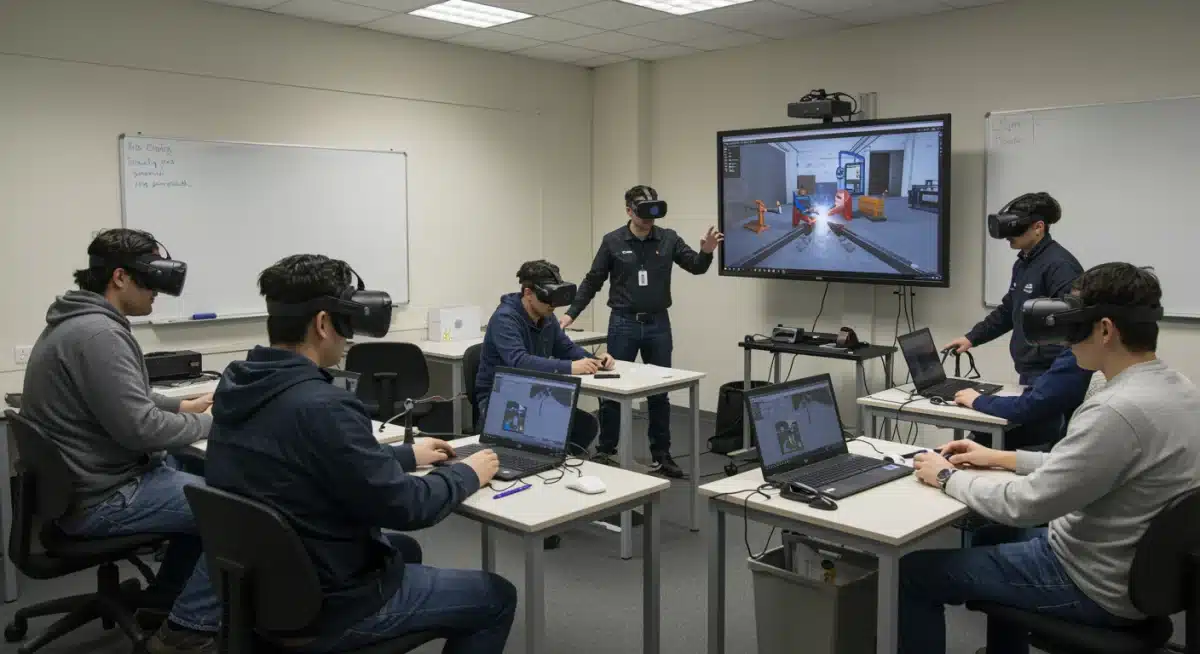
One of the most exciting advancements is the integration of VR and AR into vocational curricula. These technologies allow students to practice complex procedures in a safe, controlled, and immersive environment. Imagine a welding student perfecting their technique without using expensive materials or risking injury, or a medical student performing a simulated surgery with realistic feedback. VR and AR offer unlimited “re-dos,” accelerating the learning curve and building confidence before students enter actual work settings.
Advanced Simulations and Digital Twins
Beyond VR/AR, sophisticated simulation software is becoming standard in many vocational programs. These simulations can replicate the operation of complex machinery, industrial processes, or even entire logistical systems. “Digital twins,” virtual models of physical objects or systems, allow students to interact with and analyze equipment performance, predict maintenance needs, and optimize operations without touching the actual hardware. This hands-on, yet digital, approach is invaluable for fields like engineering technology, aviation maintenance, and process control.
Online and Hybrid Learning Models
The COVID-19 pandemic accelerated the adoption of online and hybrid learning models, and US Vocational Training has also embraced these flexible approaches. While hands-on components still necessitate in-person instruction, many theoretical aspects, safety training, and foundational knowledge can be delivered effectively online. This flexibility makes vocational education more accessible to a wider range of students, including working adults, those in rural areas, and individuals balancing family responsibilities.
Strengthening Industry Partnerships: A Win-Win for All
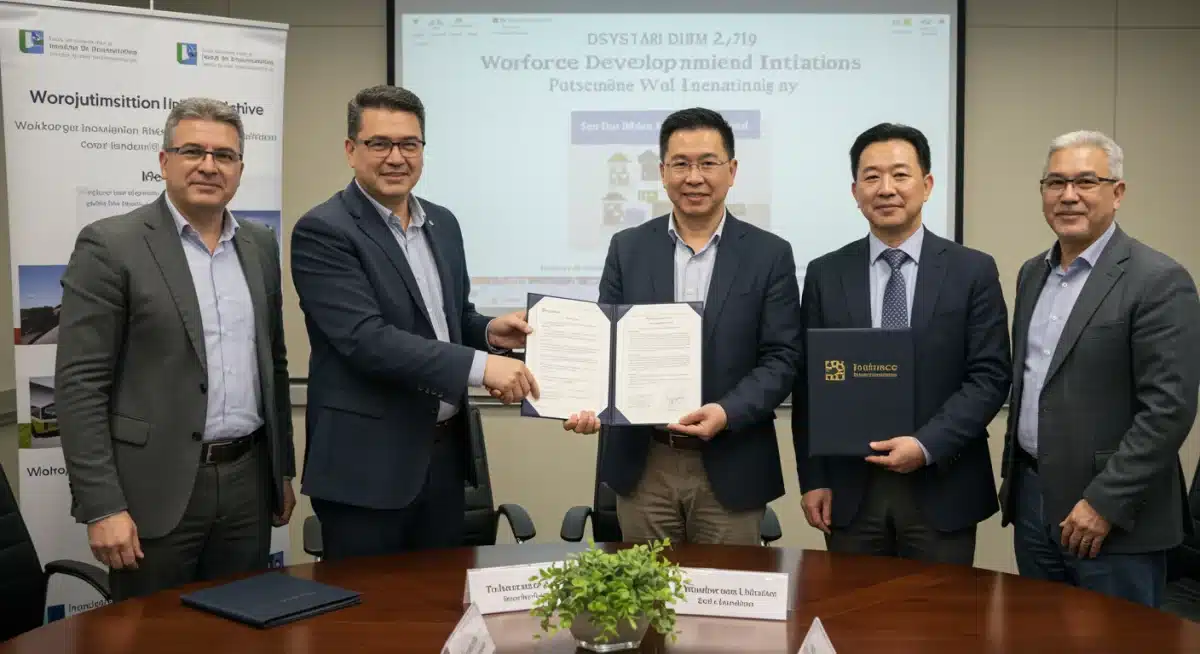
Perhaps the most crucial development in the evolution of US Vocational Training is the deepening of partnerships between educational institutions and local, regional, and even national industries. These collaborations are mutually beneficial, addressing the needs of both students and employers.
Curriculum Development and Relevance
Industry partners play a vital role in ensuring that vocational curricula remain relevant and aligned with current and future workforce needs. By actively participating in curriculum review boards, providing insights into emerging technologies, and forecasting skill requirements, businesses help shape programs that directly address their talent gaps. This direct feedback loop ensures that graduates are equipped with immediately applicable skills, reducing the need for extensive on-the-job training.
Apprenticeships and Internships
Modern apprenticeships and internships are experiencing a resurgence, providing invaluable real-world experience for vocational students. These programs allow students to “earn while they learn,” applying classroom knowledge in practical settings under the guidance of experienced professionals. For employers, apprenticeships are a powerful talent pipeline, allowing them to train and mold future employees according to their specific needs and company culture. The expansion of registered apprenticeship programs, supported by government initiatives, is a testament to their recognized value.
Equipment and Facilities
Keeping vocational training facilities equipped with the latest technology can be a significant financial challenge for educational institutions. Industry partnerships often bridge this gap, with companies donating state-of-the-art equipment, software licenses, and even providing technical expertise for facility upgrades. This ensures that students are training on the same tools they will encounter in their future workplaces, making their transition seamless.
Beyond Technical Skills: The Importance of Soft Skills
While technical proficiency is paramount, employers consistently emphasize the importance of “soft skills” – also known as essential skills or professional skills. These include critical thinking, problem-solving, communication, teamwork, adaptability, and digital literacy. In a rapidly changing work environment, the ability to collaborate effectively, communicate clearly, and continuously learn is as crucial as any technical skill.
US Vocational Training programs are increasingly integrating the development of these soft skills into their curricula. This might involve project-based learning that requires teamwork and presentation skills, workshops on professional ethics and communication, or simulated workplace scenarios that demand adaptability and critical decision-making. The aim is to produce well-rounded individuals who are not only technically competent but also capable of thriving in diverse team environments and navigating complex professional challenges.
Pathways to Success: Multiple Entry Points and Career Ladders
One of the key strengths of modern US Vocational Training is its flexibility and the multiple pathways it offers to career success. It’s no longer a “terminal” education but often serves as a springboard for further learning and career advancement.
Stackable Credentials
Many vocational programs are designed with “stackable credentials” in mind. This means students can earn certifications, diplomas, or associate degrees that build upon one another. For example, a student might first earn a certificate in basic machining, then stack that with a more advanced CNC programming certification, and eventually pursue an associate degree in manufacturing technology. This modular approach allows individuals to enter the workforce quickly with foundational skills, gain experience, and then return to education to advance their careers without having to start from scratch.
Articulation Agreements with Higher Education
Increasingly, vocational institutions are forming articulation agreements with four-year colleges and universities. These agreements allow vocational graduates to transfer credits seamlessly towards a bachelor’s degree, often in related fields like engineering technology, business management, or education. This provides a clear pathway for those who wish to pursue higher education after gaining practical experience, breaking down the traditional divide between vocational and academic routes.
Lifelong Learning and Upskilling
The need for continuous learning is a hallmark of the 21st-century workforce. US Vocational Training institutions are becoming hubs for lifelong learning, offering short-term courses, workshops, and specialized certifications for incumbent workers looking to upskill or reskill. This responsiveness to industry needs ensures that the existing workforce can adapt to new technologies and job requirements, maintaining their employability and contributing to economic vitality.
Funding and Policy Support: Investing in the Future
Recognizing the critical role of vocational education, there has been a renewed focus on funding and policy support for US Vocational Training at both federal and state levels. Initiatives like the Perkins Act (Carl D. Perkins Career and Technical Education Act) provide significant federal funding to states for career and technical education programs, emphasizing program quality, industry alignment, and student success.
State governments are also investing heavily in workforce development initiatives, often through grants, scholarships, and tax incentives for businesses that participate in training programs. The “America’s College Promise” and similar state-level proposals aim to make community college, including many vocational programs, tuition-free or more affordable, further increasing access to these vital educational pathways.
This increased investment reflects a growing understanding that strong vocational training programs are not just an educational expense but a strategic investment in the nation’s economic future and global competitiveness.
Success Stories and Impact: Changing Perceptions
The evolving landscape of US Vocational Training is yielding tangible results, with countless success stories emerging across the country. Graduates are securing high-paying, in-demand jobs, often with little or no student debt, and contributing immediately to their local economies. These success stories are slowly but surely changing public perceptions of vocational education, demonstrating its value as a first-choice pathway to a successful career.
For example, a graduate from a mechatronics program might immediately land a job as an automation technician, earning a competitive salary and working with cutting-edge robotics. A certified welder could find themselves working on critical infrastructure projects, while a cybersecurity specialist from a vocational program could be protecting vital data for a major corporation. These are not “fallback” careers; they are essential, technologically advanced, and often highly lucrative professions.
Vocational programs are also becoming powerful engines of social mobility, providing accessible pathways for individuals from diverse backgrounds to acquire valuable skills and achieve economic independence. By focusing on practical, hands-on learning and direct connections to employment, vocational education offers a clear return on investment for students, employers, and communities alike.
The Road Ahead: Challenges and Opportunities
Despite significant progress, the evolution of US Vocational Training still faces challenges. Sustaining funding, attracting and retaining qualified instructors who can teach cutting-edge technologies, and continuously updating equipment are ongoing concerns. Furthermore, overcoming persistent societal biases that sometimes favor four-year degrees over vocational pathways remains a challenge that requires continued advocacy and showcasing of vocational success stories.
However, the opportunities far outweigh the challenges. The increasing demand for skilled trades and technical professionals means that the value proposition of vocational education will only grow stronger. The continued integration of advanced technologies like AI, IoT, and quantum computing will create new roles and necessitate new training programs. The ability of US Vocational Training to adapt quickly and effectively to these changes will be critical for its continued success.
Looking towards 2026 and beyond, vocational training will likely become even more personalized, leveraging AI to tailor learning paths to individual student needs and career aspirations. Micro-credentialing, focused on specific skills, will become more prevalent, allowing for even greater flexibility in learning and employment. The lines between “academic” and “vocational” education will continue to blur, as all forms of education recognize the need for practical skills and lifelong learning.
Conclusion: A Bright Future for Skilled Trades and Technical Professions
The transformation of US Vocational Training is a testament to its resilience and adaptability. By modernizing curricula, embracing technology, forging strong industry partnerships, and emphasizing essential soft skills, vocational education is effectively addressing the nation’s skills gap and preparing a future-ready workforce. It offers a vital pathway to fulfilling, well-paying careers, contributing significantly to individual prosperity and national economic strength.
As we move further into the 21st century, the importance of skilled trades and technical professions will only continue to grow. The ongoing evolution of US Vocational Training ensures that America will have the talent pool needed to innovate, compete, and thrive in an increasingly complex and technologically driven world. Investing in vocational education is not just about training workers; it’s about building a stronger, more prosperous future for all.