Capital Gains Tax 2026: Strategies to Minimize Your Liability

Understanding Capital Gains Tax in 2026: Strategies to Minimize Your Liability
As we approach 2026, understanding the intricacies of Capital Gains Tax becomes increasingly vital for investors, homeowners, and anyone dealing with appreciating assets. The landscape of taxation is ever-evolving, and staying informed is the first step towards effective financial planning. This comprehensive guide will delve into the projected rules and regulations surrounding Capital Gains Tax 2026, offering actionable strategies to minimize your tax liability and maximize your returns. Whether you’re a seasoned investor or just starting to build your portfolio, the insights provided here will equip you with the knowledge to navigate the complexities of capital gains taxation.
Capital gains refer to the profit you make from selling an asset that has increased in value. This could be anything from stocks and bonds to real estate, art, or even cryptocurrency. The tax levied on these profits is known as Capital Gains Tax, and its rates and rules can significantly impact your net proceeds. For 2026, while specific legislative changes are always a possibility, we can anticipate certain foundational principles to remain, alongside potential adjustments influenced by economic conditions and policy shifts. Proactive planning is not just advisable; it’s essential for anyone looking to optimize their financial outcomes.
What is Capital Gains Tax? A Refresher for 2026
Before diving into specific strategies for Capital Gains Tax 2026, let’s establish a clear understanding of what capital gains tax entails. Simply put, it’s a tax on the profit realized from the sale of a non-inventory asset. This profit is calculated as the difference between the asset’s selling price and its original purchase price (cost basis), adjusted for any improvements or related expenses. Assets are generally categorized into two types for capital gains purposes: short-term and long-term.
- Short-Term Capital Gains: These are profits from assets held for one year or less. They are typically taxed at your ordinary income tax rates, which can be significantly higher than long-term rates.
- Long-Term Capital Gains: These are profits from assets held for more than one year. These are usually subject to more favorable tax rates, which are often lower than ordinary income tax rates, to encourage long-term investment.
The distinction between short-term and long-term gains is crucial because it directly impacts the tax rate you’ll pay. For 2026, it’s anticipated that this distinction will remain a cornerstone of capital gains taxation. Understanding your holding period for each asset is therefore fundamental to effective tax planning.
Current Capital Gains Tax Rates and Projections for 2026
While definitive rates for Capital Gains Tax 2026 are subject to legislative action, we can look at current trends and historical patterns to make educated projections. Historically, long-term capital gains rates have been 0%, 15%, or 20% for most taxpayers, depending on their taxable income. For instance, lower-income brackets often qualify for the 0% rate, while higher-income individuals face the 15% or 20% rates. High-income earners may also be subject to an additional 3.8% Net Investment Income Tax (NIIT).
Short-term capital gains, as mentioned, are taxed at ordinary income tax rates, which can range from 10% to 37% or more, depending on your income bracket. It’s imperative to monitor legislative developments closely as 2026 approaches, as there could be proposals to adjust these rates, particularly for high-income earners or specific types of assets. Economic conditions, such as inflation or recessionary pressures, can also influence policy decisions regarding capital gains taxation.
Key Assets Subject to Capital Gains Tax
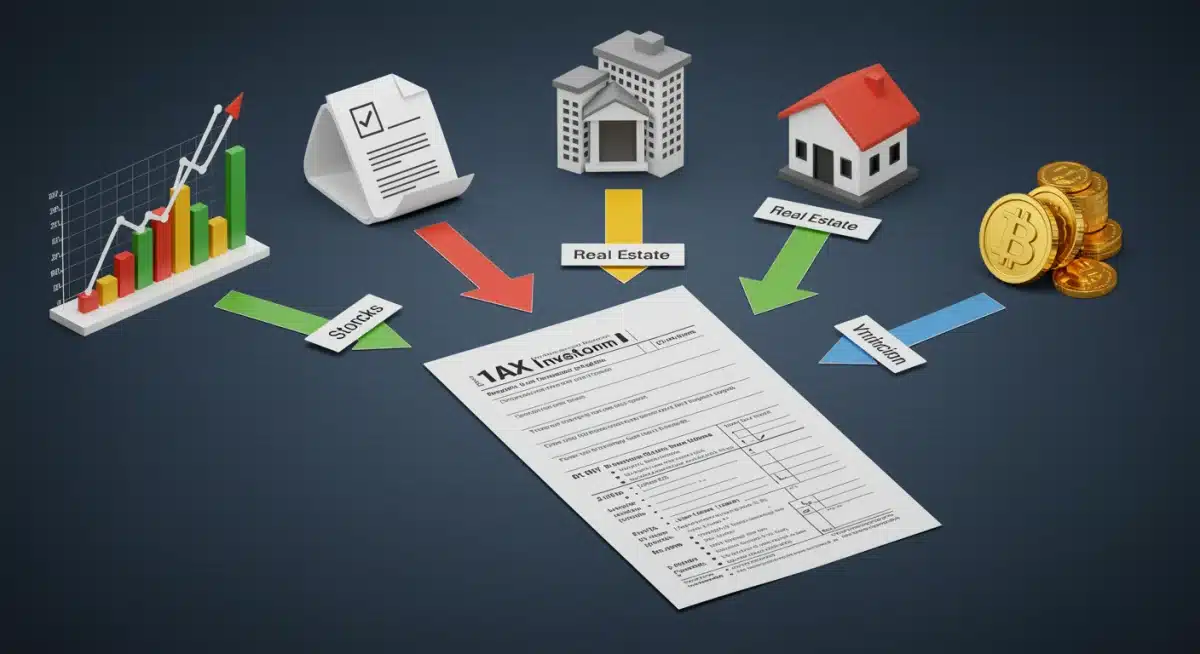
Almost any asset you own that appreciates in value and is subsequently sold for a profit can trigger a capital gains tax event. Here are some of the most common types of assets:
- Stocks and Bonds: The most common sources of capital gains for many investors.
- Mutual Funds and ETFs: Sales of shares in these funds, or distributions from them, can generate capital gains.
- Real Estate: This includes primary residences (with certain exemptions), rental properties, and commercial real estate.
- Collectibles: Art, antiques, rare coins, stamps, and other collectibles typically face higher capital gains tax rates, often up to 28%.
- Cryptocurrency: Digital assets like Bitcoin and Ethereum are generally treated as property for tax purposes, meaning their sale can generate capital gains or losses.
- Businesses: Selling a business or a significant stake in one can also result in substantial capital gains.
Understanding which assets are subject to Capital Gains Tax 2026 is the first step in preparing your tax strategy. Each asset class may have unique considerations and potential exemptions, which we will explore further.
Strategies to Minimize Your Capital Gains Tax Liability in 2026
Minimizing your Capital Gains Tax 2026 liability requires careful planning and a thorough understanding of available tax codes and strategies. Here are several effective approaches:
1. Holding Period Matters: Long-Term vs. Short-Term Gains
As discussed, the most fundamental strategy is to hold your assets for more than one year to qualify for long-term capital gains rates. The difference in tax rates between short-term and long-term gains can be substantial, often saving you a significant percentage of your profits. For example, if you are in a high ordinary income tax bracket, holding an asset for just one day longer than a year could reduce your tax rate on that gain from 37% to 20% (plus NIIT if applicable).
2. Tax-Loss Harvesting
Tax-loss harvesting is a powerful strategy where you intentionally sell investments at a loss to offset capital gains and, potentially, a limited amount of ordinary income. For Capital Gains Tax 2026, this means reviewing your portfolio at the end of the year for any underperforming assets. You can use these losses to offset any capital gains you’ve realized during the year. If your capital losses exceed your capital gains, you can deduct up to $3,000 of the remaining loss against your ordinary income, carrying forward any additional losses to future tax years. This strategy requires careful timing and adherence to the ‘wash-sale rule,’ which prevents you from repurchasing a substantially identical security within 30 days before or after the sale.
3. Utilizing Tax-Advantaged Accounts
Investing within tax-advantaged accounts is one of the most effective ways to reduce or defer capital gains tax. These accounts include:
- 401(k)s and IRAs: Contributions to traditional 401(k)s and IRAs are often tax-deductible, and investments grow tax-deferred until withdrawal in retirement. Capital gains realized within these accounts are not taxed until you take distributions.
- Roth IRAs and Roth 401(k)s: While contributions are made with after-tax dollars, qualified withdrawals in retirement are entirely tax-free, including all capital gains. This makes Roth accounts particularly attractive for long-term growth investments.
- 529 Plans: Designed for educational expenses, these plans offer tax-free growth and withdrawals for qualified education costs. Capital gains within a 529 plan are not taxed.
- Health Savings Accounts (HSAs): Often called a ‘triple-tax advantage’ account, HSAs offer tax-deductible contributions, tax-free growth, and tax-free withdrawals for qualified medical expenses. If invested, capital gains within an HSA are never taxed if used for healthcare.
Maximizing contributions to these accounts can significantly reduce your overall Capital Gains Tax 2026 burden over your lifetime.
4. Primary Residence Exclusion (Section 121)
For homeowners, the sale of a primary residence offers a significant capital gains exclusion. Under current law, single filers can exclude up to $250,000 of capital gains, and married couples filing jointly can exclude up to $500,000, provided they meet certain criteria:
- You must have owned the home for at least two of the five years leading up to the sale.
- You must have lived in the home as your main residence for at least two of the five years leading up to the sale.
These two years do not have to be continuous. This exclusion is a powerful tool for minimizing Capital Gains Tax 2026 on residential property, but it’s important to understand the rules, especially if you’ve used the exclusion recently or if your home is also used for business purposes.
5. Gifting Appreciated Assets
Gifting appreciated assets to individuals in lower tax brackets can be a strategic way to reduce the overall tax burden on the family. When you gift an asset, the recipient receives your original cost basis. If they then sell the asset, the capital gains will be calculated from that original basis but will be taxed at their potentially lower capital gains rate. This strategy is particularly effective for assets with significant unrealized gains. However, be mindful of gift tax rules and annual exclusion limits.
6. Qualified Opportunity Funds (QOFs)
Qualified Opportunity Funds (QOFs) allow investors to defer and potentially reduce capital gains taxes by reinvesting those gains into designated economically distressed communities. If you hold your investment in a QOF for at least 10 years, you can receive a step-up in basis to fair market value on the QOF investment, meaning you pay no capital gains tax on its appreciation. This is a more complex strategy but can offer significant tax advantages for those willing to invest long-term in specific areas. It’s important to research QOFs thoroughly and consult with a financial advisor to determine if this is a suitable strategy for your Capital Gains Tax 2026 planning.
7. Charitable Contributions of Appreciated Assets
Donating appreciated assets (like stocks or real estate) that you’ve held for more than a year directly to a qualified charity can provide a double tax benefit. You generally won’t have to pay capital gains tax on the appreciation, and you can typically deduct the fair market value of the asset on your income tax return, subject to certain limitations. This strategy allows you to support causes you care about while simultaneously reducing your Capital Gains Tax 2026 liability.
8. Installment Sales
For certain asset sales, particularly real estate or businesses, an installment sale allows you to spread out the recognition of capital gains over several tax years. Instead of receiving the full payment (and thus realizing the full gain) in the year of sale, you receive payments over time. This can be beneficial if it allows you to stay within lower capital gains tax brackets in subsequent years, thus reducing your overall tax bill for Capital Gains Tax 2026 and beyond.
Special Considerations for Capital Gains in 2026
Beyond the general strategies, there are specific areas that warrant particular attention when planning for Capital Gains Tax 2026.
Net Investment Income Tax (NIIT)
High-income earners should always consider the 3.8% Net Investment Income Tax (NIIT). This tax applies to the lesser of your net investment income or the amount by which your modified adjusted gross income (MAGI) exceeds certain thresholds ($200,000 for single filers, $250,000 for married filing jointly in recent years). This tax can significantly increase your effective capital gains tax rate, making strategies to reduce MAGI or defer income even more valuable.
State Capital Gains Taxes
It’s crucial to remember that Capital Gains Tax 2026 typically applies at both the federal and state levels. State capital gains tax rates vary widely, with some states having no capital gains tax and others taxing them as ordinary income. Be sure to factor in your state’s specific rules when planning your overall tax strategy, as this can have a substantial impact on your net proceeds.
Depreciation Recapture
If you’ve owned depreciable property, such as rental real estate, and have taken depreciation deductions, a portion of your gain upon sale may be subject to ‘depreciation recapture.’ This means that the amount of depreciation you’ve claimed is generally taxed at your ordinary income tax rate, up to a maximum of 25%, before the remaining gain is treated as a long-term capital gain. This is an important consideration for real estate investors planning for Capital Gains Tax 2026.

The Importance of Record-Keeping and Professional Advice
Accurate record-keeping is paramount for effectively managing Capital Gains Tax 2026. You’ll need to track:
- The purchase date and cost basis of each asset.
- The sale date and selling price.
- Any commissions, fees, or improvements that affect the cost basis or selling price.
Without meticulous records, it can be challenging to correctly calculate your gains or losses, potentially leading to overpayment of taxes or issues during an audit. Many brokerage firms and financial institutions provide year-end statements (e.g., Form 1099-B) that summarize your transactions, but it’s always wise to maintain your own detailed records as a backup.
Given the complexities and potential for legislative changes, consulting with a qualified tax professional or financial advisor is highly recommended. They can provide personalized advice tailored to your specific financial situation, help you navigate the nuances of tax law, and ensure you are utilizing all available strategies to minimize your Capital Gains Tax 2026 liability. A professional can also help you understand the implications of any new tax laws or economic shifts that may arise.
Preparing for Potential Legislative Changes in 2026
While this article provides strategies based on current tax law and reasonable projections, it’s crucial to acknowledge that tax legislation can change. Election cycles, shifts in economic policy, and evolving governmental priorities can all lead to modifications in capital gains tax rates, exemptions, and rules. For example, there have been discussions in the past about increasing capital gains rates for high-income earners or adjusting the primary residence exclusion. Staying informed through reputable financial news sources and regular consultations with your tax advisor will be key to adapting your Capital Gains Tax 2026 strategy as needed.
Consider scenario planning: what if capital gains rates increase? What if certain exemptions are modified? By thinking through these possibilities, you can develop a more resilient financial plan that can withstand potential legislative shifts. This might involve accelerating the sale of certain assets if rate increases are anticipated or delaying sales if rate decreases are expected. However, such decisions should always be made with careful consideration of your overall financial goals and market conditions, not solely based on tax implications.
Conclusion: Proactive Planning for Capital Gains Tax 2026
Navigating Capital Gains Tax 2026 doesn’t have to be a daunting task. By understanding the fundamental principles, distinguishing between short-term and long-term gains, and proactively implementing smart tax strategies, you can significantly reduce your tax burden. From utilizing tax-advantaged accounts and tax-loss harvesting to leveraging the primary residence exclusion and considering charitable giving, numerous avenues exist to optimize your financial outcomes.
The key takeaway is the importance of planning and staying informed. The tax landscape is dynamic, and what works today might need adjustment tomorrow. Begin reviewing your investment portfolio and financial goals now. Consult with tax professionals to ensure your strategies are aligned with your individual circumstances and compliant with the latest regulations. By taking these proactive steps, you can confidently approach Capital Gains Tax 2026, minimize your liability, and keep more of your hard-earned profits.
Remember, every dollar saved in taxes is a dollar earned. Make smart choices today to secure a more financially robust tomorrow.