Graduate School Funding 2026: New Options & Deadlines Explored

The 2026 Outlook for Graduate School Funding: New Options and Deadlines
Embarking on a graduate degree is a significant step towards advancing your career and deepening your expertise. However, the financial commitment can often be a daunting hurdle. As we look towards 2026, prospective graduate students need to be acutely aware of the evolving landscape of graduate school funding 2026, including new opportunities, modified eligibility criteria, and, critically, upcoming deadlines. This comprehensive guide is designed to equip you with the knowledge and strategies necessary to navigate the financial aid process effectively and secure the funding you need for your advanced studies.
Understanding the Shifting Landscape of Graduate School Funding
The world of higher education finance is rarely static. Economic trends, governmental priorities, and institutional policies all play a role in shaping the availability and nature of graduate school funding. For 2026, several key trends are emerging that could impact your financial aid search:
- Increased Focus on STEM and High-Demand Fields: Many funding bodies, both public and private, are continuing to prioritize graduate students in Science, Technology, Engineering, and Mathematics (STEM) fields, as well as other areas deemed critical for national development and economic growth (e.g., healthcare, education, data science, artificial intelligence).
- Emphasis on Diversity and Inclusion: There’s a growing commitment to promoting diversity within graduate programs. This translates into more scholarships and fellowships specifically aimed at underrepresented groups, first-generation students, and individuals with unique life experiences.
- Growth in Public-Private Partnerships: Universities are increasingly collaborating with corporations and non-profit organizations to create specialized funding opportunities. These often come with research opportunities or internship components directly relevant to the partner organization’s mission.
- Evolving Federal and State Aid Programs: While federal loan programs remain a cornerstone of graduate funding, state-specific initiatives and grant programs are subject to legislative changes. Staying informed about these developments at both federal and state levels is crucial for maximizing your aid potential.
- The Rise of Micro-Credentials and Alternative Pathways: While not directly graduate degrees, the growth of micro-credentials and specialized certificates might influence how some employers view advanced training, potentially impacting employer-sponsored tuition benefits or the perceived value of certain graduate programs.
Key Types of Graduate School Funding for 2026
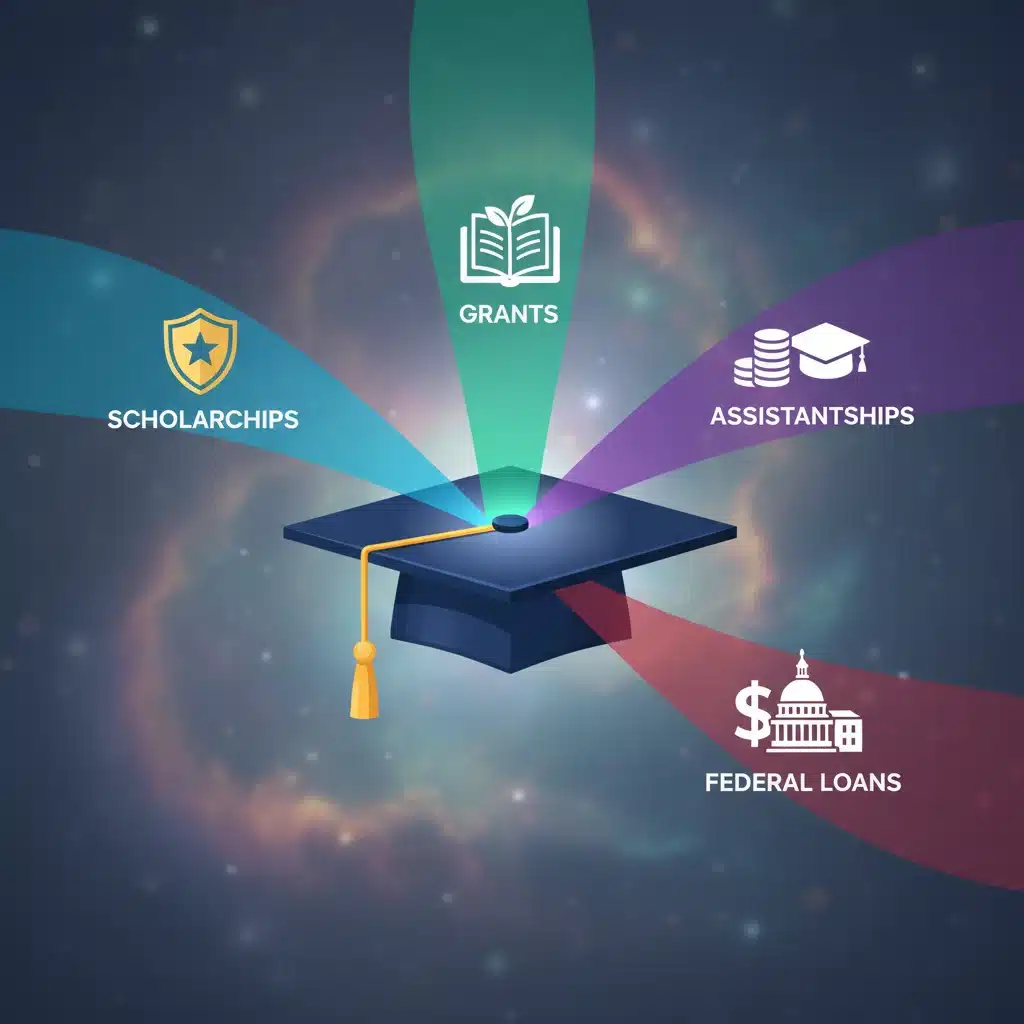
When planning for your graduate education, it’s essential to explore all available funding avenues. A multi-pronged approach often yields the best results. Here are the primary categories of financial aid you should investigate for graduate school funding 2026:
1. Scholarships and Fellowships: The Coveted Free Money
Scholarships and fellowships are arguably the most desirable forms of financial aid because they do not need to be repaid. They are typically awarded based on merit (academic achievement, research potential, leadership), need, or specific criteria such as field of study, background, or demographic. For 2026, be on the lookout for:
- University-Specific Fellowships: Most graduate schools offer their own fellowships, often covering tuition, a stipend for living expenses, and health insurance. These are highly competitive and usually tied to specific departments or research initiatives. Application deadlines for these often align with the program application deadline, so early planning is critical.
- External Scholarships: Thousands of organizations, foundations, and corporations offer scholarships for graduate students. These can be broad (e.g., for all STEM students) or highly specific (e.g., for women pursuing a Ph.D. in astrophysics from a specific region). Utilizing online scholarship databases and professional organizations in your field is key.
- Research Fellowships: If your program involves significant research, look for fellowships that support specific research projects or areas. These often come from government agencies (e.g., NIH, NSF), private foundations, or industry partners.
- Diversity and Inclusion Fellowships: As mentioned, these are growing. Organizations like the Ford Foundation, National GEM Consortium, and others offer substantial support to underrepresented groups in graduate education.
Pro Tip: When searching for scholarships and fellowships, don’t just look for large, national awards. Smaller, local organizations or professional associations in your specific field often have less competition and can provide significant, albeit smaller, awards that add up.
2. Graduate Assistantships: Earning While Learning
Graduate assistantships (GAs) are an excellent way to offset the cost of graduate school by working part-time for the university. In exchange for your work, you typically receive a tuition waiver (full or partial) and a stipend. For 2026, common types include:
- Teaching Assistantships (TAs): Involve assisting professors with undergraduate courses, grading papers, leading discussion sections, or even teaching introductory courses.
- Research Assistantships (RAs): Involve working with faculty on their research projects. This is particularly common in science and engineering fields and can be a valuable experience for your own thesis or dissertation.
- Administrative Assistantships: Involve working in various administrative offices within the university, such as admissions, student affairs, or academic departments.
The availability and compensation for GAs can vary significantly by institution and department. Many departments automatically consider applicants for GAs, but it’s always wise to inquire directly with the department’s graduate coordinator or faculty members about opportunities.
3. Grants: Non-Repayable Aid from Various Sources
Similar to scholarships, grants are forms of gift aid that do not need to be repaid. While often associated with undergraduate education, there are grants available for graduate students, particularly those demonstrating financial need or pursuing specific fields of study.
- Federal Grants: While fewer federal grants are available for graduate students compared to undergraduates, programs like the TEACH Grant (for those committed to teaching in high-need fields) or specific research grants from agencies like the NSF or NIH can be highly beneficial.
- State Grants: Many states offer grants to residents pursuing higher education, sometimes including graduate studies. Eligibility often depends on financial need and intended career path.
- Private and Foundation Grants: Numerous private foundations offer grants for graduate research, dissertation completion, or specific projects. These often require detailed proposals.
Actionable Tip: Don’t overlook smaller, niche grants. Many organizations offer grants for specific research topics, demographic groups, or even for attending conferences. These can cover specific expenses and reduce your overall financial burden.
4. Student Loans: A Necessary Consideration
While ideally, you’d fund your entire graduate education through non-repayable aid, student loans often play a crucial role. For graduate school funding 2026, understanding your loan options is vital:
- Federal Direct Unsubsidized Loans: These are available to graduate students regardless of financial need. Interest accrues during all periods, including while you’re in school. The maximum amount you can borrow annually is set by the government.
- Federal Direct PLUS Loans: These are credit-based loans available to graduate or professional students. The maximum amount you can borrow is the cost of attendance minus any other financial aid received. Interest rates can be higher than unsubsidized loans.
- Private Student Loans: Offered by banks and other financial institutions. These often have variable interest rates and may require a co-signer, especially if you have limited credit history. Exhaust federal loan options before considering private loans, as federal loans typically offer more flexible repayment terms and borrower protections.
Important Note: Always borrow only what you absolutely need. While loans can bridge funding gaps, they represent a long-term financial commitment.
Critical Deadlines for Graduate School Funding 2026
Missing a deadline can mean missing out on crucial funding. The application process for graduate school funding can be complex, with varying deadlines for different types of aid. Here’s a general timeline and what to look out for:
Fall 2026 Admissions (Most Common Intake)
- September – December 2025: This is prime time for researching programs and university-specific funding. Many competitive fellowships and assistantships have application deadlines in late fall or early winter, often coinciding with or even preceding the program application deadline.
- December 2025 – January 2026: Program application deadlines for many graduate programs fall within this window. If you’re applying for university fellowships or assistantships, ensure all materials are submitted by these dates.
- January – February 2026: If you plan to use federal student aid, complete the Free Application for Federal Student Aid (FAFSA) as soon as it becomes available (typically October 1st of the prior year). Even if you don’t think you’ll qualify for need-based aid, many universities require it for institutional scholarships and federal loan eligibility. State aid programs also have early deadlines, so check your state’s specific requirements.
- February – April 2026: Decisions on admissions and funding offers typically roll out during this period. You’ll need to carefully review offer letters and compare financial aid packages.
- April 15, 2026 (or similar): Many universities adhere to a common response date for graduate admissions and financial aid offers. This gives students time to consider multiple offers.
Spring/Summer 2026 Admissions (Less Common)
If you’re applying for Spring or Summer 2026 intake, your deadlines will be earlier. Generally:
- Spring 2026: Program and funding applications often due in August – October 2025.
- Summer 2026: Program and funding applications often due in November 2025 – January 2026.

Tips for Managing Deadlines:
- Create a Master Calendar: As soon as you identify programs and funding opportunities, create a detailed calendar with all application deadlines, FAFSA submission dates, and any other relevant financial aid forms.
- Start Early: The application process for graduate school and funding is time-consuming. Begin your research and essay writing well in advance.
- Confirm with Each Institution: Always verify deadlines directly with the graduate admissions office and relevant departments of each university you apply to. Don’t rely solely on general guides.
- Understand Rolling Admissions: Some programs have rolling admissions, meaning they review applications as they come in. While this offers flexibility, applying early often increases your chances for competitive funding.
Strategies for Maximizing Your Graduate School Funding 2026
Securing adequate funding requires a strategic and proactive approach. Here are some key strategies to enhance your chances:
1. Craft a Compelling Application
Your application materials are your primary advocacy tools. A strong application can not only secure admission but also make you a more attractive candidate for merit-based funding.
- Academic Excellence: Maintain a strong GPA and demonstrate proficiency in your chosen field.
- Statement of Purpose/Personal Statement: Clearly articulate your research interests, career goals, and how the program aligns with them. Highlight any relevant experiences (research, professional, volunteer) that demonstrate your potential for success in graduate school. Tailor this to each program and highlight why you are a strong candidate for funding.
- Letters of Recommendation: Choose recommenders who know you well and can speak to your academic abilities, research potential, and work ethic. Provide them with all necessary information and ample time.
- CV/Resume: Detail your academic achievements, research experience, publications, presentations, work experience, and any relevant skills.
2. Proactive Research for External Funding
Don’t solely rely on the university to provide all your funding. Dedicate significant time to searching for external scholarships and grants.
- Online Databases: Utilize websites like Scholarship.com, Fastweb, GradSchools.com, PIVOT (for university-affiliated researchers), and specific disciplinary organizations.
- Professional Organizations: Many professional associations in your field offer scholarships, grants, and fellowships to their members or to students pursuing studies in their area.
- Government Agencies: Explore funding opportunities from agencies relevant to your field (e.g., National Science Foundation, National Institutes of Health, Department of Education).
- Private Foundations: Research foundations that support education or specific research areas.
3. Network and Build Relationships
Networking can open doors to funding opportunities you might not otherwise discover.
- Faculty Members: Reach out to professors whose research aligns with your interests. They may have grants that can fund research assistantships or know of specific funding opportunities.
- Alumni Networks: University alumni associations often have scholarship programs or can connect you with individuals who might know about funding.
- Professional Conferences: Attending conferences in your field can provide insights into current research and potential funding sources, as well as opportunities to meet faculty and researchers.
4. Understand Your Financial Aid Package
Once you receive an offer of admission and financial aid, it’s crucial to understand exactly what you’re being offered.
- Distinguish Between Gift Aid and Loans: Clearly identify what is ‘free money’ (scholarships, fellowships, grants) and what needs to be repaid (loans).
- Understand Terms and Conditions: Some assistantships or fellowships come with specific service requirements (e.g., teaching a certain number of hours, maintaining a particular GPA, or committing to research).
- Negotiate (When Appropriate): In some cases, particularly if you have multiple offers, you might be able to negotiate your financial aid package. This is more common with competitive programs and for highly sought-after candidates. Approach this respectfully and with clear reasons for your request.
Specific Considerations for Different Graduate Programs
The funding landscape can vary significantly depending on the type of graduate program you pursue.
Ph.D. Programs
Ph.D. programs are often more generously funded than master’s programs, especially in STEM fields and humanities at research-intensive universities. Many Ph.D. students receive full tuition waivers and stipends through a combination of fellowships, teaching assistantships, and research assistantships. The expectation is that you are contributing to the university’s research and teaching mission. Competition for these fully funded spots is intense, so a strong research background and compelling statement of purpose are paramount.
Master’s Programs
Funding for master’s programs can be more challenging to secure, particularly for professional master’s degrees (e.g., MBA, Master of Public Health, Master of Social Work). While some master’s programs offer scholarships or limited assistantships, many students rely on a combination of merit scholarships, external grants, and federal or private student loans. It’s especially important for master’s students to proactively seek out external funding and consider programs that offer co-op opportunities or strong career services that can lead to employment that helps offset costs.
Professional Degrees (Law, Medicine, etc.)
Professional degrees often come with substantial tuition costs and a heavy reliance on student loans. However, scholarships are available based on merit, need, and specific interests (e.g., public interest law scholarships, scholarships for rural medicine). Many professional schools also have their own institutional scholarships. Early application for these is vital.
The Role of FAFSA in Graduate School Funding 2026
Even for graduate students who primarily seek merit-based aid, completing the Free Application for Federal Student Aid (FAFSA) is often a mandatory step. Here’s why:
- Federal Loan Eligibility: The FAFSA is required to determine your eligibility for Federal Direct Unsubsidized Loans and Federal Direct PLUS Loans.
- Institutional Aid: Many universities use FAFSA data to award their own institutional grants and scholarships, even those that are primarily merit-based. They might consider ‘demonstrated need’ as one factor among others.
- State Aid: Some state-specific grant programs for graduate students also require FAFSA completion.
The FAFSA for the 2026-2027 academic year will likely become available on October 1, 2025. It’s always best to complete it as soon as possible, as some aid is awarded on a first-come, first-served basis. Be aware of any changes to the FAFSA process or methodology that may be implemented for the 2026 cycle, as updates are periodically made to simplify the application or adjust eligibility calculations.
Emerging Trends and What to Watch For
Beyond the established funding mechanisms, keep an eye on these evolving areas for graduate school funding 2026:
- AI and Data Science Scholarships: With the rapid advancement of artificial intelligence and data analytics, expect to see an increase in dedicated scholarships and fellowships from tech companies and research institutions for students pursuing these fields.
- Climate Change and Sustainability Research Grants: As global focus intensifies on environmental issues, funding for graduate research in climate science, renewable energy, and sustainable development is likely to expand.
- Mental Health and Public Health Initiatives: Post-pandemic, there’s a sustained emphasis on public health and mental health. Funding for graduate students in psychology, public health, social work, and related fields could see continued growth.
- Employer Tuition Assistance Programs: More companies are offering or expanding tuition assistance programs to upskill their workforce. If you are currently employed, explore whether your employer offers such benefits that could cover part or all of your graduate education costs.
- Crowdfunding and Personal Fundraising: While not traditional funding, platforms for personal fundraising are becoming more sophisticated. Some students successfully raise funds through these avenues, particularly for niche research projects or for programs without extensive institutional support.
Conclusion: Plan, Prepare, and Persist
Securing graduate school funding 2026 is a marathon, not a sprint. It requires thorough research, meticulous application preparation, and persistent effort. By understanding the diverse funding options available, diligently tracking deadlines, and strategically positioning yourself as a strong candidate, you can significantly reduce the financial burden of your graduate education.
Start early, explore every avenue, and don’t be afraid to ask for help from university financial aid offices, departmental advisors, and faculty mentors. Your commitment to advanced study is an investment in your future, and with the right strategy, you can make that investment financially feasible.