US Renewable Energy Adoption Surges 10% in 2026: A Deep Dive
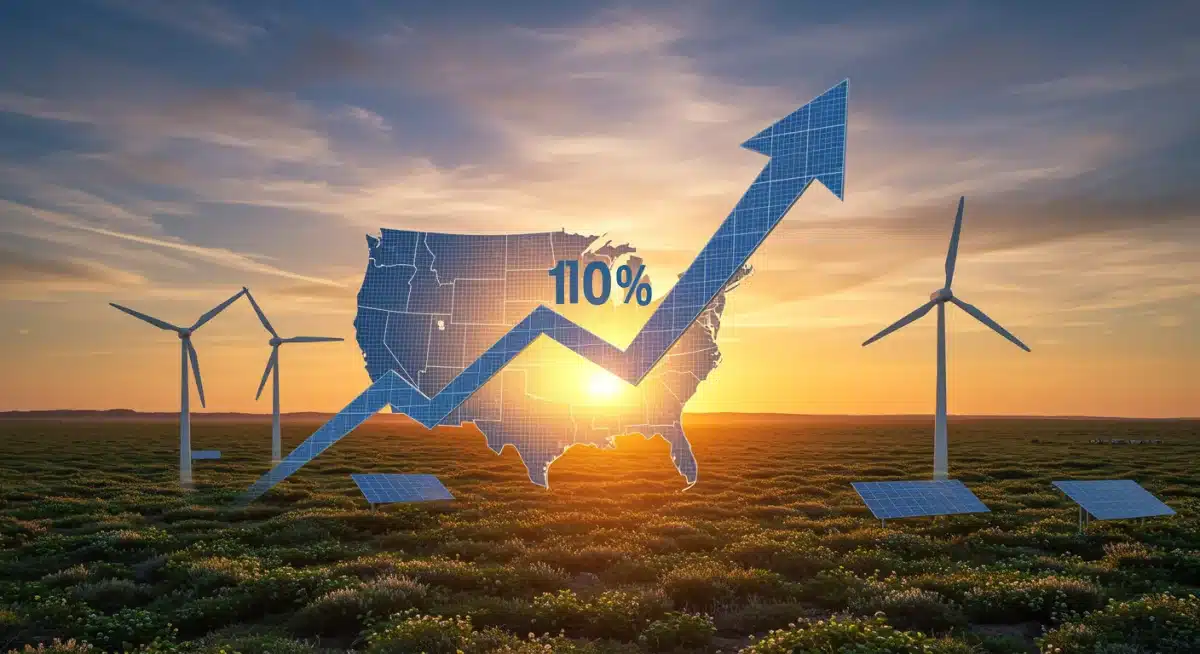
A groundbreaking new report has sent ripples of optimism through the energy sector, revealing an impressive 10% increase in renewable energy adoption across the US in 2026. This significant leap forward underscores a pivotal moment in America’s transition towards a more sustainable and environmentally friendly energy landscape. The report, compiled by leading energy analysts and environmental scientists, details the multifaceted factors contributing to this remarkable growth, ranging from progressive policy initiatives to technological advancements and shifting consumer preferences. Understanding the nuances of this surge in US Renewable Energy is crucial for policymakers, investors, and the general public alike, as it paints a vivid picture of a cleaner, more resilient energy future.
The findings indicate that this 10% rise is not merely a statistical anomaly but rather a robust trend driven by sustained investment and a growing commitment to decarbonization. This article will delve into the specifics of the report, exploring the key drivers behind this growth, the regional disparities and successes, the economic and environmental implications, and what this means for the future of energy in the United States. As the global community grapples with the urgent challenges of climate change, the US’s progress in renewable energy adoption offers a beacon of hope and a blueprint for other nations to follow.
The Driving Forces Behind the 10% Surge in US Renewable Energy Adoption
Several critical factors have converged to propel the United States towards this significant milestone in US Renewable Energy adoption. One of the primary catalysts has been the sustained legislative support at both federal and state levels. Policies such as extended tax credits for solar and wind projects, coupled with renewable portfolio standards (RPS) in numerous states, have created a fertile ground for renewable energy development. These incentives have not only made renewable energy more financially attractive for developers but have also spurred innovation and reduced the overall cost of clean energy technologies.
Technological advancements have played an equally crucial role. The efficiency of solar panels has improved dramatically, and the cost per watt has plummeted over the past decade, making solar power increasingly competitive with traditional fossil fuels. Similarly, wind turbine technology has evolved, leading to larger, more efficient turbines capable of generating more electricity at lower operational costs. Battery storage solutions have also seen significant breakthroughs, addressing the intermittency challenge inherent in many renewable sources and making them more reliable components of the grid.
Furthermore, a growing awareness and concern for climate change among the American public have fueled demand for clean energy alternatives. Consumers and businesses are increasingly seeking ways to reduce their carbon footprint, leading to greater investment in rooftop solar, community solar projects, and purchasing decisions that favor companies committed to renewable energy. This grassroots support, combined with corporate sustainability initiatives, has created a powerful market pull for US Renewable Energy solutions.
Investment in infrastructure has also been a significant contributor. Upgrades to the national grid to better integrate renewable energy sources, along with the development of new transmission lines, have facilitated the large-scale deployment of wind and solar farms in optimal locations. The synergy of policy, technology, public demand, and infrastructure development has created a powerful momentum that is reshaping the US energy landscape.
Regional Disparities and Success Stories in Renewable Energy Growth
While the 10% increase in US Renewable Energy adoption is a national average, the report highlights significant regional variations in growth and deployment. Certain states and regions have emerged as leaders, demonstrating impressive progress due to a combination of favorable natural resources, supportive policies, and proactive community engagement. For instance, states in the Sun Belt continue to lead in solar power generation, benefiting from abundant sunshine and established solar industries. California, Texas, and Florida remain at the forefront of solar capacity expansion, with significant investments in utility-scale solar farms and widespread residential installations.
The Midwest and Great Plains regions have solidified their positions as wind energy powerhouses. States like Iowa, Kansas, and Oklahoma, with their vast open spaces and consistent wind patterns, have seen substantial growth in wind turbine installations. These states often boast some of the highest percentages of electricity generated from wind, showcasing the immense potential of this renewable resource. Offshore wind, while still nascent in the US, is also beginning to gain traction, particularly in the Northeast, with projects off the coasts of Massachusetts and New York poised to contribute significantly to the regional energy mix in the coming years.
The report also points to the rise of innovative hybrid projects, combining solar and wind generation with advanced battery storage, particularly in the Western states. These projects are demonstrating enhanced grid stability and reliability, proving that renewable energy can be a consistent and dependable power source. Furthermore, states with strong community solar programs and net metering policies have seen greater distributed generation, empowering individual homeowners and businesses to become active participants in the energy transition.
Despite these successes, the report acknowledges that some regions still face challenges, including regulatory hurdles, grid integration complexities, and resistance from entrenched fossil fuel interests. However, the overall trend indicates a widespread commitment to overcoming these obstacles, with states learning from each other’s successes and adapting best practices to accelerate their own renewable energy transitions. The diverse approaches and varying degrees of success across the US provide valuable insights into the most effective strategies for promoting US Renewable Energy adoption on a broader scale.
Economic Impacts of Increased Renewable Energy Adoption
The 10% increase in US Renewable Energy adoption is not just an environmental triumph; it also carries substantial economic benefits. The report meticulously details how the expansion of renewable energy has spurred job creation, attracted significant investment, and fostered economic growth across various sectors. The renewable energy industry is a major employer, creating jobs in manufacturing, installation, operations, maintenance, research and development, and project management. These are often well-paying jobs that contribute to local economies, particularly in rural areas where large-scale solar and wind farms are frequently developed.
Investment in renewable energy infrastructure has also seen a dramatic uptick. Billions of dollars are being poured into new projects, from utility-scale solar arrays to offshore wind farms and advanced battery storage facilities. This investment not only stimulates economic activity but also enhances energy independence by reducing reliance on volatile fossil fuel markets and decreasing the need for imported energy resources. The stability offered by domestically sourced renewable energy can lead to more predictable energy costs for consumers and businesses.
Moreover, the decreasing cost of renewable electricity is translating into savings for consumers. As more renewable energy comes online, it often displaces more expensive forms of generation, leading to lower wholesale electricity prices. This benefits households and businesses by reducing their utility bills, freeing up capital for other expenditures or investments. The economic ripple effect extends to local communities through property tax revenues from renewable energy projects, which can fund schools, infrastructure improvements, and other public services.
The report also highlights the growth of an entire ecosystem of ancillary industries supporting the renewable energy sector, including specialized manufacturing, consulting services, and financial institutions. This diversification of the economy away from traditional energy sources fosters innovation and creates new opportunities for entrepreneurship. The economic case for US Renewable Energy is stronger than ever, demonstrating that environmental stewardship and economic prosperity can go hand-in-hand.
Environmental Benefits and Decarbonization Efforts
The environmental implications of a 10% increase in US Renewable Energy adoption are profoundly positive. The most significant benefit is the substantial reduction in greenhouse gas emissions. By replacing fossil fuel-derived electricity with clean energy sources like solar and wind, the US is making considerable strides in its efforts to combat climate change. The report quantifies the avoided carbon emissions, illustrating the tangible impact of this transition on the nation’s carbon footprint. This reduction is critical for meeting national and international climate targets and mitigating the long-term effects of global warming.
Beyond carbon emissions, increased renewable energy deployment also leads to a decrease in other harmful air pollutants. Traditional power plants release pollutants such as sulfur dioxide, nitrogen oxides, and particulate matter, which contribute to smog, acid rain, and respiratory illnesses. Renewable energy sources produce little to no air pollution during operation, leading to cleaner air and improved public health outcomes. This is particularly beneficial for communities historically burdened by pollution from fossil fuel facilities.
The report also touches upon the reduced water consumption associated with renewable energy. Thermoelectric power plants, which typically burn fossil fuels, require vast amounts of water for cooling. Solar photovoltaic and wind power generation, in contrast, consume very little water, making them a more sustainable option in regions facing water scarcity. This aspect becomes increasingly important as climate change exacerbates drought conditions in many parts of the US.
Furthermore, the shift to renewable energy promotes land restoration and reduces the environmental impact of resource extraction. While renewable energy projects require land, their footprint is often less disruptive than mining and drilling operations for fossil fuels. Many renewable projects can coexist with agricultural activities or be developed on previously disturbed lands, offering a more sustainable approach to energy production. The cumulative environmental benefits of this 10% surge in US Renewable Energy adoption represent a critical step towards a healthier planet and a more sustainable future for all.
Challenges and Opportunities for Future Growth
Despite the encouraging 10% increase in US Renewable Energy adoption, the path forward is not without its challenges. The report candidly addresses the hurdles that still need to be overcome to sustain and accelerate this growth. One of the primary challenges lies in grid modernization. The existing electricity grid was designed for centralized, dispatchable power plants, not for the distributed and intermittent nature of many renewable sources. Integrating a higher percentage of renewables requires significant investments in smart grid technologies, advanced transmission infrastructure, and sophisticated energy management systems to ensure reliability and stability.
Permitting and siting issues also continue to pose obstacles. Large-scale renewable energy projects often face complex regulatory processes and local opposition, which can delay development and increase costs. Streamlining these processes while ensuring environmental protection and community engagement is crucial for future expansion. Land use conflicts, particularly for large solar and wind farms, require careful planning and stakeholder collaboration to find mutually beneficial solutions.
Another area of focus is energy storage. While battery technology has advanced significantly, further innovation and cost reductions are needed to make long-duration storage solutions more widely available and affordable. This will be essential for balancing supply and demand as the share of intermittent renewables on the grid grows. Research and development into other storage technologies, such as pumped hydro and green hydrogen, also present promising opportunities.
However, these challenges also present significant opportunities for innovation and investment. The need for grid modernization, for instance, opens up a vast market for new technologies and services. The demand for skilled labor in the renewable energy sector creates opportunities for workforce development and training programs. Continued policy support, including stable tax incentives and carbon pricing mechanisms, can further de-risk investments and accelerate the transition. The report emphasizes that addressing these challenges proactively will be key to unlocking even greater potential for US Renewable Energy growth in the years to come.
The Role of Policy and Innovation in Sustaining Momentum
The continued momentum of US Renewable Energy adoption is inextricably linked to robust policy frameworks and relentless technological innovation. The report underscores the critical role that government policies have played and will continue to play in shaping the energy landscape. Long-term, stable federal and state policies, such as production tax credits (PTCs) and investment tax credits (ITCs), provide the certainty that investors and developers need to commit to large-scale projects. Predictable regulatory environments reduce risk and attract capital, which is essential for scaling up renewable energy deployment.
Beyond financial incentives, policies that promote grid modernization, inter-state transmission, and streamlined permitting are vital. Developing regional transmission organizations (RTOs) that can efficiently manage power flows across state lines, and implementing smart grid technologies that can dynamically balance supply and demand, are crucial for integrating higher percentages of intermittent renewables. Furthermore, policies that support research and development into next-generation renewable technologies, such as advanced geothermal, wave energy, and sustainable biofuels, will ensure a diversified and resilient clean energy portfolio.
Innovation, however, extends beyond just new energy sources. It encompasses advancements in energy efficiency, demand-side management, and digitalization of the energy system. Smart homes and buildings, for example, can optimize energy consumption based on real-time grid conditions and renewable energy availability. Artificial intelligence and machine learning are being deployed to forecast renewable energy generation more accurately and to manage grid operations more efficiently, thereby minimizing waste and maximizing the utilization of clean power.
The interplay between policy and innovation creates a virtuous cycle. Policies can incentivize innovation, and successful innovations can, in turn, inform and strengthen future policies. This collaborative ecosystem is fundamental to overcoming existing barriers and accelerating the transition to a fully decarbonized energy system. The report’s findings clearly demonstrate that a sustained commitment to both progressive policy and cutting-edge innovation will be paramount for the US to continue its impressive trajectory in US Renewable Energy adoption.
Community Engagement and Equity in the Energy Transition
As the nation celebrates a 10% increase in US Renewable Energy adoption, the report also emphasizes the critical importance of community engagement and ensuring an equitable energy transition. The benefits of renewable energy – cleaner air, job creation, and energy independence – must be accessible to all communities, including those that have historically been underserved or disproportionately affected by pollution from fossil fuel industries. Achieving energy equity means actively involving local communities in the planning and development of renewable energy projects.
Community solar programs, for instance, allow individuals and businesses who cannot install solar panels on their own roofs to subscribe to a local solar farm and receive credits on their electricity bills. These programs are particularly beneficial for renters, low-income households, and those with unsuitable rooftops. Policies that support community ownership and local benefits from renewable energy projects can foster greater public acceptance and ensure that the economic advantages are widely distributed.
Furthermore, the transition to a clean energy economy must include robust workforce development and training programs that prepare workers from traditional energy sectors for new jobs in renewable energy. This just transition ensures that no community is left behind as the economy shifts. Investments in green jobs training, apprenticeships, and educational initiatives can empower individuals with the skills needed to thrive in the growing renewable energy industry.
Addressing environmental justice concerns is another key aspect of an equitable transition. Siting new renewable energy infrastructure must be done transparently and with meaningful community input, avoiding the concentration of projects in already burdened areas. The report advocates for policies that prioritize investments in historically marginalized communities, ensuring they benefit from the clean energy revolution. By prioritizing community engagement and equity, the US Renewable Energy transition can be not only environmentally sound but also socially just and inclusive.
The Global Context: US Renewable Energy Leadership
The 10% increase in US Renewable Energy adoption in 2026 places the nation in an increasingly prominent position on the global stage of clean energy leadership. The report contextualizes the US’s progress within international efforts to combat climate change and transition to sustainable energy systems. As one of the world’s largest economies and greenhouse gas emitters, the US’s commitment to renewable energy sends a powerful signal to other nations and demonstrates the feasibility of rapid decarbonization.
This surge in adoption can inspire other developed and developing countries to accelerate their own clean energy transitions. The technological advancements and policy innovations pioneered in the US can serve as valuable case studies and blueprints for nations seeking to expand their renewable energy portfolios. International collaborations on research and development, sharing of best practices, and joint investment initiatives can further amplify the global impact of the US’s progress.
Moreover, the growth of the US Renewable Energy industry strengthens its competitiveness in the global market. As the demand for clean energy technologies and expertise grows worldwide, US companies are well-positioned to export their innovations and services, creating new economic opportunities and fostering international collaboration on climate solutions. This leadership extends to diplomatic efforts, where the US can advocate for stronger global climate action and facilitate technology transfer to support renewable energy deployment in emerging economies.
The report underscores that while domestic progress is paramount, addressing climate change is a global endeavor. The US’s success in increasing renewable energy adoption contributes significantly to collective global goals, demonstrating that ambitious climate action is achievable and beneficial. This positive momentum reinforces the nation’s role as a key player in shaping a sustainable and prosperous future for the entire planet.
Conclusion: A Green Horizon for the United States
The new report detailing a 10% increase in renewable energy adoption across the US in 2026 marks a momentous achievement in the nation’s journey towards a sustainable future. This significant progress is a testament to the powerful combination of strategic policy, groundbreaking technological innovation, increasing public demand, and robust economic investment. From the sun-drenched solar farms of the Southwest to the towering wind turbines of the Great Plains and the emerging offshore wind projects in the Northeast, renewable energy is rapidly transforming the American energy landscape.
The economic benefits are clear: job creation, increased energy independence, and lower electricity costs for consumers. Environmentally, the reduction in greenhouse gas emissions and harmful air pollutants represents a critical step in mitigating climate change and improving public health. While challenges such as grid modernization and permitting complexities remain, they also present unparalleled opportunities for further innovation and investment.
As the US continues to champion community engagement and strive for energy equity, ensuring that all Americans benefit from this transition, its leadership on the global stage becomes even more pronounced. The progress made in US Renewable Energy adoption serves as an inspiring example for nations worldwide, demonstrating that a cleaner, more resilient, and economically vibrant energy future is not just a dream, but an achievable reality. The horizon is indeed green, and the path forward is illuminated by the promise of abundant, clean energy for generations to come.