Supply Chain Disruptions: 15% Worsening Expected in Q1 2025 – Consumer Impact Report
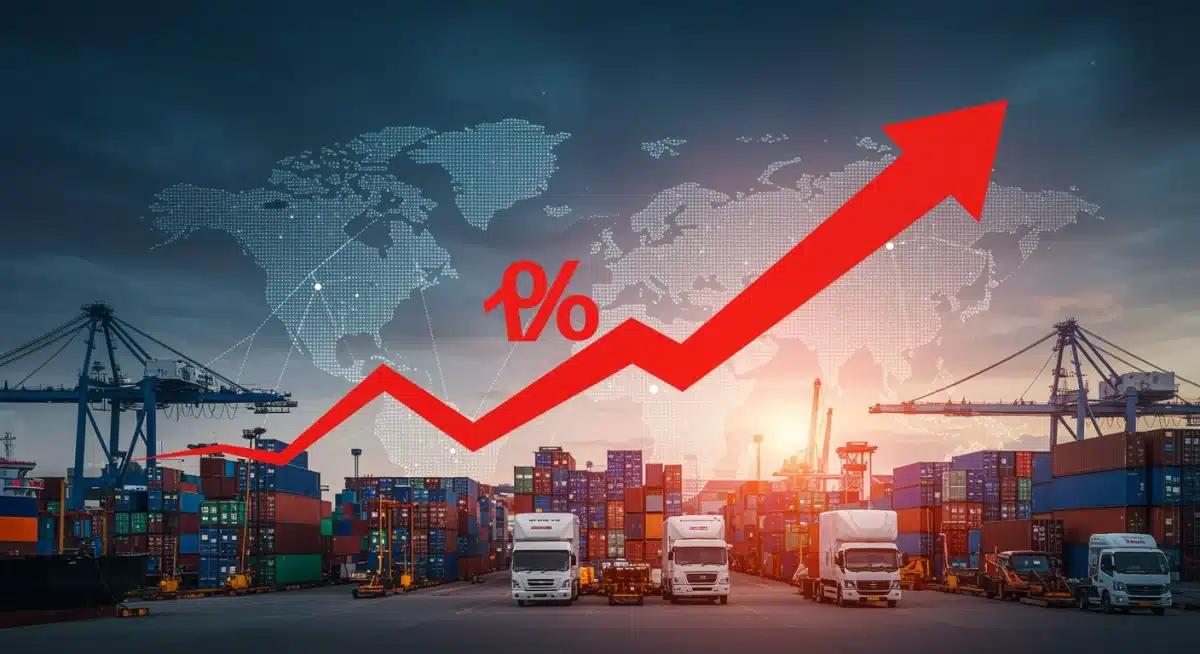
Supply chain disruptions are projected to escalate by 15% in Q1 2025, exerting significant pressure on consumer prices, product availability, and overall economic stability, necessitating immediate attention to mitigate adverse effects.
Breaking News: Supply Chain Disruptions Expected to Worsen by 15% in Q1 2025 – Consumer Impact Report (RECENT UPDATES, FINANCIAL IMPACT) indicates a critical period ahead for global trade and local economies. This forecast suggests that businesses and consumers alike must prepare for increased challenges, ranging from higher prices to reduced product availability. Understanding the underlying causes and potential remedies is crucial for navigating these turbulent economic waters effectively.
The Looming Threat: Understanding Q1 2025 Projections
The latest reports paint a concerning picture for the global economy, with projections indicating a significant exacerbation of supply chain issues in the first quarter of 2025. This isn’t merely a continuation of existing problems; it’s an anticipated intensification that demands proactive strategies from all stakeholders. The 15% worsening forecast is not just a number; it represents a tangible threat to economic stability and consumer welfare.
Analyzing these projections requires a deep dive into the factors contributing to this downturn. Geopolitical tensions, persistent labor shortages, and the increasing frequency of climate-related events are coalescing to create a perfect storm for global logistics. These elements interact in complex ways, making simple solutions elusive and comprehensive strategies essential.
Key Drivers of Worsening Disruptions
Several critical factors are converging to amplify supply chain challenges. Recognizing these drivers is the first step toward developing resilient solutions.
- Geopolitical Instability: Conflicts and trade disputes continue to reroute shipping lanes and impose tariffs, adding costs and delays.
- Labor Shortages: A persistent lack of qualified workers in logistics, trucking, and manufacturing sectors hampers operational efficiency.
- Climate Change Impacts: Extreme weather events increasingly disrupt transportation infrastructure and agricultural output, creating bottlenecks.
- Cybersecurity Threats: Growing cyberattacks on logistics systems can paralyze operations, leading to significant delays and data breaches.
The cumulative effect of these drivers is expected to create a ripple effect across industries, from raw material sourcing to final product delivery. Businesses that fail to anticipate and adapt to these evolving conditions risk substantial financial losses and damage to their market standing. Consumers, in turn, will bear the brunt of these inefficiencies through higher prices and limited choices.
Recent Updates and Emerging Trends in Supply Chain Management
The dynamic nature of global supply chains means that new challenges and trends are constantly emerging. Recent updates highlight a shift in how companies are approaching risk management and resilience building. There’s a growing recognition that traditional just-in-time inventory models, while efficient in stable times, are vulnerable during periods of high volatility.
Many organizations are now exploring diversified sourcing strategies and nearshoring options to reduce reliance on single points of failure. This strategic pivot aims to create more robust and adaptable supply networks capable of withstanding unforeseen shocks. However, implementing these changes is a complex and costly endeavor, requiring significant investment and strategic foresight.
Technological Innovations for Resilience
Technology is playing an increasingly vital role in mitigating supply chain risks. Advanced analytics, artificial intelligence, and blockchain are being leveraged to enhance visibility, predictability, and security across the logistics network.
- AI-Powered Forecasting: AI algorithms can analyze vast datasets to predict potential disruptions, allowing for proactive adjustments.
- Blockchain for Transparency: Distributed ledger technology offers immutable records, improving traceability and reducing fraud within the supply chain.
- Automation in Logistics: Robotics and automated systems in warehouses and ports can offset labor shortages and increase operational speed.
- Digital Twins: Creating virtual models of physical supply chains helps simulate scenarios and optimize decision-making without real-world risk.
These technological advancements, while promising, require substantial investment in infrastructure and training. The adoption rate varies across industries and regions, creating a disparity in resilience levels. Companies that embrace these innovations early are likely to gain a competitive advantage in a volatile market.
Financial Impact: Businesses Brace for Higher Costs and Reduced Margins
The projected 15% worsening of supply chain disruptions in Q1 2025 is set to have profound financial implications for businesses across all sectors. Companies are already grappling with inflated operational costs, including increased shipping fees, raw material prices, and labor expenses. The upcoming period promises to intensify these pressures, leading to reduced profit margins and potential revenue shortfalls.
Small and medium-sized enterprises (SMEs) are particularly vulnerable, often lacking the financial reserves and diversified supplier networks of larger corporations. They may find it challenging to absorb rising costs, potentially leading to price increases for consumers or, in severe cases, business closures. Investors are closely monitoring these trends, as prolonged disruptions can erode shareholder value and dampen economic growth prospects.
Many businesses are also facing pressure to maintain competitive pricing despite escalating input costs. This dilemma forces tough decisions between absorbing losses, passing costs to consumers, or streamlining operations to find efficiencies. Each choice carries its own set of risks and rewards, underscoring the delicate balancing act required in today’s economic climate.
Consumer Impact Report: Prices, Availability, and Purchasing Power
The direct consequences of worsening supply chain disruptions will be felt acutely by consumers. The anticipated 15% increase in disruptions translates directly into higher prices for a wide array of goods, from everyday necessities to luxury items. This inflationary pressure diminishes consumer purchasing power, forcing households to make difficult choices about their spending.
Product availability is another major concern. Delays in manufacturing and transportation mean that popular items may be out of stock for extended periods, leading to frustration and unmet demand. This scarcity can drive up prices further, creating a vicious cycle that disproportionately affects lower-income households. The cumulative effect is a decline in overall quality of life and increased economic insecurity for many.


Moreover, the psychological impact on consumers cannot be overlooked. The constant uncertainty about product availability and rising costs can lead to increased anxiety and reduced consumer confidence, which in turn can dampen overall economic activity. Businesses must communicate transparently with their customers about potential delays and price changes to manage expectations and maintain trust.
Strategies for Mitigation: What Businesses and Governments Can Do
Addressing the forecasted worsening of supply chain disruptions requires a multi-faceted approach involving both businesses and governmental bodies. Companies need to prioritize resilience, while governments can facilitate a more stable and predictable operating environment. Collaboration and innovation are key to navigating the challenges ahead and building more robust global trade systems.
For businesses, this means moving beyond reactive measures to proactive risk management. Diversifying supply bases, investing in localized production where feasible, and enhancing inventory management are critical steps. The goal is to create flexible supply chains that can adapt quickly to unexpected events rather than being overwhelmed by them.
Governmental and Industry-Wide Initiatives
Governments have a crucial role in fostering a resilient supply chain ecosystem. Policy interventions, infrastructure investments, and international cooperation can significantly alleviate the pressures faced by businesses.
- Infrastructure Investment: Upgrading ports, roads, and digital networks can improve logistical efficiency and reduce bottlenecks.
- Trade Facilitation Policies: Streamlining customs procedures and reducing trade barriers can expedite the flow of goods.
- Strategic Stockpiling: Governments can create reserves of critical goods and raw materials to buffer against sudden shortages.
- International Cooperation: Collaborative efforts to address global challenges like climate change and geopolitical instability are essential for long-term stability.
Industry associations can also play a vital role by sharing best practices, conducting research, and advocating for policies that support supply chain resilience. Collective action can lead to more effective solutions than individual efforts alone, reinforcing the importance of a unified response to a global problem.
Long-Term Outlook: Building Resilient and Sustainable Supply Chains
Looking beyond Q1 2025, the long-term outlook for supply chains points towards an imperative for greater resilience and sustainability. The recurring nature of disruptions highlights the need for systemic changes rather than temporary fixes. Businesses that invest in future-proof strategies now will be better positioned to thrive in an increasingly unpredictable global landscape.
Sustainability is emerging as a core component of future supply chain design. This includes reducing environmental impact, promoting ethical labor practices, and fostering circular economy principles. A sustainable supply chain is inherently more resilient, as it reduces reliance on finite resources and minimizes exposure to regulatory and reputational risks.
The shift towards regionalization and diversification is likely to continue, with companies seeking to balance the cost efficiencies of globalization with the security of localized production. This doesn’t necessarily mean an end to global trade, but rather a rebalancing that prioritizes stability and adaptability. The goal is to create supply chains that are not only efficient but also robust enough to withstand a wide range of external pressures.
Ultimately, the challenges of supply chain disruptions present an opportunity for innovation and transformation. By embracing new technologies, fostering collaboration, and prioritizing long-term resilience, businesses and governments can build a more stable and sustainable global economy for the future. The lessons learned from the current disruptions will be invaluable in shaping these future-oriented strategies.
| Key Point | Brief Description |
|---|---|
| Q1 2025 Forecast | Supply chain disruptions expected to worsen by 15%, impacting global trade and local economies. |
| Consumer Impact | Higher prices, reduced product availability, and decreased purchasing power for households. |
| Business Challenges | Increased operational costs, reduced profit margins, and pressure to maintain competitive pricing. |
| Mitigation Strategies | Diversified sourcing, technological adoption, government infrastructure investment, and international cooperation. |
Frequently Asked Questions About Supply Chain Disruptions
A 15% worsening indicates a significant increase in challenges like delays, cost hikes, and product shortages compared to previous periods. Businesses and consumers should prepare for heightened instability in global logistics and trade flows, affecting various sectors from manufacturing to retail.
Consumers will likely face higher prices for goods due to increased transportation and production costs. Additionally, product availability may decrease, leading to longer wait times for purchases and potentially limited choices in stores. This can reduce overall purchasing power.
Key causes include ongoing geopolitical tensions, persistent global labor shortages in logistics, and the increasing frequency and intensity of climate-related events disrupting transportation and production. Cybersecurity Threats to logistics systems also contribute to instability.
Businesses can mitigate impacts by diversifying their supplier base, exploring nearshoring or reshoring options, investing in inventory optimization, and adopting advanced technologies like AI for forecasting and blockchain for transparency. Proactive risk management is crucial.
Governments can invest in critical infrastructure (ports, roads), streamline trade policies, consider strategic stockpiling of essential goods, and foster international cooperation to address global challenges. These actions create a more stable environment for businesses to operate.
Conclusion
The forecast for a 15% worsening of supply chain disruptions in Q1 2025 presents a significant challenge for the global economy, impacting both businesses and consumers. While the immediate outlook suggests increased costs, reduced availability, and economic pressures, it also serves as a catalyst for fundamental change. By embracing advanced technologies, fostering collaboration, and prioritizing long-term resilience, businesses and governments can build a more stable and sustainable global economy for the future. The lessons learned from these impending challenges will be invaluable in shaping these future-oriented strategies.