Online vs. In-Person Degrees 2026: ROI for US Students
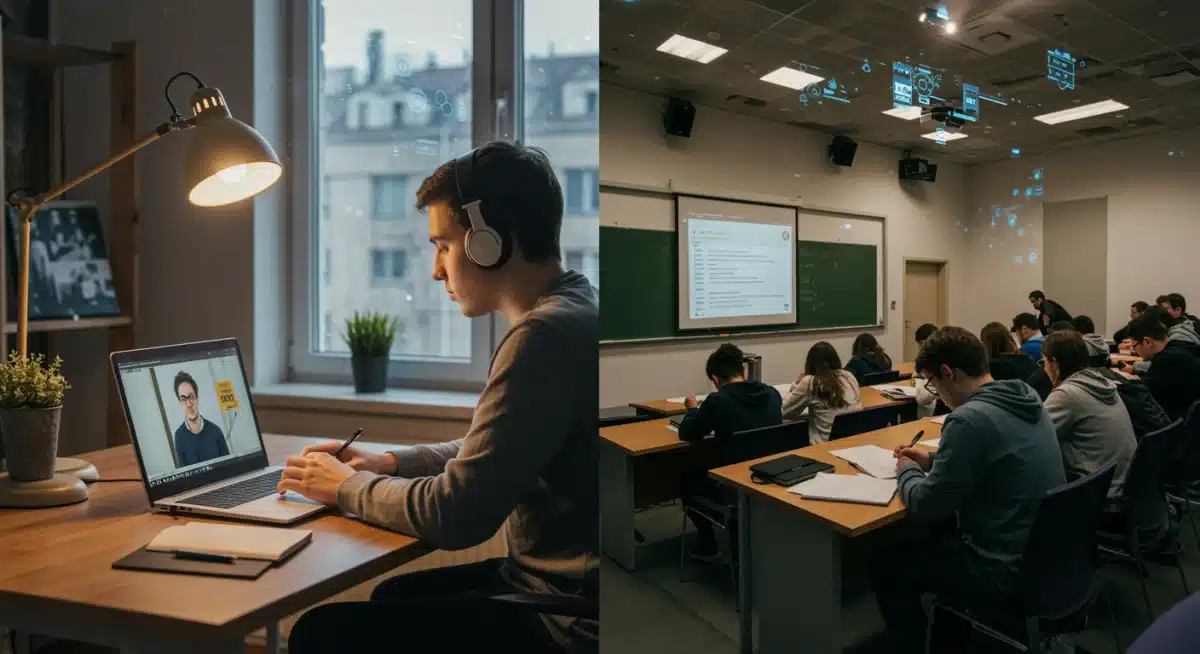
Choosing between an online and an in-person degree in 2026 for US students involves navigating evolving educational landscapes to determine the optimal return on investment for their future.
The decision between pursuing an online or an in-person degree has become increasingly complex, especially as we look towards 2026. For US students, understanding which educational model offers a better return on investment (ROI) is crucial. This choice impacts not only immediate costs but also long-term career prospects and personal development, making a careful comparison essential. Comparing Online vs. In-Person Degrees in 2026: Which Educational Model Offers a Better ROI for US Students? requires a deep dive into various factors.
The evolving landscape of higher education in 2026
Higher education in 2026 is a dynamic environment, shaped by technological advancements and shifting economic demands. The traditional campus experience, once the sole benchmark for quality, now shares the stage with sophisticated online learning platforms. This evolution has profound implications for how students access education and how their degrees are perceived in the job market.
The rapid integration of AI-powered learning tools and virtual reality simulations has transformed both online and in-person classrooms. These technologies are not just enhancing delivery but also personalizing the learning experience, making education more accessible and engaging than ever before. Understanding these changes is the first step in evaluating the ROI of different degree paths.
Technological integration and learning modalities
In 2026, technology is no longer a supplement but an integral part of higher education. Online platforms boast interactive modules, real-time collaboration tools, and AI tutors that provide instant feedback. In-person institutions, not to be outdone, leverage smart classrooms and blended learning models that combine face-to-face instruction with digital resources. This convergence blurs the lines between traditional and virtual learning.
- AI-driven personalized learning paths
- Virtual and augmented reality labs
- Real-time collaborative digital workspaces
Changing employer perceptions and demands
Employer attitudes towards online degrees have significantly matured. What was once viewed with skepticism is now often seen as a testament to a candidate’s self-discipline and adaptability. Companies in 2026 are increasingly focused on demonstrable skills and competencies, regardless of how they were acquired. This shift benefits online graduates, provided their programs are reputable and rigorous.
The key takeaway is that the educational model itself is becoming less critical than the quality of the program and the skills gained. Both online and in-person institutions are under pressure to deliver relevant, career-focused education that prepares students for the future workforce. This competitive environment drives innovation and ensures that students have a wider array of high-quality options.
The educational landscape in 2026 offers unprecedented flexibility and technological integration. This evolution makes the decision between online and in-person degrees more nuanced, requiring students to consider not just tradition but also the practical advantages and disadvantages of each model in a tech-driven world. The perceived value of a degree is increasingly tied to its practical application and the skills it imparts, rather than solely its delivery format.
Cost analysis: tuition, fees, and hidden expenses
When evaluating the return on investment for a degree, a thorough cost analysis is paramount. Beyond tuition fees, students must consider a range of expenses that can significantly impact the overall financial burden. This section delves into the various costs associated with both online and in-person degrees in 2026 for US students.
The sticker price of tuition can often be misleading. Online programs frequently boast lower tuition rates, but it’s essential to scrutinize what these rates include. Similarly, in-person degrees come with a host of associated costs that can accumulate rapidly, making them potentially more expensive than initially perceived.
Tuition and fees: a direct comparison
Generally, online degree programs tend to have lower tuition fees than their in-person counterparts. This is often due to reduced overheads for facilities and administrative costs. However, some prestigious online programs from top universities may have tuition rates comparable to, or even exceeding, some traditional programs. Students should always compare specific program costs.
- Lower tuition for many online programs
- Potential for in-state vs. out-of-state tuition differences in online learning
- Varying fee structures for technology and administrative services
Accommodation and living expenses
One of the most significant cost differences lies in accommodation and living expenses. In-person students often incur substantial costs for on-campus housing, meal plans, transportation, and daily living in a college town. Online students, on the other hand, can often continue living at home or in more affordable locations, dramatically reducing their overall expenses.
Even if an online student chooses to relocate, their housing choices are not dictated by proximity to a specific campus, offering greater flexibility and potential savings. This factor alone can swing the ROI pendulum significantly in favor of online learning for many budget-conscious students.
Opportunity costs and hidden expenses
Beyond direct financial costs, opportunity costs play a crucial role. In-person degrees, especially full-time programs, often require students to put their careers on hold or significantly reduce work hours, leading to lost income. Online programs, conversely, offer the flexibility to continue working full-time or part-time, maintaining income streams throughout their studies.
- Lost income from reduced work hours (in-person)
- Childcare costs for in-person attendance
- Commuting expenses and parking fees
- Study materials and technology requirements (can vary for both)
A comprehensive cost analysis reveals that while tuition might be a primary concern, the ancillary expenses and lost income often paint a clearer picture of a degree’s true cost. For many US students in 2026, the cumulative savings from an online degree, particularly in living and opportunity costs, can make it a more financially attractive option, significantly boosting its potential ROI.
Flexibility and accessibility: tailoring education to life
The appeal of online versus in-person degrees often hinges on the level of flexibility and accessibility each model provides. In 2026, students are increasingly seeking educational pathways that can seamlessly integrate with their personal and professional lives, rather than demanding a complete restructuring of them. This section explores how each format caters to varying student needs.
For many adult learners, working professionals, or students with family responsibilities, the traditional nine-to-five class schedule of an in-person degree is simply not feasible. Online education has emerged as a transformative solution, offering a level of adaptability that was once unimaginable in higher education.
Scheduling and pace of study
Online degrees typically offer asynchronous learning, allowing students to access course materials and complete assignments on their own schedule. This autonomy is invaluable for those balancing work, family, or other commitments. In-person degrees, while offering a structured routine, often demand rigid attendance and adherence to a fixed academic calendar.
The ability to set one’s own pace, within reasonable deadlines, means online students can tailor their education to fit their unique life circumstances. This often translates to reduced stress and a higher likelihood of program completion, contributing positively to the overall ROI.
Geographic location and program availability
One of the most significant advantages of online education is the elimination of geographic barriers. Students can pursue degrees from institutions across the country, or even globally, without needing to relocate. This expands access to specialized programs or top-tier universities that might otherwise be out of reach due to location or cost of living.
- Access to niche programs not locally available
- No relocation required for prestigious institutions
- Broader selection of universities and courses
Support systems and work-life balance
Both online and in-person models offer support systems, though their delivery differs. In-person students benefit from direct access to faculty, campus resources, and peer networks. Online programs, however, have developed robust virtual support, including online tutoring, virtual office hours, and dedicated student success advisors, all accessible remotely.
The flexibility of online learning often allows for a better work-life balance, as students can integrate their studies into their existing routines. This can prevent burnout and enable continued personal and professional growth alongside academic pursuits. For students prioritizing such balance, the online model presents a compelling case.
Ultimately, the choice between online and in-person degrees in 2026 is deeply personal, driven by individual needs for flexibility and accessibility. While in-person degrees provide structure and immediate community, online degrees offer unparalleled adaptability, enabling students to pursue higher education without sacrificing other crucial aspects of their lives. This adaptability is a key component of its ROI for a diverse student body.
Career outcomes and employability in 2026
The ultimate measure of any degree’s ROI is its impact on career outcomes and employability. In 2026, the job market is highly competitive and rapidly evolving, placing a premium on practical skills, adaptability, and continuous learning. This section explores how both online and in-person degrees prepare US students for the workforce and are perceived by employers.
While traditional degrees have long been the gold standard, online education has steadily gained traction, with many employers now recognizing the value of remote learning. The key is not just the mode of delivery but the quality of the program and the relevance of the skills acquired.
Employer perceptions and hiring trends
By 2026, employer perceptions of online degrees are largely positive, especially for programs from accredited and reputable institutions. The pandemic accelerated the acceptance of remote work and, consequently, remote learning. Many employers now view online graduates as self-starters with strong time management and digital literacy skills, highly valued in today’s workforce.
However, the reputation of the institution and the specific program still matter. Graduates from well-regarded online programs often find themselves on equal footing with their in-person counterparts. Networking opportunities, though different, are also crucial for both paths.
Skill development and practical application
Both online and in-person degrees aim to equip students with essential skills. In-person programs often emphasize soft skills developed through direct interaction, group projects, and campus leadership roles. Online programs, conversely, foster strong independent learning, digital communication, and problem-solving skills, which are increasingly vital in a remote-first work environment.
- Adaptability and self-discipline (online)
- Teamwork and direct communication (in-person)
- Digital literacy and remote collaboration (online)
- Critical thinking and problem-solving (both)
Post-graduation salary and career advancement
Studies in 2026 show that there is often little statistical difference in post-graduation salaries between online and in-person degree holders from comparable institutions and programs. What truly impacts salary and career advancement are factors like the field of study, the prestige of the university, individual performance, and professional networking.
The flexibility of online learning can also allow students to gain relevant work experience concurrently with their studies, potentially giving them a head start in their careers. This can lead to faster career advancement and higher earning potential post-graduation, further enhancing the ROI of an online degree for many.
In conclusion, the career outcomes and employability of graduates in 2026 are less about the mode of education and more about the quality of the program and the individual’s initiative. Both online and in-person degrees can lead to successful careers, but students must strategically choose programs that align with their career goals and provide in-demand skills, irrespective of the delivery method.
Networking and community building: virtual vs. physical
Networking and community building are often cited as significant advantages of an in-person degree, offering opportunities for face-to-face interaction with peers and faculty. However, in 2026, online platforms have made substantial strides in fostering vibrant virtual communities, challenging the traditional view that meaningful connections can only be forged in person.
The ability to build a professional network and a supportive academic community is crucial for both personal growth and career opportunities. This section compares how online and in-person degrees facilitate these vital connections for US students.
Traditional campus networking
In-person degrees offer unparalleled opportunities for spontaneous interactions. Students can join clubs, attend campus events, participate in study groups, and engage directly with professors during office hours. These organic interactions often lead to lifelong friendships, mentorships, and valuable professional connections that can open doors later in their careers.
- Direct access to faculty and alumni networks
- Participation in campus organizations and sports
- Informal social gatherings and study groups
Virtual community engagement
Online degree programs in 2026 have developed sophisticated mechanisms for virtual community building. Discussion forums, collaborative online projects, virtual study sessions, and social media groups allow students to connect with peers and faculty from diverse backgrounds. Many programs also host virtual career fairs and networking events, mirroring their in-person counterparts.
While these interactions may lack the immediacy of face-to-face meetings, they often foster a global network, connecting students with professionals and academics from various geographical locations. This can be a significant advantage in an increasingly interconnected world.
Alumni networks and professional associations
Both online and in-person graduates can leverage their university’s alumni networks. Many institutions now integrate online alumni platforms, ensuring that all graduates, regardless of their learning modality, have access to mentorship, job postings, and networking events. Professional associations also play a crucial role, providing industry-specific networking opportunities that transcend educational formats.
The key is proactive engagement. Whether online or in-person, students who actively seek out and participate in networking opportunities will reap the most benefits. The mode of delivery merely changes the medium of interaction, not the fundamental need for connection and collaboration.
In summary, while in-person degrees naturally facilitate direct networking, online programs in 2026 have evolved to offer robust virtual community-building opportunities. Students must consider which environment best suits their personality and networking style. Both models can lead to strong professional networks if students are intentional about building relationships and engaging with their academic and professional communities.
Accreditation and program quality: ensuring value
The value and recognition of a degree, whether online or in-person, are fundamentally tied to the accreditation and overall quality of the program. In 2026, students must be diligent in verifying these aspects to ensure their investment yields a worthwhile return. An unaccredited or low-quality program, regardless of its cost or flexibility, offers little to no ROI.
Understanding the nuances of accreditation and how to assess program quality is critical for any US student considering higher education. This section provides an overview of these essential factors.
Understanding accreditation standards
Accreditation is a formal recognition that an educational institution or program meets certain quality standards. In the US, regional and national accrediting agencies are recognized by the Council for Higher Education Accreditation (CHEA) and the U.S. Department of Education. Regional accreditation is generally considered the gold standard and is crucial for transferring credits and being eligible for federal financial aid.
- Regional vs. national accreditation: importance for transferability
- Program-specific accreditation for certain fields (e.g., engineering, nursing)
- Verification through CHEA and Department of Education websites
Assessing program curriculum and faculty
Beyond accreditation, the quality of the curriculum and faculty directly impacts a degree’s value. A strong program will have a curriculum that is up-to-date, relevant to current industry demands, and taught by experienced faculty with academic credentials and real-world expertise. This applies equally to online and in-person programs.
Students should research faculty profiles, course syllabi, and program learning outcomes. For online programs, it’s also important to assess the quality of the digital learning environment and the support provided to students.
Graduate success rates and alumni testimonials
A key indicator of program quality and potential ROI is the success of its graduates. Reputable institutions often publish data on graduate employment rates, average starting salaries, and career advancement. Alumni testimonials and reviews can also provide valuable insights into the practical benefits and challenges of a program.
Looking at these metrics can help prospective students gauge how well a program prepares its graduates for the job market and their chosen careers, regardless of whether the degree was earned online or in person. This due diligence ensures that the investment in education is likely to pay off in the long run.
In conclusion, prioritizing accreditation and program quality is non-negotiable for any student seeking a strong ROI from their degree. Both online and in-person institutions can offer high-quality education, but it is the student’s responsibility to thoroughly research and verify these critical factors before committing to a program. A well-accredited degree from a reputable institution is the foundation of a valuable education.
Future trends and predictions for 2026 and beyond
As we look beyond 2026, the landscape of higher education will continue to evolve, influenced by technological innovation, changing societal needs, and global economic shifts. Understanding these future trends is crucial for US students making long-term educational investments, as they will shape the relevance and ROI of their chosen degree paths.
The distinction between online and in-person learning is likely to become even more blurred, with hybrid models gaining prominence. The emphasis will increasingly be on personalized, skills-based learning, rather than rigid, one-size-fits-all curricula.
Hybrid learning models and micro-credentials
The future of education points towards widespread adoption of hybrid or blended learning models, combining the best aspects of online flexibility with targeted in-person engagement. Additionally, micro-credentials and stackable certificates will become more prevalent, allowing individuals to acquire specific, in-demand skills quickly and build towards full degrees over time.
- Increased prevalence of blended learning environments
- Growth of digital badges and skills-based certifications
- Modular learning pathways for lifelong learners
The role of AI and immersive technologies
Artificial intelligence and immersive technologies like virtual and augmented reality will play an even greater role in education. AI will power more sophisticated adaptive learning systems, personalized tutoring, and automated assessment. VR/AR will create highly realistic and interactive learning environments, from virtual laboratories to historical simulations, enhancing engagement for both online and in-person students.
These technologies will democratize access to high-quality educational experiences, potentially leveling the playing field between well-funded traditional campuses and innovative online providers. The focus will shift from content delivery to experiential learning and skill mastery.
Lifelong learning and career agility
The concept of a single degree lasting a lifetime is rapidly becoming obsolete. In 2026 and beyond, career agility and lifelong learning will be paramount. Graduates will need to continuously update their skills and knowledge to remain competitive in a dynamic job market. Educational institutions, both online and in-person, will need to adapt to offer continuous learning opportunities.
The ROI of a degree will increasingly be measured not just by initial job placement but by its ability to provide a foundation for continuous learning and adaptation throughout a career. Programs that foster critical thinking, problem-solving, and digital fluency will hold the most long-term value.
Looking ahead, the educational landscape promises greater integration, personalization, and a stronger focus on practical skills. For US students, this means the choice between online and in-person degrees will be less about the format and more about the program’s ability to prepare them for a future that demands continuous learning and adaptability. The most robust ROI will come from education that builds a foundation for lifelong growth.
| Key Aspect | Description for ROI |
|---|---|
| Cost Efficiency | Online degrees often reduce living and opportunity costs, enhancing financial ROI. |
| Flexibility & Access | Online learning offers unparalleled scheduling freedom and access to diverse programs. |
| Career Perception | 2026 employers value online degrees from reputable institutions equally for skills. |
| Networking Potential | Both models offer robust networking, with online fostering global connections. |
Frequently asked questions about degree ROI in 2026
By 2026, employer perceptions of online degrees are largely positive, especially from accredited institutions. The focus has shifted to skills and competencies, rather than the mode of delivery. Many employers value the self-discipline and digital literacy often acquired through online learning, viewing it as a testament to adaptability.
While online degrees often have lower tuition, they are not always cheaper. The significant savings typically come from reduced living expenses, accommodation, and opportunity costs like lost income. Some highly specialized or prestigious online programs may have tuition comparable to, or even exceeding, traditional programs. It’s crucial to compare total costs.
In-person programs offer direct, spontaneous networking. Online programs in 2026, however, have advanced virtual tools for community building, including forums, collaborative projects, and virtual events. Both can lead to strong professional networks; the key is active engagement and leveraging alumni resources, which are increasingly online-integrated.
Accreditation is paramount for both online and in-person degrees. A regionally accredited online degree ensures its recognition, eligibility for financial aid, and transferability of credits. Without proper accreditation, a degree, regardless of its mode, will have minimal to no ROI as it won’t be valued by employers or other educational institutions.
Future trends suggest that hybrid learning models, blending online flexibility with strategic in-person interaction, will become increasingly dominant. This approach offers the best of both worlds, catering to diverse student needs and leveraging technological advancements. This evolution will further blur the traditional lines between online and in-person education.
Conclusion
The decision of Comparing Online vs. In-Person Degrees in 2026: Which Educational Model Offers a Better ROI for US Students? is multifaceted, requiring a careful evaluation of financial costs, flexibility, career outcomes, and the quality of the educational experience. While in-person degrees continue to offer traditional campus life and direct interaction, online degrees have emerged as highly credible and often more cost-effective alternatives, particularly for students seeking flexibility and diverse program access. The evolving landscape of higher education, driven by technological advancements and shifting employer perceptions, indicates that the value of a degree is increasingly tied to its accreditation, curriculum relevance, and the skills it imparts, rather than solely its delivery method. Ultimately, the optimal ROI for US students in 2026 will come from a well-researched choice that aligns with their personal circumstances, learning style, and long-term career aspirations, ensuring a valuable investment in their future.