Healthcare Reform 2026: What the Latest Congressional Debates Mean for Insurance Coverage and Access by September
The landscape of American healthcare is perpetually in flux, a testament to the complex interplay of societal needs, economic realities, and political ideologies. As we approach 2026, the discussions in Congress around Healthcare Reform 2026 have intensified, signaling potential monumental shifts in how millions of Americans access and afford medical care. This article delves deep into the current congressional debates, exploring the various proposals, their potential impacts on insurance coverage and access, and what these developments could mean for you by September.
Understanding the intricacies of Healthcare Reform 2026 requires a look at the historical context that has shaped the current system. From the Social Security Act of 1935, which laid the groundwork for modern social welfare programs, to the landmark Affordable Care Act (ACA) of 2010, each legislative effort has sought to address persistent challenges. These challenges include rising costs, disparities in access, and the ever-present question of who bears the financial burden of healthcare. The current debates are not just about tweaking existing laws; they represent a fundamental re-evaluation of these core principles, with significant implications for individuals, families, and the healthcare industry as a whole.
The Current State of Healthcare in America: A Precursor to Reform
Before dissecting the specifics of Healthcare Reform 2026, it’s crucial to grasp the current state of healthcare in the United States. Despite significant advancements in medical science and technology, the U.S. healthcare system continues to grapple with several persistent issues. High costs remain a primary concern, with the U.S. spending more per capita on healthcare than any other developed nation. This expenditure doesn’t always translate into superior health outcomes, as evidenced by lower life expectancies and higher rates of chronic diseases compared to peer countries. The financial burden often falls disproportionately on individuals, leading to medical debt and bankruptcy, even for those with insurance.
Insurance coverage, while expanded by the ACA, still leaves millions uninsured or underinsured. Gaps in coverage, high deductibles, and co-pays create barriers to essential care, forcing many to delay or forgo necessary medical treatments. Access to care is another critical issue, particularly in rural and underserved urban areas where there’s a shortage of healthcare professionals and facilities. This disparity in access exacerbates health inequities, with marginalized communities often bearing the brunt of these systemic failures.
Technological integration, though promising, also presents challenges. While electronic health records (EHRs) and telehealth have the potential to improve efficiency and access, their implementation has been uneven, and concerns about data privacy and interoperability persist. The pharmaceutical industry also plays a significant role, with high drug prices often cited as a major contributor to overall healthcare costs. These multifaceted challenges form the backdrop against which the Healthcare Reform 2026 debates are unfolding, with policymakers attempting to craft solutions that are both effective and politically viable.
Key Players and Their Agendas in the 2026 Debates
The congressional debates surrounding Healthcare Reform 2026 involve a diverse array of stakeholders, each with their own priorities and perspectives. Understanding these players and their agendas is essential to comprehending the potential outcomes of the reform efforts. On one side, you have the Democratic Party, generally advocating for policies that expand government’s role in healthcare, aiming to achieve universal coverage and reduce out-of-pocket costs. Their proposals often include strengthening the ACA, expanding Medicare or Medicaid eligibility, and negotiating prescription drug prices. They argue that healthcare is a fundamental right and that the government has a responsibility to ensure equitable access for all citizens.
On the other side, the Republican Party typically champions market-based solutions, emphasizing individual choice, competition among providers, and reduced government intervention. Their proposals often involve repealing or replacing the ACA, promoting health savings accounts (HSAs), and encouraging private insurance plans through tax credits or vouchers. They believe that a free-market approach will lead to greater efficiency, lower costs, and higher quality care. These ideological differences form the core of the political gridlock often seen in healthcare reform discussions.
Beyond the two major parties, various advocacy groups, industry lobbyists, and professional organizations exert considerable influence. Pharmaceutical companies, insurance providers, hospital systems, and physician associations all have vested interests in the outcome of Healthcare Reform 2026. Consumer advocacy groups, representing patients and their families, push for reforms that prioritize affordability and access. Each of these players brings their unique concerns and lobbying power to the table, making the legislative process incredibly complex and often contentious. The art of negotiation and compromise will be critical if any meaningful reform is to be achieved by September.
Proposed Reforms and Their Potential Impact on Insurance Coverage
The ongoing congressional debates have brought forth several distinct approaches to Healthcare Reform 2026, each with profound implications for insurance coverage. One prominent set of proposals focuses on shoring up and expanding the Affordable Care Act (ACA). This could include increasing subsidies to make marketplace plans more affordable, expanding Medicaid in states that have not yet done so, and adding a public option to compete with private insurers. The goal here is to reduce the number of uninsured Americans and improve the affordability of coverage for those already insured. If these measures pass, we could see a significant increase in the number of people with comprehensive health insurance by September 2026, potentially lowering the national uninsured rate.
Another set of proposals, often favored by those seeking more market-driven solutions, involves restructuring the current insurance landscape. This might include promoting short-term, limited-duration insurance plans, expanding association health plans, and offering tax credits for individuals to purchase private insurance. Proponents argue these options offer greater flexibility and lower premiums, though critics often point out that such plans may offer less comprehensive coverage and could leave individuals vulnerable to high out-of-pocket costs in the event of serious illness. The impact of such reforms could be a more diverse, but potentially more fragmented, insurance market, with varying levels of coverage depending on individual choices and financial capacity.
Furthermore, discussions around Medicare expansion are also central to Healthcare Reform 2026. Some proposals suggest lowering the eligibility age for Medicare, while others advocate for expanding Medicare benefits to include services like dental, vision, and hearing care. These changes would significantly alter the insurance landscape, particularly for older Americans and those approaching retirement, potentially shifting a larger portion of the population onto government-sponsored insurance programs. The financial implications of such expansions are a major point of contention, with debates revolving around funding mechanisms and their impact on the national budget. The outcome of these discussions will directly influence the types of insurance plans available and their affordability for millions of citizens.
Addressing Access to Care: Beyond Just Having Insurance
Having health insurance is a crucial first step, but Healthcare Reform 2026 also grapples with the equally important issue of access to care. Even with coverage, many individuals face significant barriers to receiving timely and appropriate medical services. These barriers can include a shortage of healthcare providers, particularly in rural and underserved urban areas, long wait times for appointments, and a lack of specialists. Congressional debates are exploring various strategies to enhance access, recognizing that simply expanding insurance coverage without addressing these underlying issues will not fully solve the healthcare crisis.
One major area of focus for Healthcare Reform 2026 is strengthening the healthcare workforce. Proposals include increasing funding for medical schools, nursing programs, and residency training, especially in primary care and specialties that address critical shortages. Incentives for healthcare professionals to practice in underserved areas, such as loan forgiveness programs or enhanced salaries, are also on the table. Expanding the scope of practice for advanced practice nurses (APRNs) and physician assistants (PAs) could also help alleviate physician shortages and improve access to routine care. These measures aim to ensure that there are enough qualified professionals to meet the healthcare needs of the population, regardless of their location.
Telehealth and digital health solutions are another significant component of the discussions around improving access. The pandemic highlighted the potential of telehealth to bridge geographical gaps and provide convenient care. Healthcare Reform 2026 proposals seek to make permanent many of the temporary telehealth flexibilities introduced during the pandemic, ensuring that virtual care is adequately reimbursed and accessible to all. This includes expanding broadband internet access in rural areas to support telehealth infrastructure. However, concerns about digital literacy, privacy, and the equitable distribution of technology among all demographic groups must also be addressed to ensure that these advancements truly enhance access for everyone.
Finally, addressing social determinants of health is gaining traction in the Healthcare Reform 2026 debates. Factors like housing stability, food security, transportation, and education profoundly impact an individual’s health outcomes. Some proposals advocate for integrating social services with healthcare delivery, recognizing that medical care alone cannot solve health problems rooted in broader societal issues. This holistic approach aims to create a more equitable and effective healthcare system by tackling the root causes of poor health, thereby improving overall access to a healthy life rather than just medical appointments.
The Economic Implications of 2026 Healthcare Reforms
Any significant changes to healthcare policy, particularly those as sweeping as those proposed for Healthcare Reform 2026, carry substantial economic implications. The cost of healthcare is a major concern for individuals, businesses, and the government, and the various reform proposals aim to address this issue from different angles. For instance, proposals to expand coverage, such as increasing ACA subsidies or expanding Medicare, would likely lead to increased government spending. This spending would need to be financed through various means, such as new taxes, reallocating existing funds, or increasing the national debt. The economic impact of such decisions would ripple through the economy, affecting taxpayers, investors, and the broader fiscal outlook.
Conversely, reforms that emphasize market-based solutions, like promoting private insurance options or health savings accounts, might aim to reduce direct government expenditure. However, they could shift more of the financial burden onto individuals, potentially increasing out-of-pocket costs for those with less comprehensive plans. This could lead to a different set of economic challenges, such as higher medical debt and reduced consumer spending on other goods and services, as individuals prioritize healthcare expenses. Businesses, particularly small businesses, are also keenly watching the Healthcare Reform 2026 debates, as changes to employer-sponsored insurance mandates or tax incentives could significantly impact their operational costs and ability to provide benefits to employees.
The pharmaceutical industry and medical device manufacturers also stand to be significantly affected. Proposals to negotiate prescription drug prices, for example, could lead to lower revenues for pharmaceutical companies, potentially impacting their research and development budgets. On the other hand, increased access to care could lead to higher demand for medical services and products, benefiting providers and manufacturers. The overall economic impact is a complex equation with numerous variables, and policymakers are carefully weighing the potential benefits against the costs and risks associated with each proposed reform. The goal is to achieve a balance that ensures affordability and access without unduly burdening the economy.
What September 2026 Could Hold: A Look Ahead
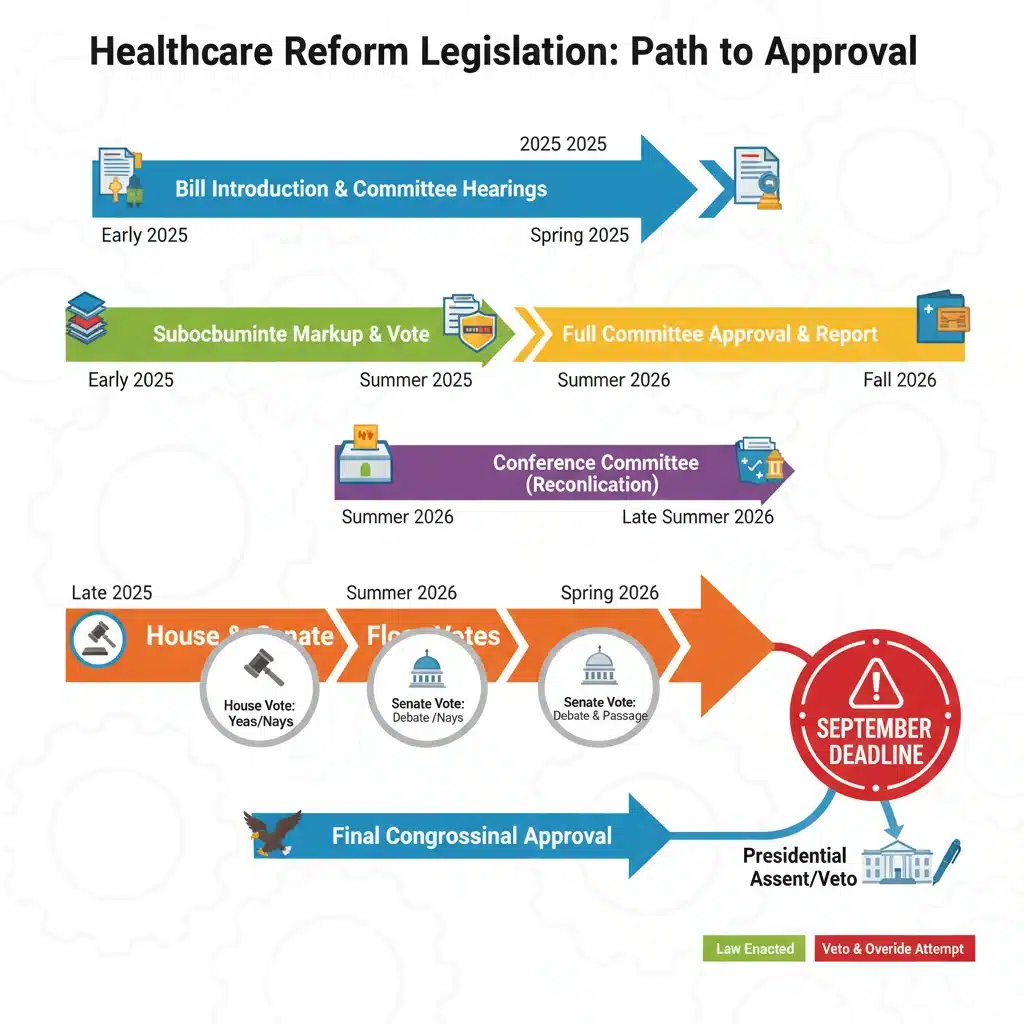
The September 2026 deadline looms large in the discussions surrounding Healthcare Reform 2026, representing a critical juncture for potential legislative action. While predicting the exact outcome of congressional debates is inherently challenging, we can outline several potential scenarios and their implications. One possibility is a bipartisan compromise, where elements from both Democratic and Republican proposals are combined to create a package that addresses some of the most pressing issues without completely overhauling the system. This could involve targeted expansions of coverage, measures to control drug prices, and initiatives to improve access in specific underserved areas. Such an outcome would likely lead to incremental but meaningful improvements in the healthcare system by September.
Another scenario involves the passage of more sweeping legislation, driven by a unified political front. If one party gains significant control, they might be able to push through more ambitious reforms, such as a substantial expansion of government-funded healthcare or a complete overhaul of the private insurance market. The impact of such changes would be far-reaching, potentially transforming how healthcare is delivered and financed across the nation. This could mean a significant shift in who pays for healthcare and what services are covered, with effects becoming noticeable by September 2026 and beyond.
Conversely, political gridlock remains a strong possibility. Deep ideological divisions and intense lobbying from various interest groups could prevent any major legislation from passing. In this scenario, the healthcare system would largely remain as it is, with ongoing challenges related to cost, coverage, and access persisting. While some minor administrative adjustments might occur, a lack of comprehensive Healthcare Reform 2026 would mean that the fundamental issues remain unaddressed. This would leave individuals and families to continue navigating the complexities of the current system, with little relief in sight by September.
Regardless of the specific outcome, individuals and businesses should remain vigilant and informed. Understanding the potential changes to insurance plans, healthcare costs, and access to services will be crucial for making informed decisions about personal and organizational healthcare strategies. The period leading up to and immediately following September 2026 will be a time of significant adjustment and adaptation for all stakeholders in the American healthcare system.

How Individuals Can Prepare for Changes in Healthcare
As the debates around Healthcare Reform 2026 continue to unfold, it’s natural for individuals to wonder how these potential changes might affect them personally. While the specifics are still being ironed out, there are several proactive steps you can take to prepare for any shifts in insurance coverage and access by September 2026. Firstly, staying informed is paramount. Regularly follow reliable news sources that cover healthcare policy and congressional debates. Understanding the different proposals and their potential implications will empower you to make better decisions.
Secondly, review your current health insurance plan thoroughly. Understand your coverage limits, deductibles, co-pays, and out-of-pocket maximums. If significant reforms are enacted, your current plan might be affected, or new, more advantageous options might become available. Pay close attention to any communications from your employer or insurance provider regarding upcoming changes. This will help you assess whether your existing coverage will continue to meet your needs under the new landscape of Healthcare Reform 2026.
Thirdly, consider exploring different insurance marketplaces and options. If you purchase insurance through the ACA marketplace, be aware of open enrollment periods and any new subsidies or plan offerings that might emerge. If you rely on employer-sponsored insurance, discuss potential changes with your HR department. For those who are uninsured, keep an eye out for expanded eligibility criteria for programs like Medicaid or new opportunities for affordable coverage. Being proactive in researching your options can help you navigate any shifts effectively.
Finally, engage with your elected officials. Your voice matters in these debates. Contacting your representatives to share your concerns and priorities can influence the direction of Healthcare Reform 2026. Advocacy groups also play a crucial role in representing patient interests, so consider supporting or joining organizations that align with your views on healthcare access and affordability. By taking these steps, you can position yourself to adapt to whatever changes September 2026 brings, ensuring continued access to the care you need.
Conclusion: The Future of Healthcare in America
The congressional debates surrounding Healthcare Reform 2026 are a critical moment for the future of healthcare in America. The decisions made in the coming months will have profound and lasting impacts on insurance coverage, access to care, and the economic well-being of millions of citizens. From proposals to strengthen the Affordable Care Act to calls for more market-driven solutions and the expansion of programs like Medicare, the spectrum of ideas is vast and complex.
As we approach September 2026, the watchwords for individuals and stakeholders alike should be vigilance and adaptability. The path forward is uncertain, but the fundamental goal remains the same: to create a healthcare system that is accessible, affordable, and effective for all. Whether through incremental adjustments or transformative overhauls, the ongoing dialogue about Healthcare Reform 2026 underscores the nation’s commitment to addressing its healthcare challenges. By staying informed, engaging in the process, and preparing for potential changes, we can all play a role in shaping a healthier future for America.