Gold & Silver Price Predictions: Early 2026 Outlook

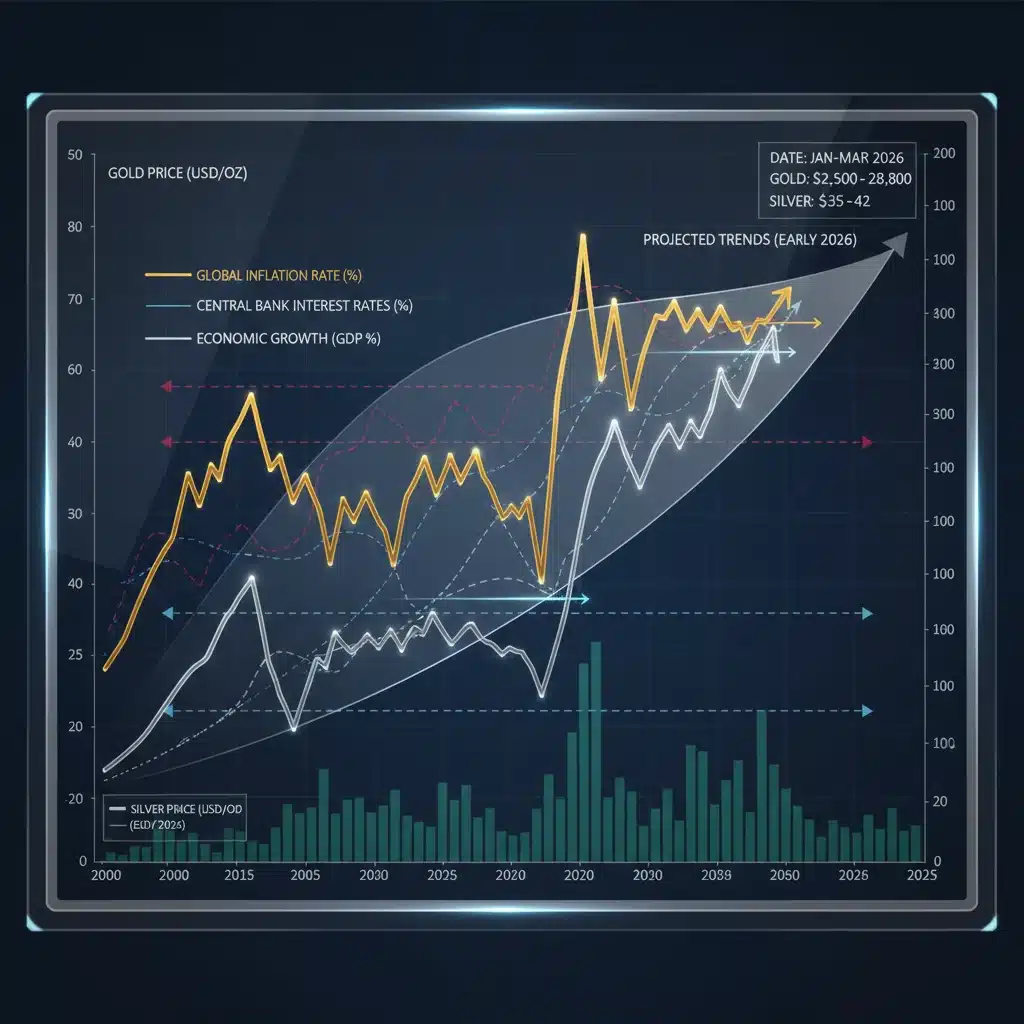
The world of precious metals investment is constantly evolving, influenced by a myriad of economic, geopolitical, and market-specific factors. As we cast our gaze forward to early 2026, investors, analysts, and enthusiasts alike are keen to understand the potential trajectory of gold and silver. This comprehensive analysis aims to provide a detailed 3-month outlook, delving into the critical drivers that will shape our gold silver prediction for the first quarter of 2026. Understanding these dynamics is paramount for making informed investment decisions in a volatile global landscape.
Gold and silver have historically served as safe-haven assets, inflation hedges, and stores of value. Their performance is often a reflection of broader economic health, investor sentiment, and the stability of the global financial system. Predicting their exact movements is, of course, an intricate exercise, but by dissecting the underlying forces, we can construct a robust framework for our outlook. This article will explore the macroeconomic environment, central bank policies, geopolitical tensions, supply and demand dynamics, and technical analysis to offer a holistic perspective on what early 2026 might hold for these two revered metals.
The Macroeconomic Landscape: A Foundation for Gold Silver Prediction
The global macroeconomic environment will undoubtedly play a pivotal role in shaping the gold silver prediction for early 2026. Several key indicators and trends warrant close attention:
Inflationary Pressures and Interest Rates
Inflation remains a persistent concern for many economies. While central banks have been aggressive in combating it, the long-term trajectory of inflation will be crucial. If inflationary pressures persist or re-emerge more strongly than anticipated, both gold and silver, particularly gold, tend to benefit. They are traditionally viewed as excellent hedges against the eroding purchasing power of fiat currencies. Conversely, if inflation is successfully tamed and falls within central bank targets, the appeal of precious metals as an inflation hedge might diminish slightly.
Interest rate policies of major central banks, particularly the U.S. Federal Reserve, will also be a dominant factor. Higher interest rates typically increase the opportunity cost of holding non-yielding assets like gold and silver, making them less attractive. However, if central banks signal a pause or even a pivot towards rate cuts in early 2026, perhaps due to slowing economic growth or a successful battle against inflation, this could provide significant tailwinds for precious metals. The market will be keenly watching for any forward guidance from central bankers, as their rhetoric alone can trigger substantial price movements.
Global Economic Growth Outlook
The health of the global economy is another critical determinant. A robust global growth environment, characterized by strong corporate earnings and consumer spending, sometimes leads investors to favor riskier assets like equities, potentially drawing capital away from safe havens. However, if economic growth falters, leading to recessionary fears or a significant slowdown, the demand for gold and silver as safe havens typically increases. Early 2026 could see a divergence in growth trajectories across different regions, creating complex dynamics for precious metals. For instance, a strong U.S. economy might contrast with a struggling European one, leading to mixed signals for the dollar and, consequently, gold and silver.
Currency Strength and the U.S. Dollar
The U.S. dollar’s strength is inversely correlated with gold prices. Since gold is primarily denominated in U.S. dollars, a stronger dollar makes gold more expensive for holders of other currencies, potentially dampening demand. Conversely, a weaker dollar makes gold more affordable and attractive. Factors influencing the dollar, such as interest rate differentials, economic performance relative to other major economies, and the dollar’s status as the world’s reserve currency, will all contribute to our gold silver prediction. Any significant shift in global trade balances or international relations could also impact currency movements and, by extension, precious metals.
Geopolitical Tensions and Safe-Haven Demand
Geopolitical instability has historically been a significant catalyst for demand in both gold and silver. Early 2026 is unlikely to be devoid of such tensions, and any escalation could rapidly shift investor sentiment towards safe-haven assets.
Regional Conflicts and Global Security
Ongoing regional conflicts, political unrest in key strategic areas, and the potential for new geopolitical flashpoints will be closely monitored. Events that threaten global security or disrupt international trade routes often prompt a flight to safety, with gold being a primary beneficiary. Silver, while also benefiting, tends to have a more pronounced industrial demand component, making its safe-haven appeal slightly less direct than gold’s.
Trade Wars and International Relations
The specter of trade wars and deteriorating international relations between major economic powers can also fuel demand for precious metals. Uncertainty surrounding global supply chains, tariffs, and retaliatory measures can create economic instability, driving investors towards perceived safe havens. Any significant policy announcements or diplomatic developments in early 2026 relating to trade could have a noticeable impact on our gold silver prediction.
Central Bank Policies and Gold Reserves
Central banks are not just setting interest rates; they are also significant players in the gold market through their reserve holdings. Their buying and selling activities can influence prices, and their broader monetary policies have a cascading effect.
Central Bank Gold Accumulation
In recent years, many central banks, particularly those in emerging economies, have been net buyers of gold, diversifying their reserves away from traditional fiat currencies. This trend is driven by a desire for greater financial independence, a hedge against dollar depreciation, and a store of value in uncertain times. If this trend of central bank gold accumulation continues into early 2026, it will provide a strong floor for gold prices and could even propel them higher. Conversely, any significant selling by major central banks, though less common, would be a bearish signal.
Monetary Policy Divergence
The divergence in monetary policies among the world’s leading central banks (e.g., Fed, ECB, BoJ, PBoC) can create volatility in currency markets, which, in turn, affects gold and silver. If some central banks remain hawkish while others turn dovish, it can lead to shifts in capital flows and investor preferences, directly influencing precious metal valuations. The coordination, or lack thereof, among these institutions will be a critical factor in the early 2026 outlook.
Supply and Demand Dynamics for Gold and Silver
Beyond macroeconomic and geopolitical factors, the fundamental forces of supply and demand are always at play, particularly for silver, which has a substantial industrial component.
Gold Supply and Demand
Gold supply primarily comes from mine production and recycling. Mine production is relatively stable but can be affected by new discoveries, operational challenges, and geopolitical risks in mining regions. Recycling, on the other hand, often increases when gold prices are high, as people are incentivized to sell old jewelry or coins. Demand for gold comes from jewelry, investment (bullion, coins, ETFs), and central bank purchases. Early 2026 will see continued scrutiny of these components. A robust jewelry market, particularly in Asia, coupled with sustained investor interest, would bolster demand. Any significant new mine supply or a slowdown in investment demand could temper price gains.
Silver Supply and Demand: The Industrial Engine
Silver’s market dynamics are more complex due to its dual role as a precious metal and an industrial commodity. Approximately 50-60% of silver demand comes from industrial applications, including solar panels, electronics, and electric vehicles. This makes silver’s price highly sensitive to global economic growth and technological advancements. A strong global manufacturing sector and continued growth in green technologies would drive up industrial demand for silver, supporting its price. Conversely, an industrial slowdown or a significant shift in technology that reduces silver’s use could exert downward pressure.
On the supply side, silver is often a byproduct of mining other metals like copper, lead, and zinc. This means its supply is less responsive to its own price movements compared to gold. Recycling also plays a role, similar to gold. For our gold silver prediction for early 2026, the industrial demand component for silver will be a key differentiator from gold, potentially offering it additional upside if the global economy performs well and green energy initiatives accelerate.
Technical Analysis: Charting the Path Forward
While fundamental factors provide the ‘why,’ technical analysis helps us understand the ‘how’ and ‘when’ of price movements. By examining historical price charts, trends, support and resistance levels, and various indicators, we can gain insights into potential future price action for our gold silver prediction.
Key Levels for Gold
For gold, analysts will be watching critical support and resistance levels. A sustained break above significant resistance could signal a strong bullish trend, attracting more buyers. Conversely, a break below key support levels could indicate bearish sentiment and potential further declines. Moving averages (e.g., 50-day, 200-day) will be crucial indicators of short-term and long-term trends. The Relative Strength Index (RSI) and Moving Average Convergence Divergence (MACD) will also be used to gauge momentum and potential overbought/oversold conditions as we enter early 2026.
Key Levels for Silver
Silver’s volatility often means its technical patterns can be more pronounced. Key price levels, particularly those that have served as strong support or resistance in the past, will be important. The gold-to-silver ratio is another vital technical indicator. Historically, when this ratio is high, it suggests silver is undervalued relative to gold, and vice-versa. A declining gold-to-silver ratio in early 2026 could signal outperformance for silver, while an increasing ratio might suggest gold is the preferred metal. Volume analysis will also be important to confirm the strength of any breakouts or breakdowns.
Potential Scenarios for Early 2026: Gold Silver Prediction
Based on the factors discussed, we can outline a few potential scenarios for the gold silver prediction in early 2026:
Scenario 1: Bullish Outlook (High Probability)
Under this scenario, inflationary pressures remain elevated or re-accelerate, prompting continued investor demand for inflation hedges. Central banks, particularly the Fed, might signal a pause in rate hikes or even consider cuts due to signs of economic slowdown, reducing the opportunity cost of holding precious metals. Geopolitical tensions could escalate, driving strong safe-haven flows. Additionally, robust industrial demand for silver, fueled by green energy initiatives, could provide an extra boost. In this environment, we would expect both gold and silver to perform strongly, with gold potentially retesting or surpassing previous highs, and silver showing significant upside due to its industrial leverage.
Scenario 2: Neutral to Moderately Bullish Outlook (Medium Probability)
In this scenario, inflation gradually subsides, but economic growth remains subdued, creating a ‘stagflation-lite’ environment. Central banks maintain a cautious stance, neither aggressively hiking nor cutting rates. Geopolitical tensions remain contained without major escalations. Industrial demand for silver is steady but not exceptional. In this balanced environment, gold and silver would likely trade within a range, perhaps with a slight upward bias, as investors seek diversification and some protection against persistent uncertainties. Price movements would be more gradual, reacting to incremental data releases and policy statements.
Scenario 3: Bearish Outlook (Low Probability)
This less likely scenario would involve a significant decline in inflation, coupled with strong global economic growth that encourages a ‘risk-on’ sentiment. Central banks might maintain a hawkish stance for longer than anticipated, or even resume rate hikes if inflation proves more stubborn. Geopolitical stability improves significantly, reducing safe-haven demand. Industrial demand for silver could weaken if a global recession takes hold. In this environment, the attractiveness of non-yielding precious metals would diminish, leading to downward pressure on both gold and silver prices. Investors would likely flock to equities and other growth-oriented assets.

Investment Considerations and Strategies for Early 2026
Given the nuanced outlook, investors should consider a diversified approach when incorporating precious metals into their portfolios for early 2026.
Diversification and Portfolio Allocation
Gold and silver can serve as valuable diversifiers, particularly against equity market downturns and inflationary pressures. The specific allocation to these metals should align with an individual’s risk tolerance, investment horizon, and overall portfolio objectives. Many financial advisors recommend a modest allocation (e.g., 5-15%) to precious metals as a long-term hedge.
Monitoring Key Indicators
Investors should continuously monitor key economic indicators such as inflation rates, interest rate expectations, GDP growth figures, and the U.S. dollar index. Keeping an eye on geopolitical developments and central bank communications will also be crucial for adapting investment strategies. Any significant shifts in these factors could necessitate a re-evaluation of the gold silver prediction.
Gold vs. Silver: Which to Choose?
The choice between gold and silver, or a combination of both, depends on individual investment goals. Gold is often seen as the primary safe-haven asset and inflation hedge, offering stability. Silver, with its industrial demand component, can offer higher upside potential during periods of strong economic growth and technological advancement, but also comes with greater volatility. Analyzing the gold-to-silver ratio can help determine relative value and inform allocation decisions.
Methods of Investment
Investors have several avenues for gaining exposure to gold and silver:
- Physical Bullion: Owning physical gold and silver coins or bars provides direct exposure and eliminates counterparty risk.
- Exchange-Traded Funds (ETFs): ETFs backed by physical gold or silver offer liquidity and ease of trading without the complexities of physical storage.
- Mining Stocks: Investing in companies that mine gold and silver can offer leveraged exposure to price movements, but also comes with company-specific risks.
- Futures and Options: For sophisticated investors, these derivatives can be used for speculation or hedging, but carry higher risk.
Conclusion: Navigating the Precious Metals Market in Early 2026
The gold silver prediction for early 2026 is shaped by a complex interplay of macroeconomic forces, geopolitical developments, central bank actions, and fundamental supply and demand dynamics. While precise forecasting is inherently challenging, the prevailing sentiment suggests a moderately to strongly bullish outlook for both metals, largely driven by persistent inflationary concerns, potential shifts in monetary policy towards easing, and ongoing geopolitical uncertainties. Silver, with its significant industrial demand, could potentially outperform gold if global economic growth, particularly in green technologies, remains robust.
Investors are advised to remain vigilant, continuously assessing the evolving landscape and adjusting their strategies accordingly. Diversification, a keen eye on global indicators, and a clear understanding of personal risk tolerance will be indispensable for navigating the precious metals market in the first quarter of 2026. As always, consulting with a financial advisor is recommended to tailor investment decisions to individual circumstances. The journey of gold and silver through early 2026 promises to be an interesting one, and those who are well-prepared will be best positioned to capitalize on its movements.