2026 Federal Student Aid: Maximize Your College Funding

The 2026 shift in federal student aid policies is poised to significantly reshape college funding, potentially impacting individual student financial packages by as much as 15% through comprehensive FAFSA reforms and revised eligibility criteria for various grants and loans.
The landscape of higher education finance is on the cusp of a significant transformation. With the impending federal student aid 2026 policy changes, students and families across the United States face a new reality in how college is funded. These adjustments could alter your financial aid package by up to 15%, making it crucial to understand the nuances now.
Understanding the FAFSA Simplification Act’s Full Implementation
The FAFSA Simplification Act, while partially implemented in previous cycles, is set to fully roll out its comprehensive changes for the 2026-2027 academic year. This complete implementation will bring fundamental shifts in how financial need is assessed, moving away from the Expected Family Contribution (EFC) to the Student Aid Index (SAI). This change is more than just a name; it redefines the calculation of a family’s ability to pay for college, potentially benefiting some and challenging others.
The new SAI calculation aims to streamline the process and make it more equitable. However, its full impact won’t be truly understood until the 2026 cycle. Families should familiarize themselves with the new formula, which considers different income and asset protections, affecting how much aid a student might receive. This could mean significant adjustments in aid eligibility, especially for middle-income families who may find themselves qualifying for more assistance than before, or conversely, potentially less depending on their specific financial profile.
Key Changes to the FAFSA Form
- Reduced Questions: The FAFSA form will be significantly shorter, aiming to reduce complexity and encourage more students to apply. This simplification is intended to make the application process less daunting.
- Direct Data Exchange: Integration with IRS data will allow for a direct exchange of financial information, reducing the need for manual input and minimizing errors. This automation is a major step towards efficiency.
- Expanded Eligibility: Some students, particularly those from low-income backgrounds, may find it easier to qualify for federal aid due to revised calculations that better account for their financial circumstances.
The overarching goal of the FAFSA Simplification Act is to expand access to federal student aid. By making the application process easier and updating the need analysis, the Department of Education hopes to reach more students who could benefit from financial assistance. Preparing for these changes by understanding the new terminology and calculation methods is crucial for maximizing your college funding opportunities in 2026.
Pell Grant Expansion and Revised Eligibility Criteria
One of the most impactful changes coming in 2026 involves the Pell Grant program. This cornerstone of federal student aid is set for a substantial expansion, coupled with revised eligibility criteria designed to reach a broader spectrum of students, particularly those with the greatest financial need. This expansion could directly influence the amount of grant money available, reducing the burden of loans for many.
The revisions are expected to link Pell Grant eligibility more directly to a student’s family income relative to the federal poverty level, potentially offering maximum grants to more recipients. This means that even if the SAI calculation shows some ability to pay, a student from a low-income household might still qualify for a full Pell Grant based on these new guidelines. It’s a significant move towards making higher education more accessible to disadvantaged populations.
How Pell Grant Amounts Are Determined
Historically, Pell Grant amounts were tied to the EFC. Under the new system, the Student Aid Index (SAI) will play a role, but additional factors, such as family size and poverty guidelines, will also be heavily considered. This multi-faceted approach aims to provide a more holistic view of a student’s financial situation.
- Increased Maximum Award: Projections suggest a potential increase in the maximum Pell Grant award, offering more substantial aid to eligible students.
- Automatic Eligibility: Some students whose families receive federal benefits, such as SNAP or Medicaid, may automatically qualify for the maximum Pell Grant, simplifying the application process for these groups.
- Year-Round Pell: The continuation of year-round Pell Grants allows students to receive aid for more than two semesters a year, facilitating faster degree completion.
For students planning their college finances, understanding these Pell Grant changes is paramount. The expanded eligibility and potentially higher award amounts could significantly reduce the need for student loans, making college more affordable. It is advisable to monitor official announcements from the Department of Education regarding the exact figures and detailed criteria as 2026 approaches.
Changes to Federal Student Loan Programs and Interest Rates
Beyond grants, federal student loan programs are also subject to significant policy adjustments for 2026. These changes could affect everything from interest rates and repayment options to loan limits and eligibility. Students relying on loans to finance their education will need to be well-informed to navigate these evolving terms effectively.
One area of focus is the potential restructuring of interest rate calculations. While details are still emerging, discussions have included models that could tie interest rates more closely to economic indicators or offer more favorable rates for specific fields of study deemed critical. Such changes aim to make borrowing more sustainable and less burdensome in the long run, though specific impacts will vary by individual loan type and economic conditions.
New Repayment Plans and Loan Forgiveness Initiatives
The federal government is continuously evaluating and refining repayment plans to better suit borrowers’ financial realities. 2026 might introduce more flexible income-driven repayment (IDR) plans or expand existing loan forgiveness programs. These initiatives are designed to prevent default and provide a safety net for graduates struggling to find employment or facing economic hardship.
- Simplified IDR Options: Expect a move towards fewer, more straightforward income-driven repayment plans to reduce confusion and increase enrollment.
- Targeted Loan Forgiveness: New or enhanced forgiveness programs might be introduced for graduates in public service, teaching, or other high-need professions.
- Loan Limits Review: Annual and aggregate loan limits for federal student loans could be revisited, potentially adjusting the maximum amount students can borrow based on program costs and perceived need.
These loan program changes are crucial for future borrowers. Understanding the implications of new interest rate structures and exploring updated repayment and forgiveness options will be vital for managing post-graduation debt. Students should actively research these developments to make informed decisions about their borrowing strategy.
Impact on Work-Study Programs and Other Federal Aid
While much attention is given to grants and loans, federal work-study programs and other specialized aid initiatives are also part of the 2026 policy review. These programs provide valuable opportunities for students to earn money for college expenses through part-time employment, often in community service roles or positions related to their field of study. Any changes here could affect both the availability of these jobs and the funding allocated to them.
Discussions around work-study often center on increasing its funding and expanding its reach to more institutions. The aim is to provide more students with the chance to gain work experience while offsetting educational costs, thereby reducing reliance on loans. The upcoming policy shifts might introduce new criteria for institutional participation or enhance the federal contribution to student wages, making these opportunities more attractive and accessible.
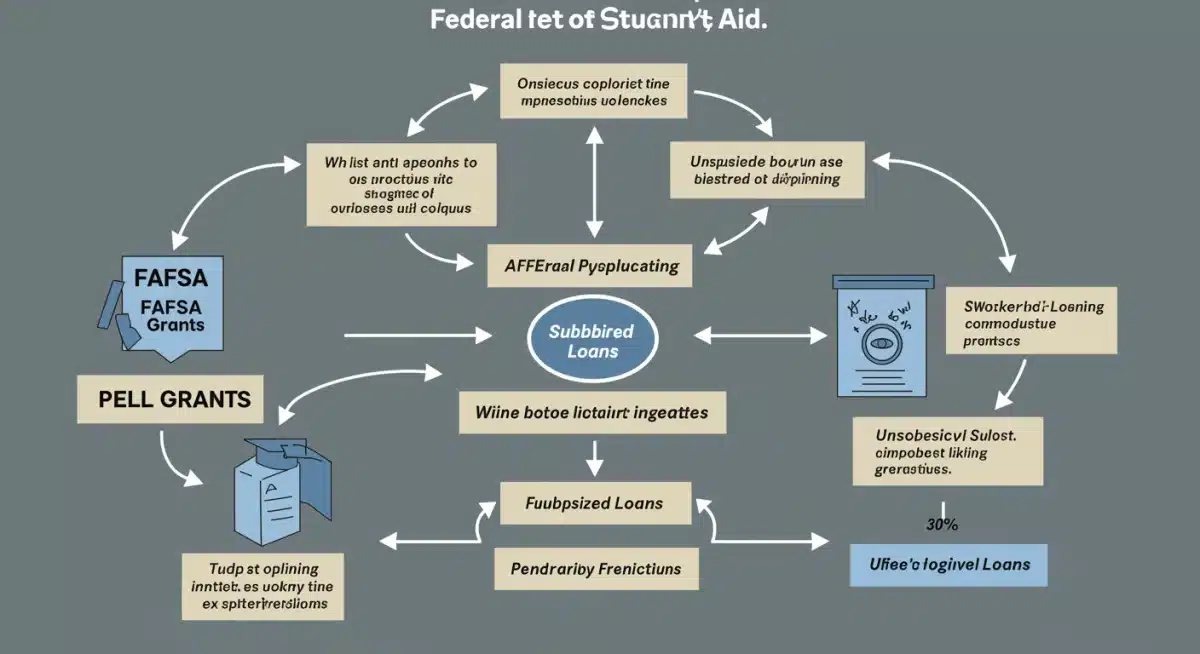
Specialized Federal Aid Programs
Beyond the major aid categories, several smaller, targeted federal programs support specific student populations or educational goals. These include programs for students with disabilities, those pursuing careers in specific shortage areas, or individuals from particular demographic groups. The 2026 policy review may also touch upon these, adjusting their funding, eligibility, or administrative processes.
- Increased Funding for Work-Study: There’s a strong possibility of increased federal appropriations for the Federal Work-Study Program, allowing more students to participate.
- Streamlined Application for Specialized Aid: Efforts may be made to integrate applications for specialized aid programs more seamlessly with the FAFSA, simplifying access.
- Focus on Career-Aligned Opportunities: Work-study placements might increasingly emphasize opportunities that provide direct career experience relevant to a student’s major.
Students should not overlook work-study and other federal aid programs as they plan for college. These opportunities can significantly reduce out-of-pocket costs and provide valuable experience. Staying informed about any changes to these programs will allow students to leverage all available resources for their education.
Strategies for Maximizing Your College Funding in 2026
Given the significant policy shifts in federal student aid 2026, developing a proactive strategy is essential for maximizing your college funding. The changes, while complex, also present new opportunities for those who are well-prepared and informed. It’s no longer enough to simply fill out the FAFSA; a deeper understanding of the new system will be your greatest asset.
Start by understanding your family’s specific financial situation in the context of the new Student Aid Index (SAI) calculation. Utilize online calculators or consult with financial aid advisors who are up-to-date on the 2026 changes. Early preparation can help you identify potential eligibility for increased grants or more favorable loan terms, allowing you to adjust your college savings and application strategy accordingly.
Proactive Steps for Students and Families
- Early FAFSA Submission: Even with a simplified form, submitting the FAFSA as early as possible remains crucial. Many aid programs operate on a first-come, first-served basis.
- Understand the SAI: Familiarize yourself with how the Student Aid Index (SAI) is calculated and how it differs from the old EFC. This knowledge will be key to predicting your aid eligibility.
- Research Institutional Aid: Federal aid is just one piece of the puzzle. Research the institutional grants and scholarships offered by colleges, as these can often complement federal assistance.
- Appeal Financial Aid Offers: If your financial circumstances change or you believe your aid offer doesn’t accurately reflect your need, don’t hesitate to appeal to the financial aid office.
Maximizing your college funding in 2026 requires a diligent and informed approach. By staying current with policy updates, understanding the new FAFSA and Pell Grant criteria, and exploring all available aid sources, students can significantly offset the cost of higher education. This proactive stance will empower you to navigate the new financial aid landscape successfully.
The Long-Term Outlook: Future Trends in Student Financial Aid
The 2026 federal student aid changes are not isolated events but rather part of a broader, ongoing evolution in how the nation approaches college affordability. Looking beyond 2026, it’s important to consider the long-term outlook and potential future trends in student financial aid. These trends will likely continue to shape access to higher education for generations to come, influenced by economic conditions, political priorities, and societal needs.
One significant trend expected to continue is the push for greater transparency and simplification in the aid application process. The FAFSA Simplification Act is a major step, but further efforts may be made to reduce bureaucratic hurdles and ensure that all eligible students can easily access the aid they deserve. This could involve more robust digital platforms, enhanced guidance resources, and even more integrated data sharing.
Anticipated Developments in Aid Policy
- Performance-Based Funding: Some discussions have revolved around tying federal aid more to institutional performance metrics, potentially incentivizing colleges to improve student outcomes.
- Increased Focus on Career Pathways: Aid programs may increasingly be designed to support students in fields with high demand or those that address critical national needs, aligning education with workforce development.
- State-Level Innovations: States may continue to develop their own innovative aid programs, potentially complementing or diverging from federal initiatives, creating a more diverse aid landscape.
The future of federal student aid will undoubtedly remain a dynamic area. Students and families should view the 2026 changes as a foundational shift, but also be prepared for subsequent adjustments and new initiatives. Staying engaged with policy discussions and advocating for policies that promote college affordability will be key to shaping a more accessible higher education system for all.
| Key Policy Area | 2026 Impact Summary |
|---|---|
| FAFSA Simplification | Full implementation of Student Aid Index (SAI) replacing EFC, potentially shifting eligibility for many families. |
| Pell Grant Expansion | Revised eligibility criteria and potentially higher maximum awards, increasing access for low-income students. |
| Student Loan Programs | Potential restructuring of interest rates, new repayment plans, and revised loan limits are under consideration. |
| Work-Study & Other Aid | Potential for increased funding and expanded access to work-study and specialized federal programs. |
Frequently Asked Questions About 2026 Federal Student Aid
The Student Aid Index (SAI) is the new term replacing the Expected Family Contribution (EFC). It’s a different formula used to determine a student’s financial need, calculated using updated income and asset protection allowances. The SAI can be a negative number, indicating higher need, unlike the EFC which could not go below zero.
Pell Grant eligibility in 2026 will be more closely tied to family income relative to federal poverty levels, expanding access for more low-income students. The new formula aims to provide maximum grants to more recipients and simplify the process for those receiving federal benefits, ensuring broader reach and impact.
Yes, the comprehensive nature of the 2026 federal student aid changes, including FAFSA revisions, Pell Grant adjustments, and potential loan program modifications, could collectively alter a student’s total financial aid package by up to 15%. Individual impact will vary based on specific financial circumstances and institutional aid.
To prepare, familiarize yourself with the FAFSA Simplification Act, understand the new SAI calculation, and monitor official Department of Education announcements. Consider consulting a financial aid advisor and begin gathering necessary financial documents early. Proactive research and planning are key to navigating these shifts effectively.
While specific changes are still under review, there are ongoing discussions about potentially restructuring federal student loan interest rate calculations. These might involve tying rates to economic indicators or offering more favorable terms for certain fields, aiming for greater sustainability for borrowers. Official updates will provide concrete details.
Conclusion
The year 2026 marks a pivotal moment for federal student aid, ushering in a new era of college funding. The comprehensive implementation of the FAFSA Simplification Act, coupled with significant changes to Pell Grants and federal loan programs, will undoubtedly reshape how students finance their higher education. While these shifts present complexities, they also offer renewed opportunities for increased accessibility and affordability. By staying informed, understanding the new Student Aid Index, and proactively engaging with financial aid resources, students and families can navigate these changes effectively and maximize their potential college funding. The future of higher education finance is evolving, and preparation is the best strategy for success.