Top 5 EdTech Trends: Shaping US Classrooms for 2026

The Top 5 Emerging Educational Technologies to Watch in US Classrooms for 2026
The landscape of education is in constant flux, driven by relentless technological innovation. As we cast our gaze towards 2026, the United States educational system is on the cusp of a profound transformation, propelled by a wave of emerging EdTech trends. These advancements promise to reshape teaching methodologies, enhance student engagement, and foster personalized learning experiences like never before. For educators, administrators, policymakers, and parents alike, understanding these pivotal shifts is not just beneficial, but essential for preparing the next generation for a rapidly evolving world.
The integration of technology into classrooms has moved far beyond simple digital whiteboards or computer labs. Today, we’re talking about sophisticated tools that adapt to individual learning styles, create immersive environments, and leverage vast amounts of data to optimize educational outcomes. The goal is to create more equitable, effective, and engaging learning environments that cater to the diverse needs of every student. This article will delve into the top five emerging educational technologies that are poised to make the most significant impact on US classrooms by 2026, providing a deeper understanding of their potential and implications.
1. Artificial Intelligence (AI) and Machine Learning (ML) for Personalized Learning
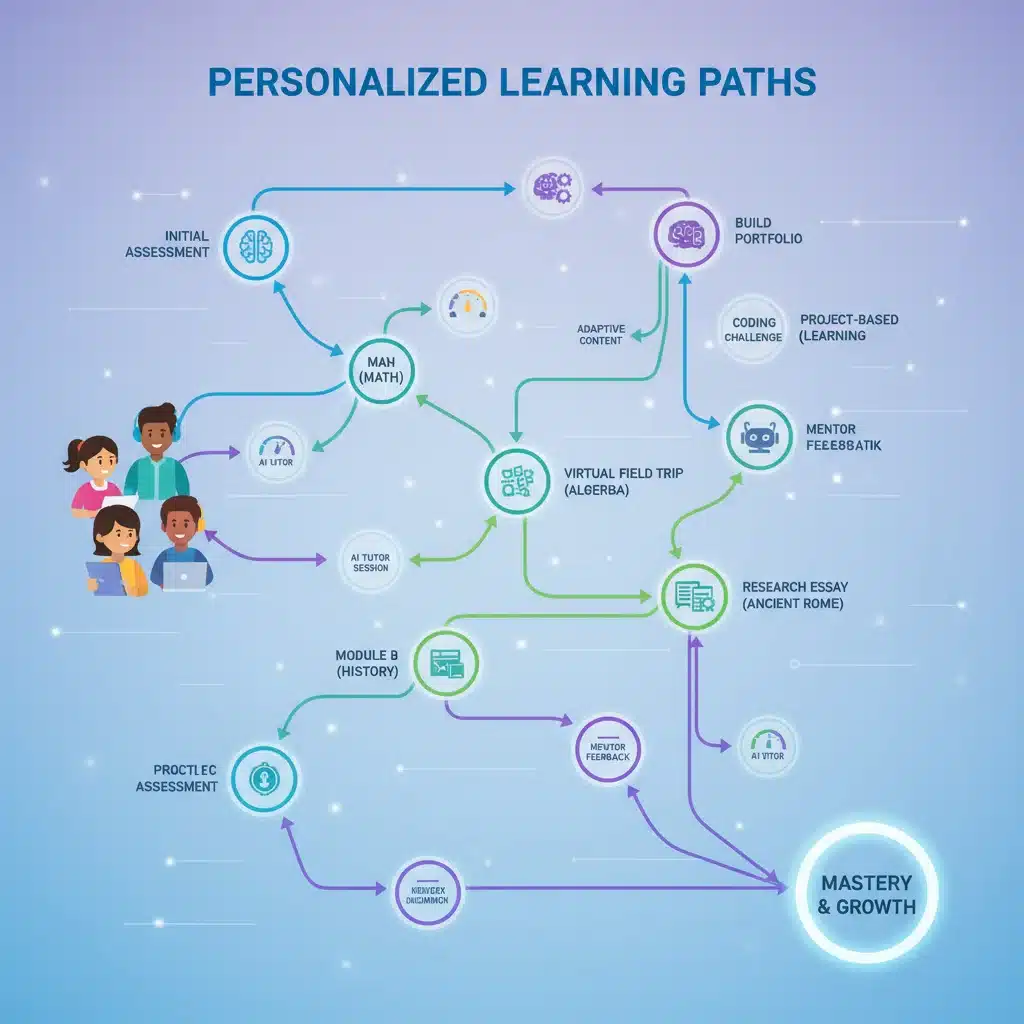
Perhaps no emerging EdTech trend holds more promise for individualizing education than Artificial Intelligence and Machine Learning. By 2026, AI is expected to be deeply embedded in various aspects of the US classroom, moving beyond simple automation to truly adaptive and intelligent systems. The core strength of AI in education lies in its ability to analyze vast amounts of student data – from performance on assignments to engagement levels and learning patterns – to create highly personalized learning paths.
Imagine a system that can identify a student’s specific areas of struggle in real-time, then provide targeted resources, activities, and even direct tutoring from an AI assistant. This isn’t science fiction; it’s the reality that AI is bringing to education. AI-powered platforms can adapt the pace and difficulty of content, recommend supplementary materials, and offer instant feedback, ensuring that each student receives instruction tailored to their unique needs and pace. This capability is particularly crucial in addressing learning gaps and catering to diverse learners, including those with special needs or those who are gifted.
Beyond personalized instruction, AI is also revolutionizing assessment. Instead of static tests, AI can facilitate dynamic and adaptive assessments that evolve based on a student’s responses, providing a more accurate measure of understanding rather than just memorization. Furthermore, AI tools can automate administrative tasks for teachers, such as grading routine assignments, managing schedules, and even generating progress reports. This frees up invaluable time for educators to focus on what they do best: direct instruction, mentorship, and fostering critical thinking skills.
The ethical considerations surrounding AI in education, such as data privacy, algorithmic bias, and the role of human educators, are paramount and will continue to be a focus as these technologies mature. However, the potential for AI to dramatically enhance the effectiveness and equity of education makes it one of the most compelling emerging EdTech trends for 2026.
2. Virtual Reality (VR) and Augmented Reality (AR) for Immersive Learning Experiences
The lines between the physical and digital worlds are blurring, and nowhere is this more evident than in the rise of Virtual Reality (VR) and Augmented Reality (AR) in education. These immersive technologies are set to transform the way students interact with learning content, offering experiences that transcend traditional classroom limitations. By 2026, expect to see VR and AR move from experimental tools to mainstream learning aids in US classrooms.
VR, which creates fully simulated environments, allows students to explore historical sites, dissect virtual organs, journey through the solar system, or conduct dangerous chemistry experiments in a safe, controlled setting. Imagine a history lesson where students can walk through ancient Rome, or a biology class where they can shrink down to explore the inside of a human cell. These experiences go far beyond what textbooks or even videos can offer, fostering deeper understanding, empathy, and engagement.

AR, on the other hand, overlays digital information onto the real world. This could mean pointing a tablet at a textbook image to bring a 3D model to life, or using an AR app to visualize complex mathematical equations in physical space. AR can enrich field trips by providing real-time information about landmarks or ecosystems, or help students learn about mechanics by projecting internal components onto a physical engine. The accessibility of AR through smartphones and tablets makes it particularly scalable for widespread adoption.
The benefits of VR and AR extend to various subjects, from science and history to art and language learning. These technologies can make abstract concepts tangible, provide hands-on (or rather, ‘eyes-on’) learning opportunities, and cater to different learning styles, especially kinesthetic and visual learners. While hardware costs and content development remain challenges, the increasing affordability and availability of VR/AR devices, coupled with a growing library of educational content, position these as critical emerging EdTech trends for the near future.
3. Adaptive and Gamified Learning Platforms
Engagement is a perennial challenge in education, and adaptive and gamified learning platforms are emerging as powerful solutions. These platforms combine the personalized approach enabled by AI with the motivational psychology of games, creating highly interactive and rewarding educational experiences. By 2026, their presence in US classrooms will be significantly more pronounced.
Adaptive learning platforms, often powered by AI, continuously adjust content and challenges based on a student’s performance and learning style. If a student masters a concept quickly, the platform moves them forward; if they struggle, it provides additional support and alternative explanations. This ensures that every student is consistently challenged but not overwhelmed, optimizing their learning trajectory. These systems can identify patterns in errors, suggest specific interventions, and track progress with granular detail, providing invaluable insights to both students and teachers.
Gamification takes learning beyond traditional methods by incorporating game-like elements such as points, badges, leaderboards, levels, and narrative-driven challenges into educational activities. This approach taps into students’ natural competitive and exploratory instincts, making learning feel less like work and more like play. When students are motivated by intrinsic rewards and the desire to achieve goals within a game-like structure, their engagement, persistence, and retention of information often increase dramatically.
Combining adaptive learning with gamification creates a potent educational tool. Students are presented with challenges that are just right for their current skill level (adaptive), and they are motivated to overcome these challenges through engaging game mechanics (gamified). This synergy fosters a growth mindset, encourages problem-solving, and makes the learning process inherently more enjoyable. As these platforms become more sophisticated and content-rich, they will be central to the emerging EdTech trends driving student success.
4. Data Analytics and Learning Analytics for Informed Decision-Making
In the era of big data, the education sector is increasingly recognizing the power of analytics to improve outcomes. Learning analytics, a specialized field within data analytics, involves collecting, analyzing, and reporting data about learners and their contexts to understand and optimize learning environments and future learning. By 2026, data analytics will be an indispensable tool for educators and administrators in US classrooms.
The application of data analytics in education spans several critical areas. For individual students, it can track progress across subjects, identify areas where intervention might be needed, and even predict potential academic difficulties before they become significant problems. This proactive approach allows educators to provide timely support, preventing students from falling behind. For teachers, learning analytics dashboards can offer real-time insights into classroom performance, highlight effective teaching strategies, and pinpoint areas where curriculum adjustments might be beneficial.
At an institutional level, data analytics can inform curriculum design, resource allocation, and policy decisions. By analyzing trends across cohorts of students, schools can identify systemic issues, evaluate the effectiveness of new programs, and make data-driven decisions to improve overall educational quality and equity. For example, analytics might reveal that students in a particular demographic consistently struggle with a specific module, prompting educators to re-evaluate teaching methods or support systems for that group.
The ethical implications of data privacy and security are paramount when dealing with sensitive student information. Robust safeguards and clear policies will be essential to build trust and ensure responsible use of this powerful technology. Nonetheless, the ability of data analytics to provide actionable insights for improving teaching, learning, and administrative efficiency makes it one of the most transformative emerging EdTech trends shaping US education.
5. Collaborative Learning Tools and Digital Citizenship Platforms
The modern workforce demands strong collaboration, communication, and digital literacy skills. Recognizing this, US classrooms by 2026 will increasingly leverage sophisticated collaborative learning tools and integrate digital citizenship platforms to prepare students for a connected world. These technologies foster teamwork, critical thinking, and responsible online behavior.
Collaborative learning tools go beyond simple document sharing. They include platforms that allow students to co-create projects in real-time, engage in peer feedback sessions, participate in moderated online discussions, and work together on simulations or problem-solving scenarios, regardless of their physical location. Examples include advanced shared document editors with version control, interactive whiteboards that support multiple remote users, and project management software adapted for educational settings. These tools mirror the collaborative environments found in modern workplaces, equipping students with essential 21st-century skills.
Equally important are digital citizenship platforms. As students spend more time online, understanding how to navigate the digital world safely, ethically, and responsibly becomes critical. These platforms educate students on topics such as online safety, cyberbullying prevention, digital footprints, intellectual property rights, and responsible social media use. They often incorporate interactive lessons, real-world scenarios, and discussions to help students develop a strong sense of digital etiquette and awareness.
The integration of these tools not only enhances learning outcomes by promoting active participation and diverse perspectives but also instills crucial life skills. By fostering environments where students can learn to collaborate effectively in digital spaces and understand their role as responsible digital citizens, these emerging EdTech trends are preparing students not just for higher education, but for successful lives and careers in an increasingly interconnected global society.
Challenges and Opportunities for Adoption
While the promise of these emerging EdTech trends is immense, their widespread adoption in US classrooms by 2026 will not be without challenges. Funding remains a significant hurdle, as schools and districts often operate with limited budgets. The initial investment in hardware, software licenses, and professional development can be substantial. Equity in access is another critical concern; ensuring that all students, regardless of socioeconomic background or geographic location, have access to these transformative technologies is paramount to avoid exacerbating existing digital divides.
Teacher training and professional development are also crucial. Even the most advanced technology is ineffective without educators who are confident and competent in its use. Ongoing support, training, and opportunities for teachers to experiment and integrate these tools into their pedagogy will be vital. Furthermore, the rapid pace of technological change means that continuous learning and adaptation will be necessary for both educators and institutions.
Despite these challenges, the opportunities presented by these emerging EdTech trends are too significant to ignore. They offer the potential to create a more engaging, equitable, and effective educational system. By fostering personalized learning, making abstract concepts tangible through immersive experiences, driving engagement through gamification, and enabling data-driven decision-making, these technologies can help address long-standing educational challenges and prepare students for a future that demands adaptability, critical thinking, and digital fluency.
Collaboration between EdTech developers, educators, policymakers, and communities will be essential to overcome these hurdles. Pilot programs, grant funding, and community partnerships can help bridge the gap in resources and expertise. Moreover, a focus on open-source solutions and interoperable platforms can reduce costs and increase accessibility, ensuring that innovation benefits a broader spectrum of learners.
Conclusion: A Future-Ready Classroom
The year 2026 is not far off, and the trajectory of educational technology suggests a future where US classrooms are dynamic, adaptive, and highly personalized learning environments. The five emerging EdTech trends – Artificial Intelligence, Virtual and Augmented Reality, Adaptive and Gamified Learning, Data Analytics, and Collaborative Learning Tools with Digital Citizenship – are not isolated innovations but rather interconnected components of a holistic transformation.
By embracing these technologies thoughtfully and strategically, educators can move beyond traditional one-size-fits-all instruction to create learning experiences that are tailored to each student’s unique needs, interests, and pace. This shift promises to unlock greater potential, foster deeper understanding, and cultivate critical skills necessary for success in the 21st century. The classrooms of 2026 will be places where technology empowers both teachers and students, making education more accessible, engaging, and ultimately, more effective for everyone.
The journey towards this future-ready classroom requires foresight, investment, and a commitment to innovation. As these emerging EdTech trends continue to evolve, the educational community must remain agile, continuously evaluating their impact and adapting strategies to harness their full potential. The goal is not just to integrate technology for technology’s sake, but to leverage it as a powerful catalyst for meaningful learning and a brighter future for all students in the United States.
Ultimately, the successful integration of these technologies will hinge on a human-centered approach. Technology should serve to augment human capabilities, not replace them. The role of the teacher will evolve, becoming more focused on mentorship, facilitation, and fostering higher-order thinking skills, while technology handles more of the individualized instruction and administrative burdens. This partnership between human intelligence and artificial intelligence holds the key to unlocking the full promise of these emerging EdTech trends and truly preparing students for the challenges and opportunities of tomorrow.