
Unemployment Benefits 2026: Your Comprehensive State-by-State Guide to Maximum Weekly Payouts and Eligibility Changes
As we navigate the ever-evolving economic landscape, understanding the intricacies of unemployment benefits becomes paramount. For millions of Americans, these benefits serve as a crucial safety net during periods of joblessness. Looking ahead to 2026, it’s essential to be well-informed about the potential changes in maximum weekly payouts and eligibility criteria across different states. This comprehensive guide aims to demystify the system, providing a detailed, state-by-state breakdown to help you prepare and understand what to expect from unemployment benefits 2026.
The federal-state unemployment insurance (UI) program is a complex beast, with each state having the autonomy to set its own rules regarding benefit amounts, duration, and eligibility requirements. While federal guidelines provide a framework, the specifics can vary wildly from one state to another. These variations are often influenced by local economic conditions, legislative priorities, and historical precedents. Staying updated on these nuanced differences is key, especially as economic forecasts and labor market dynamics continue to shift.
Understanding the Foundation of Unemployment Benefits
Before diving into state-specific details for unemployment benefits 2026, let’s first grasp the fundamental principles of the unemployment insurance program. At its core, UI is a joint federal and state program that provides temporary financial assistance to eligible workers who are unemployed through no fault of their own. It’s funded by taxes paid by employers, not employees, though some states do have employee contributions. The primary goal is to provide a temporary income stream, allowing individuals to meet basic needs while they actively search for new employment.
Who is Eligible for Unemployment Benefits?
While specific criteria vary by state, general eligibility requirements typically include:
- Monetary Eligibility: You must have earned a certain amount of wages during a specified period (known as the “base period”) before becoming unemployed. This ensures that you have a recent attachment to the workforce. Each state defines its base period and minimum earnings differently.
- Reason for Separation: You must be unemployed through no fault of your own. This generally means you were laid off, your position was eliminated, or you were fired for reasons other than misconduct. Quitting voluntarily without good cause (as defined by state law) typically disqualifies you.
- Ability and Availability: You must be able to work, available for work, and actively seeking suitable employment. Most states require claimants to register with their state’s employment service and document their job search efforts.
These foundational requirements are unlikely to change drastically by 2026, but the interpretation and enforcement of these rules can evolve. For instance, what constitutes “suitable employment” or “active job search” might be subject to stricter definitions in some states, impacting eligibility for unemployment benefits 2026.
Key Factors Influencing Unemployment Benefits in 2026
Several factors will shape the landscape of unemployment benefits 2026. Understanding these influences can provide context for the state-by-state variations you’ll encounter.
Economic Conditions and Labor Market Trends
The overall health of the national and state economies plays a significant role. A booming economy might see states reducing maximum benefit durations or tightening eligibility as job opportunities become more plentiful. Conversely, an economic downturn could prompt states to consider extensions or more lenient rules, as was seen during the peak of the COVID-19 pandemic. Labor market trends, such as the rise of automation or shifts in industry demand, can also influence policy decisions regarding training requirements or job search assistance.
Legislative Changes at State and Federal Levels
State legislatures regularly review and amend their unemployment insurance laws. These changes can affect everything from the calculation of weekly benefits to the duration of aid and the stringency of work search requirements. While federal legislation primarily sets minimum standards and provides funding for administration, it can also introduce emergency programs or incentives that influence state policies. Keeping an eye on proposed bills and legislative sessions will be crucial for understanding potential shifts in unemployment benefits 2026.
Inflation and Cost of Living Adjustments
Inflation erodes the purchasing power of unemployment benefits. While not all states automatically adjust benefits for inflation, there’s increasing pressure in some regions to tie benefit amounts to the cost of living. This could lead to higher maximum weekly payouts in states with rapidly rising expenses, ensuring that benefits remain a meaningful form of support. Conversely, states facing budget constraints might be slower to implement such adjustments.
State-by-State Guide to Maximum Weekly Payouts and Eligibility Changes (2026 Projections)
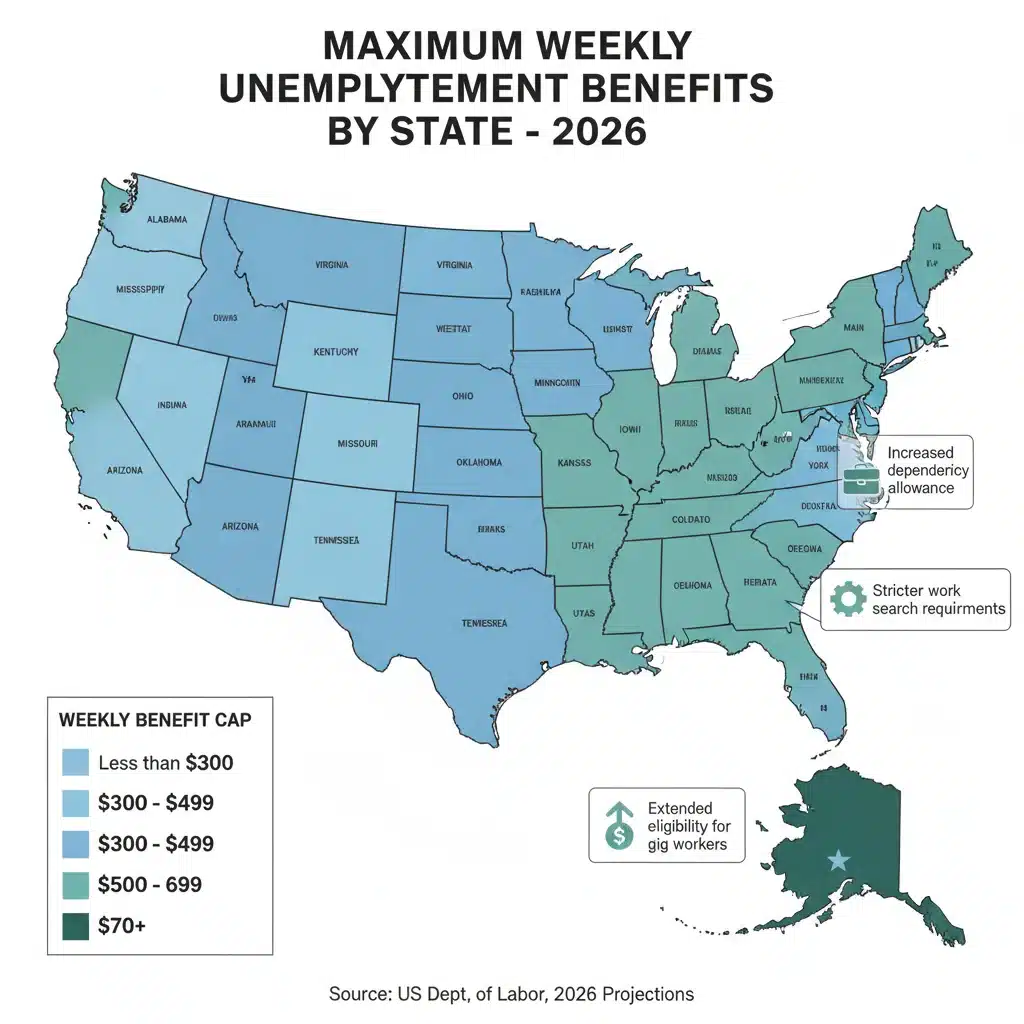
Navigating the specific details of unemployment benefits 2026 requires a granular look at each state. Below, we’ll provide a projected overview, highlighting general trends and any anticipated changes based on recent legislative activity and economic forecasts. Please note that these are projections, and actual figures and rules may be subject to change as 2026 approaches.
Northeast Region
- Connecticut: Expected to maintain a relatively high maximum weekly benefit, potentially seeing minor adjustments based on wage indexation. Eligibility requirements are likely to remain consistent, focusing on extensive work search documentation.
- Maine: Continues its trend of moderate benefits. Anticipate ongoing efforts to streamline the application process, but strict adherence to availability and job search rules will persist.
- Massachusetts: Known for its generous benefits, Massachusetts is likely to continue offering some of the highest maximum payouts. Focus will remain on robust reemployment services.
- New Hampshire: Generally lower maximum benefits compared to its neighbors. Potential for legislative review of benefit duration in response to labor market needs.
- New Jersey: High population density and cost of living often translate to higher benefits. Expect continued emphasis on online application and fraud prevention measures.
- New York: One of the largest UI systems. Maximum weekly benefits are regularly reviewed. Expect ongoing technological upgrades to the filing system and clear work search requirements.
- Pennsylvania: Moderate benefit levels. There might be legislative discussions around expanding training opportunities for claimants.
- Rhode Island: Typically offers competitive benefits. Focus on rapid reemployment initiatives.
- Vermont: Known for a strong social safety net. Expect continued emphasis on claimant support services alongside benefit provision.
Mid-Atlantic and Southeast Region
- Delaware: Generally offers average benefits. Expect stability in eligibility rules.
- Florida: Historically one of the lowest maximum weekly payouts and shortest durations. No significant upward revisions are immediately projected for unemployment benefits 2026, though political pressures could lead to minor adjustments. Strict work search requirements are a given.
- Georgia: Similar to Florida, Georgia typically has lower benefits. Eligibility remains stringent.
- Maryland: Moderate to high benefits. Expect continued investment in online services and clear guidance for claimants.
- North Carolina: Lower-tier benefits. Focus on rapid reemployment and job training.
- South Carolina: Among the states with lower maximum benefits. Eligibility will likely remain tightly controlled.
- Virginia: Moderate benefits. Potential for legislative discussions around benefit duration based on economic indicators.
- West Virginia: Typically offers lower benefits. Emphasis on connecting claimants with local job opportunities.
- District of Columbia: As a unique jurisdiction, DC often has higher benefits due to its high cost of living. Expect robust support services.
Midwest Region
- Illinois: Generally offers competitive benefits, especially for those with dependents. Expect ongoing efforts to modernize the UI system.
- Indiana: Moderate benefits. Focus on work search compliance and reemployment.
- Iowa: Moderate benefits. Potential for minor adjustments based on state wage growth.
- Kansas: Often has lower benefits. Expect continued emphasis on strict eligibility.
- Michigan: Historically offers good benefits. Focus on anti-fraud measures and efficient claims processing.
- Minnesota: Known for relatively strong benefits. Expect continued investment in claimant support.
- Missouri: Lower benefits. Strict adherence to work search rules.
- Nebraska: Among the lower benefit states. Eligibility will likely remain conservative.
- North Dakota: Benefits linked to state average wages. Relatively stable system.
- Ohio: Moderate benefits. Ongoing efforts to balance claimant support with system solvency.
- South Dakota: One of the lowest benefit states. No major changes projected.
- Wisconsin: Moderate benefits. Emphasis on efficiency and preventing improper payments.
Southwest and Mountain West Region
- Arizona: Lower maximum benefits. Eligibility remains strict, with focus on active job search.
- Colorado: Moderate to high benefits, reflecting its growing economy. Expect continued investment in digital services.
- Idaho: Lower benefits. Focus on connecting claimants with available jobs.
- Montana: Moderate benefits. Rural considerations often play a role in policy.
- Nevada: Benefits tied to average wages. High tourism sector can influence unemployment dynamics.
- New Mexico: Moderate benefits. Potential for increased focus on workforce development programs.
- Utah: Lower benefits. Strong emphasis on rapid reemployment.
- Wyoming: Lower benefits. Stable system without major projected changes.
- Texas: Moderate to lower benefits, given its large population. Expect continued focus on preventing fraud and ensuring strict eligibility.
- Oklahoma: Lower benefits. Emphasis on timely claims processing and work search.
- Arkansas: Lower benefits. Focus on connecting claimants with state employment services.
- Louisiana: Moderate benefits. Economic factors like the energy sector can influence policy.
Pacific West Region
- Alaska: High benefits to reflect the high cost of living. Relatively stable system.
- California: The largest UI system in the nation. While maximum benefits are substantial, they can feel insufficient in high-cost areas. Expect ongoing efforts to improve claims processing efficiency and address potential backlogs. Eligibility requirements are comprehensive.
- Hawaii: High benefits due to extreme cost of living. Focus on tourism sector recovery and stability.
- Oregon: Moderate to high benefits. Progressive policies often lead to claimant-friendly rules.
- Washington: Known for competitive benefits. Expect continued investment in technological solutions for claims and services.
It’s crucial to remember that these are general observations. For the most accurate and up-to-date information on unemployment benefits 2026 for your specific state, always refer to your state’s official Department of Labor or Employment Security website. They will publish the definitive maximum weekly benefit amounts, duration, and detailed eligibility criteria.
Navigating the Application Process for Unemployment Benefits in 2026
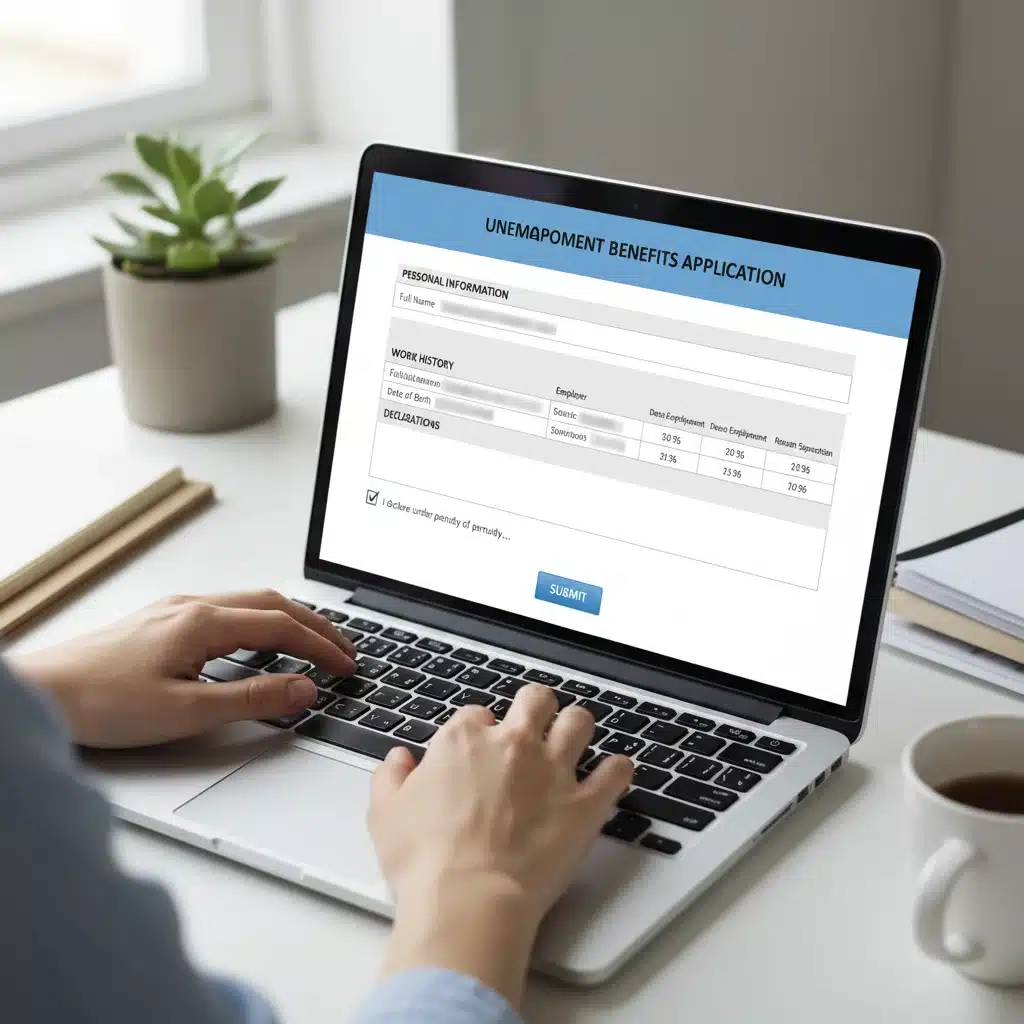
Regardless of your state, the application process for unemployment benefits 2026 will likely involve several key steps. Being prepared can significantly streamline the experience.
Gather Essential Documents
Before you even begin, collect all necessary information. This typically includes:
- Your Social Security number.
- Your driver’s license or state ID.
- Your mailing address and phone number.
- Your employment history for the past 18-24 months, including employer names, addresses, phone numbers, dates of employment, and reasons for separation.
- Wage information (pay stubs, W-2s, or other proof of earnings).
- If you are not a U.S. citizen, your Alien Registration Number and expiration date.
- Bank account information for direct deposit (recommended for faster payments).
File Your Claim Promptly
Do not delay filing your claim after becoming unemployed. Most states have rules about when claims must be filed, and delaying can result in lost benefits for weeks you were eligible. Claims are typically filed online through your state’s Department of Labor website.
Understand Work Search Requirements
This is a critical aspect of maintaining eligibility for unemployment benefits 2026. Most states require you to actively search for work each week and report your job search activities. Failure to meet these requirements can lead to disqualification. Be meticulous in documenting your efforts, including:
- Dates of contact.
- Names of employers contacted.
- Type of work sought.
- Method of contact (e.g., online application, in-person visit).
- Results of contact.
Certify for Benefits Weekly or Bi-Weekly
To continue receiving benefits, you will need to “certify” your eligibility on a regular basis (usually weekly or bi-weekly). During certification, you will typically answer questions about your work search, any earnings you may have had, and your continued ability and availability for work. Be honest and accurate in your responses.
Respond to All Communications
Your state’s unemployment agency may send you letters, emails, or call you with questions. Respond promptly and provide any requested information to avoid delays or interruptions in your benefits.
Potential Challenges and How to Address Them
Even with careful preparation, claimants may face challenges when applying for or receiving unemployment benefits 2026.
Appeals Process
If your claim is denied, or if you disagree with a decision made by the unemployment agency, you have the right to appeal. The appeals process varies by state but generally involves submitting a written appeal and potentially attending a hearing. It’s advisable to gather all relevant documentation and, if possible, seek legal advice or assistance from a local legal aid society.
Overpayments
Sometimes, due to errors or misreporting, claimants may receive more benefits than they were entitled to. This results in an overpayment, which the state will typically require you to repay. If you receive an overpayment notice, understand your options, which might include repayment plans or, in some cases, waivers if the overpayment was not your fault. Ignoring an overpayment can lead to severe consequences, including collection actions.
Fraud and Identity Theft
Unfortunately, unemployment systems are targets for fraud. Protect your personal information and be wary of phishing scams. If you suspect your identity has been used to file a fraudulent claim, report it immediately to your state’s unemployment agency and relevant law enforcement.
The Future of Unemployment Benefits: Beyond 2026
The discussion around unemployment benefits 2026 is part of a larger, ongoing conversation about the future of the social safety net in the United States. Policymakers are continually debating reforms to the UI system to make it more responsive to modern economic realities, including the gig economy, automation, and long-term unemployment.
Modernizing the UI System
Many states are investing in modernizing their outdated IT systems, which proved inadequate during the surge of claims in recent years. These upgrades aim to improve efficiency, reduce fraud, and make the application process more user-friendly. By 2026, we can expect more states to have more robust online portals and digital services.
Addressing the Gig Economy
The traditional UI system was designed for W-2 employees. As the gig economy continues to expand, there’s growing pressure to extend unemployment benefits to independent contractors and self-employed individuals who currently have limited access to such aid. While significant federal legislation would likely be needed for widespread change, some states might explore pilot programs or specific provisions for these workers.
Automatic Stabilizers
There’s also discussion around making unemployment benefits more responsive to economic downturns through “automatic stabilizers.” This could mean that benefit durations or amounts automatically increase when unemployment rates rise above a certain threshold, without requiring new legislative action. Such changes, if implemented, would significantly impact the landscape of unemployment benefits 2026 and beyond.
Conclusion: Staying Informed and Prepared
The world of unemployment benefits 2026, while rooted in established principles, is subject to constant evolution. Maximum weekly payouts, eligibility criteria, and administrative processes can and do change. For anyone who might need to rely on this vital safety net, proactive information gathering is your best defense.
Regularly check your state’s Department of Labor website for the most current information. Familiarize yourself with the application process, understand your rights and responsibilities, and keep meticulous records. By staying informed and prepared, you can navigate the complexities of unemployment benefits more effectively, ensuring that you receive the support you need during challenging times.
The goal of the unemployment insurance program is to provide temporary relief and facilitate reemployment. By understanding its nuances, you empower yourself to utilize this resource efficiently and get back on your feet as quickly as possible. Whether you’re an employer or an employee, an informed citizenry strengthens the overall economic resilience of our communities.