WIC Program Updates 2026: Essential Changes to Food Packages and Eligibility Requirements

WIC Program Updates 2026: Essential Changes to Food Packages and Eligibility Requirements for Families with Young Children, Effective January 1st
The Special Supplemental Nutrition Program for Women, Infants, and Children, universally known as WIC, stands as a cornerstone of nutritional support for millions of vulnerable families across the United States. Since its inception, WIC has played a vital role in safeguarding the health of low-income pregnant women, new mothers, infants, and young children up to age five who are at nutritional risk. The program provides nutritious foods, information on healthy eating, including breastfeeding promotion and support, and referrals to health care and other social services. As we approach 2026, significant WIC Program Updates are on the horizon, promising to reshape how participants access and utilize these critical benefits. These changes, effective January 1st, 2026, are designed to further enhance the program’s effectiveness, align with the latest dietary guidelines, and ensure that the most vulnerable populations receive the best possible support.
Understanding these comprehensive WIC Program Updates 2026 is paramount for current and prospective participants, healthcare providers, and community organizations. The modifications span across several key areas, most notably affecting food packages and eligibility requirements. The overarching goal is to improve the nutritional quality of the food provided, increase participant choice, and streamline the process of accessing benefits. This detailed guide will delve into the specifics of these changes, offering clarity and practical information to help families navigate the evolving landscape of WIC benefits.
The anticipation surrounding these WIC Program Updates 2026 is well-founded. The program is constantly evaluated and refined to reflect the most current scientific evidence regarding nutrition and public health. These upcoming adjustments are a testament to WIC’s commitment to adapting and evolving to meet the complex needs of the communities it serves. From expanding the variety of fruits and vegetables to adjusting the allowances for dairy and whole grains, every change is meticulously planned to foster healthier eating habits and reduce diet-related health disparities among young families.
The Rationale Behind the WIC Program Updates 2026
Before diving into the specifics, it’s crucial to understand the driving forces behind these WIC Program Updates 2026. The U.S. Department of Agriculture (USDA), which administers the WIC program, regularly reviews its policies and food lists based on recommendations from the National Academies of Sciences, Engineering, and Medicine (NASEM). These recommendations are rooted in the latest scientific dietary guidance, including the Dietary Guidelines for Americans. The goal is always to ensure that WIC food packages provide a robust nutritional foundation, address common nutrient deficiencies, and promote healthy eating patterns that can last a lifetime.
The 2026 updates are particularly significant because they aim to:
- Align with Current Dietary Guidelines: The changes reflect the most recent scientific understanding of healthy eating, emphasizing fruits, vegetables, and whole grains, while reducing foods high in saturated fat, added sugars, and sodium.
- Increase Participant Choice and Cultural Relevance: Recognizing the diverse dietary needs and preferences of WIC participants, the updates introduce greater flexibility and a wider array of food options, including culturally appropriate choices.
- Promote Breastfeeding: Strengthening support for breastfeeding remains a core tenet of WIC. The updates include provisions designed to encourage and sustain breastfeeding, acknowledging its profound benefits for both mothers and infants.
- Address Food Insecurity and Health Disparities: By providing a more comprehensive and nutritionally adequate food package, the program seeks to further alleviate food insecurity and mitigate health disparities prevalent in low-income communities.
- Streamline Program Administration: Some changes may also aim to simplify the administration of the program for state agencies and local clinics, making it more efficient to deliver benefits to those who need them most.
These motivations underscore a proactive approach by the USDA to keep WIC at the forefront of public health nutrition. The WIC Program Updates 2026 are not merely administrative adjustments; they are strategic enhancements designed to improve the health and well-being of millions of mothers and children.
Key Changes to WIC Food Packages in 2026
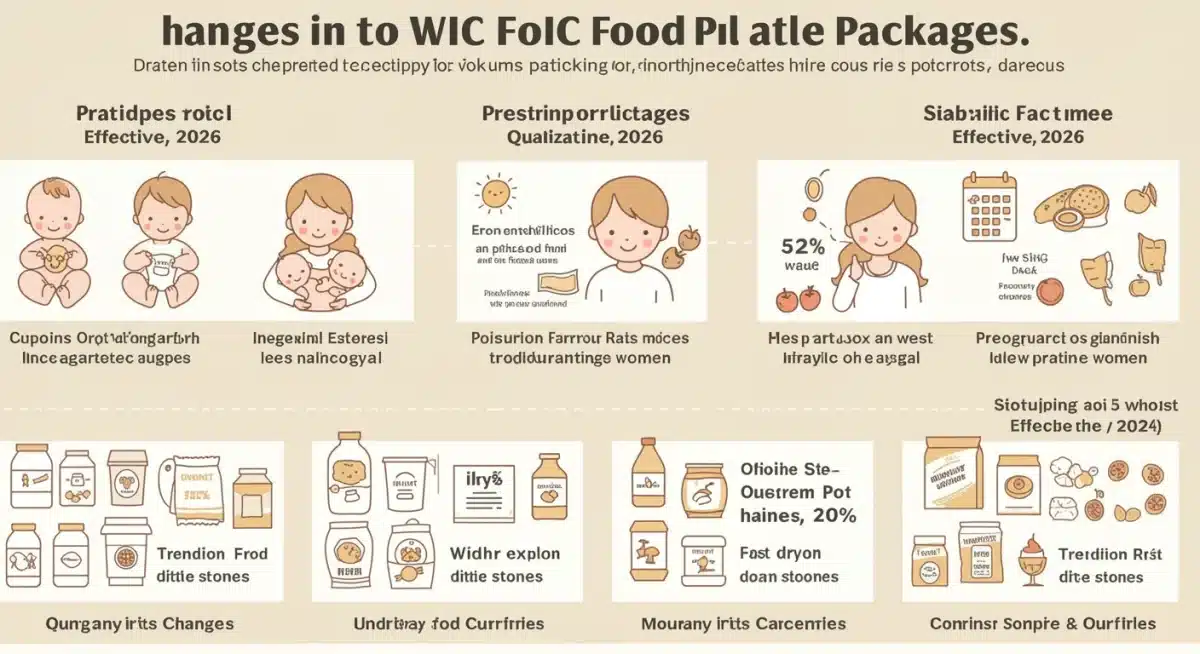
The most anticipated aspect of the WIC Program Updates 2026 concerns the modifications to the food packages. These packages are tailored to specific participant categories: pregnant women, breastfeeding women (fully and partially), postpartum women, infants (0-11 months), and children (1-4 years). While the exact quantities and specific items may vary slightly by state due to local product availability and participant needs, the federal guidelines provide a clear framework for these changes.
Expanded Fruit and Vegetable Vouchers
One of the most impactful WIC Program Updates 2026 is the significant increase in the Cash Value Benefit (CVB) for fruits and vegetables. This change is a direct response to recommendations to encourage greater consumption of these nutrient-dense foods. Higher CVBs mean families will have more purchasing power to buy fresh, frozen, or canned fruits and vegetables, which are crucial for growth and development.
- For Children (1-4 years): Expect a notable increase in their monthly CVB, allowing for a broader selection of produce.
- For Pregnant and Postpartum Women: The CVB will also see an increase, recognizing the heightened nutritional needs during these critical periods.
- For Breastfeeding Women: Fully breastfeeding women, in particular, will receive the highest CVB amount, acknowledging the substantial caloric and nutrient demands of lactation.
This expansion aims to diversify the diets of WIC participants and instill healthy eating habits early in life. It also offers greater flexibility, empowering families to choose the produce they prefer and are most likely to consume.
Adjustments to Dairy and Milk Products
The WIC Program Updates 2026 also include revisions to the dairy component of food packages. While dairy remains a fundamental source of calcium and vitamin D, the types and quantities offered are being refined:
- Reduced Fat Milk Emphasis: There will be a continued emphasis on reduced-fat and fat-free milk options for children over two years and adults.
- Lactose-Free and Fortified Plant-Based Alternatives: Recognizing the growing prevalence of lactose intolerance and dietary preferences, the program will expand the availability of lactose-free milk and fortified plant-based milk alternatives (such as soy milk) as WIC-eligible options, ensuring accessibility for all participants.
- Cheese and Yogurt: The allowances for cheese and yogurt may also see slight adjustments to balance the overall dairy intake within the package.
Whole Grains and Cereal Modifications
Whole grains are essential for fiber and various micronutrients. The WIC Program Updates 2026 will refine the whole grain component:
- Increased Variety: WIC will continue to promote a wider variety of whole grain options, including whole wheat bread, tortillas, brown rice, oatmeal, and whole wheat pasta.
- Cereal Sugar Content: Expect stricter guidelines on the sugar content of WIC-approved cereals, aligning with recommendations to reduce added sugars in children’s diets.
Protein Sources: Eggs, Legumes, and Fish
Protein is vital for growth and development. The WIC Program Updates 2026 will ensure adequate and varied protein sources:
- Eggs: Eggs will remain a staple, providing an affordable and nutrient-rich protein source.
- Legumes (Beans/Peas): The flexibility to choose canned or dried beans and peas will continue, offering a plant-based protein alternative.
- Canned Fish: For some participant categories, particularly fully breastfeeding women, the allowance for canned fish (like tuna or salmon) may be adjusted to provide essential omega-3 fatty acids and other nutrients.
Infant Food Revisions
Infant nutrition is a critical focus. The WIC Program Updates 2026 for infants will include:
- Infant Formula: While WIC primarily promotes breastfeeding, for infants who are formula-fed, the program will continue to provide iron-fortified infant formula. Any changes will likely focus on ensuring access to appropriate formulas for specific medical needs.
- Infant Cereal, Fruits, and Vegetables: The quantities and types of infant cereals, fruits, and vegetables will be reviewed to ensure they meet developmental and nutritional milestones, with an emphasis on single-ingredient foods.
- Infant Meats: For breastfed infants, the provision of infant meats may see adjustments to support iron intake.
Updated WIC Eligibility Requirements 2026
Beyond food packages, the WIC Program Updates 2026 will also touch upon eligibility requirements. While the core criteria generally remain consistent—income, categorical eligibility, and nutritional risk—there might be subtle refinements to how these are assessed or documented.
Income Guidelines
WIC is a federal income-based program. To be eligible, applicants’ gross income must fall at or below 185% of the U.S. poverty level. These poverty levels are updated annually by the federal government. While the methodology for determining income eligibility is unlikely to change drastically, families should be aware that the specific income thresholds will be updated for 2026. It is crucial for families to check the most current income guidelines for their state, as these can vary based on household size.
Furthermore, individuals who participate in certain other assistance programs automatically meet the income eligibility requirement. These include:
- Supplemental Nutrition Assistance Program (SNAP)
- Medicaid
- Temporary Assistance for Needy Families (TANF)
The WIC Program Updates 2026 will likely reinforce the importance of these adjunctive eligibility pathways, simplifying access for families already enrolled in other safety net programs.
Categorical Eligibility
The categorical eligibility for WIC will fundamentally remain the same. Participants must fall into one of the following categories:
- Pregnant women (during pregnancy and up to six weeks after birth or end of pregnancy)
- Postpartum women (up to six months after birth or end of pregnancy, if not breastfeeding)
- Breastfeeding women (up to one year after birth)
- Infants (up to their first birthday)
- Children (up to their fifth birthday)
While the categories themselves are stable, WIC Program Updates 2026 might introduce clarifications or specific guidelines for documenting these statuses, particularly for complex cases or specific medical conditions.
Nutritional Risk Assessment
A unique aspect of WIC is the requirement for a nutritional risk assessment by a health professional. This assessment determines if an applicant has a medical or dietary-based nutritional risk. These risks can include:
- Medically-based risks: such as anemia, underweight, overweight, history of poor pregnancy outcome, or chronic diseases.
- Dietary-based risks: such as inadequate dietary patterns or nutrient deficiencies.
The WIC Program Updates 2026 may refine the criteria or methods used for these assessments, potentially incorporating new evidence-based indicators of nutritional risk. It’s important for applicants to be prepared to discuss their health history and dietary habits with WIC clinic staff.
How to Prepare for the WIC Program Updates 2026
For current WIC participants and those considering applying, proactive preparation is key to a smooth transition once the WIC Program Updates 2026 take effect. Here’s how you can get ready:
Stay Informed Through Official Channels
The most reliable source of information regarding WIC Program Updates 2026 will be your local WIC agency or state WIC program website. These agencies will provide detailed, state-specific guidance on changes to food packages, eligibility, and application procedures. The USDA Food and Nutrition Service (FNS) website is also an excellent federal resource.
- Check State WIC Websites: Each state administers its WIC program within federal guidelines. State websites will have the most accurate information on how the national changes translate locally.
- Contact Your Local WIC Clinic: Your WIC counselor or clinic staff are invaluable resources. They can answer specific questions about your family’s benefits and help you understand how the updates will affect you.
- Look for Program Bulletins: WIC agencies often send out newsletters, flyers, or email updates to participants. Make sure your contact information is current with your local clinic.
Review Your Current Food Package
Familiarize yourself with your current WIC food package. Understanding what you receive now will make it easier to identify the changes once the WIC Program Updates 2026 are implemented. Pay attention to the types and quantities of foods, especially fruits and vegetables, dairy, and whole grains.
Understand New Food Options and Restrictions
As new items are added or restrictions are modified, take the time to learn about them. This could involve exploring new brands, understanding different product sizes, or identifying expanded options for specific dietary needs (e.g., lactose-free or plant-based alternatives). WIC clinics often provide shopping lists or guides to help participants navigate stores.
Plan for Re-certification
WIC eligibility is not permanent; participants must be re-certified periodically. If your re-certification falls around January 1st, 2026, be prepared for your appointment to reflect the new guidelines. Ensure you have all necessary documentation for income verification and any updated health information.
Utilize WIC Nutrition Education
WIC offers personalized nutrition education, which is a cornerstone of the program. With the WIC Program Updates 2026, there will likely be new educational materials and counseling sessions to help participants understand the revised food packages and make the most of their benefits. Take advantage of these resources to learn how to incorporate the new foods into your family’s diet effectively.
The Broader Impact of WIC Program Updates 2026
The implications of the WIC Program Updates 2026 extend far beyond individual families. These changes are expected to have a significant positive impact on public health at a broader level.
Improved Health Outcomes for Mothers and Children
By providing food packages that better align with current dietary recommendations, the updates are projected to improve the nutritional status of pregnant women, new mothers, infants, and young children. This can lead to:
- Reduced rates of diet-related diseases: Such as anemia, obesity, and type 2 diabetes.
- Healthier birth outcomes: For pregnant women, better nutrition can lead to healthier babies and fewer pregnancy complications.
- Enhanced child development: Adequate nutrition in early childhood is critical for cognitive and physical development.
- Increased breastfeeding rates: Continued support and enhanced food packages for breastfeeding mothers can help sustain longer breastfeeding durations.
Economic Benefits for Local Communities
The WIC program is not just a health program; it’s also an economic driver. The WIC Program Updates 2026, particularly the increased CVB for fruits and vegetables, can stimulate local economies:
- Support for Farmers Markets: Many WIC programs allow participants to use their CVB at farmers’ markets, directly supporting local agriculture.
- Increased Retail Sales: Grocery stores and other WIC-authorized vendors will see increased sales of specific healthy food items.
- Job Creation: The program supports jobs in the food retail sector and within WIC clinics.
Addressing Food Insecurity and Health Equity
WIC is a critical tool in the fight against food insecurity. The WIC Program Updates 2026 will further strengthen this role by providing more comprehensive and flexible food assistance. By addressing nutritional disparities, WIC helps to advance health equity, ensuring that all children, regardless of their socioeconomic background, have a chance at a healthy start in life.
These updates also reflect a commitment to understanding and integrating the diverse cultural backgrounds of WIC participants. By offering a wider range of food choices, the program becomes more inclusive and effective in meeting the needs of a multicultural society.
Challenges and Considerations
While the WIC Program Updates 2026 are overwhelmingly positive, their implementation may present some challenges:
- Vendor Adaptation: WIC-authorized stores will need time to adjust their inventories and systems to accommodate the new food lists and quantities.
- Participant Education: Ensuring all participants understand the changes and how to utilize their benefits effectively will require substantial outreach and education efforts from WIC agencies.
- Funding: The success of these expanded benefits relies on continued adequate federal funding for the WIC program.
- State-Specific Implementation: While federal guidelines are set, each state has some flexibility in implementation. This means there might be slight variations in how the WIC Program Updates 2026 are rolled out across different states.
However, the WIC program has a long history of successfully navigating such transitions, and with proper planning and communication, these challenges can be effectively managed.
Conclusion: A Brighter Future with WIC Program Updates 2026
The WIC Program Updates 2026 represent a significant step forward in the ongoing effort to support the health and nutritional well-being of women, infants, and young children. By aligning food packages with the latest dietary science, enhancing participant choice, and continuously refining eligibility processes, WIC reinforces its position as a cornerstone public health program. These changes, effective January 1st, 2026, are not just about food; they are about investing in the future health and prosperity of our youngest generations and their mothers.
Families currently participating in WIC, and those who may be eligible, are strongly encouraged to stay connected with their local WIC clinics and official state WIC resources. Proactive engagement with these updates will ensure a seamless transition and maximize the benefits available. The WIC Program Updates 2026 promise a more robust, flexible, and nutritionally sound program, empowering families to make healthier choices and build a foundation for lifelong well-being. WIC’s enduring commitment to nutritional excellence and family support continues to shine brightly, offering hope and health to millions.
As the implementation date draws near, the collective efforts of WIC agencies, healthcare providers, community partners, and participating families will be crucial in realizing the full potential of these transformative WIC Program Updates 2026. This ongoing evolution ensures that WIC remains a dynamic and responsive program, continually adapting to provide the best possible start in life for those who need it most.