Student Loan Debt 2026: New Repayment & Forgiveness

Over 40 million Americans with student loan debt are set to experience transformative changes in 2026, with the introduction of new repayment options and expanded forgiveness programs aiming to provide substantial financial relief.
For millions of Americans, the burden of student loan debt in 2026 remains a significant financial challenge, yet the landscape is evolving with new repayment options and potential forgiveness programs offering a glimmer of hope. This comprehensive guide will navigate the complexities of these changes, providing clarity and actionable insights for the 40 million borrowers impacted by these developments.
Understanding the Current Student Loan Landscape in 2026
The year 2026 brings both continuity and significant shifts to the student loan environment. While the fundamental structure of federal student loans largely persists, the emphasis on borrower relief and sustainable repayment has intensified. This section will outline the prevailing conditions and the underlying factors driving the current policy adjustments.
Economically, the nation continues to navigate post-pandemic recovery, with inflation and interest rate fluctuations playing a role in household budgets. For student loan borrowers, this means that every dollar saved on loan payments or forgiven through new programs can have a substantial impact on their financial stability and overall economic participation. Policymakers are increasingly recognizing the broader economic benefits of addressing student debt.
The Scale of the Challenge
With approximately 40 million Americans holding federal student loan debt, the collective impact on the economy is undeniable. This widespread financial obligation affects housing markets, consumer spending, and even career choices. The sheer volume of borrowers underscores the necessity for comprehensive and accessible solutions.
- Over $1.7 trillion: The total outstanding federal student loan debt in the US.
- Average Debt: Many graduates face an average debt exceeding $30,000.
- Economic Impact: Debt affects major life decisions like homeownership and starting a family.
Understanding the magnitude of this debt crisis is crucial for appreciating the scope and intent of the new programs and options being introduced. The goal is not merely to alleviate individual burdens but to foster broader economic growth and stability.
The current student loan landscape in 2026 is characterized by a continued effort to balance fiscal responsibility with borrower welfare. The government’s initiatives reflect a nuanced approach, aiming to provide targeted relief while establishing more robust and equitable repayment frameworks for the future. This ongoing evolution is critical for millions.
Exploring New Repayment Options for Borrowers
The year 2026 has ushered in several innovative repayment options designed to make managing student loan debt more feasible for a wider range of borrowers. These new plans aim to address common pain points, such as high monthly payments and prolonged debt repayment periods, offering more flexibility and potentially lower financial strain. Understanding these options is paramount for effective debt management.
A key focus of these new plans is to better align monthly payments with a borrower’s current income and family size, rather than solely on their original loan balance. This income-driven approach has been refined to be more responsive to economic fluctuations and personal circumstances, ensuring that borrowers are not unduly burdened during times of financial hardship.
The SAVE Plan and its Enhancements
The Saving on a Valuable Education (SAVE) Plan, introduced prior to 2026, has seen further enhancements this year, solidifying its position as a cornerstone of federal student loan repayment. These updates aim to make the plan even more beneficial, particularly for low-income borrowers.
- Lower Discretionary Income Calculation: The percentage of discretionary income used to calculate payments has been further reduced, leading to lower monthly costs for many.
- Interest Subsidy: Unpaid interest no longer accrues as long as borrowers make their scheduled payments, preventing balances from growing even if payments are low.
- Shorter Repayment Timelines: Some undergraduate loan balances may be forgiven after as little as 10 years of payments.
These adjustments to the SAVE Plan represent a significant step forward in making student loan repayment more manageable and equitable. Borrowers are strongly encouraged to evaluate if this enhanced plan aligns with their financial situation.
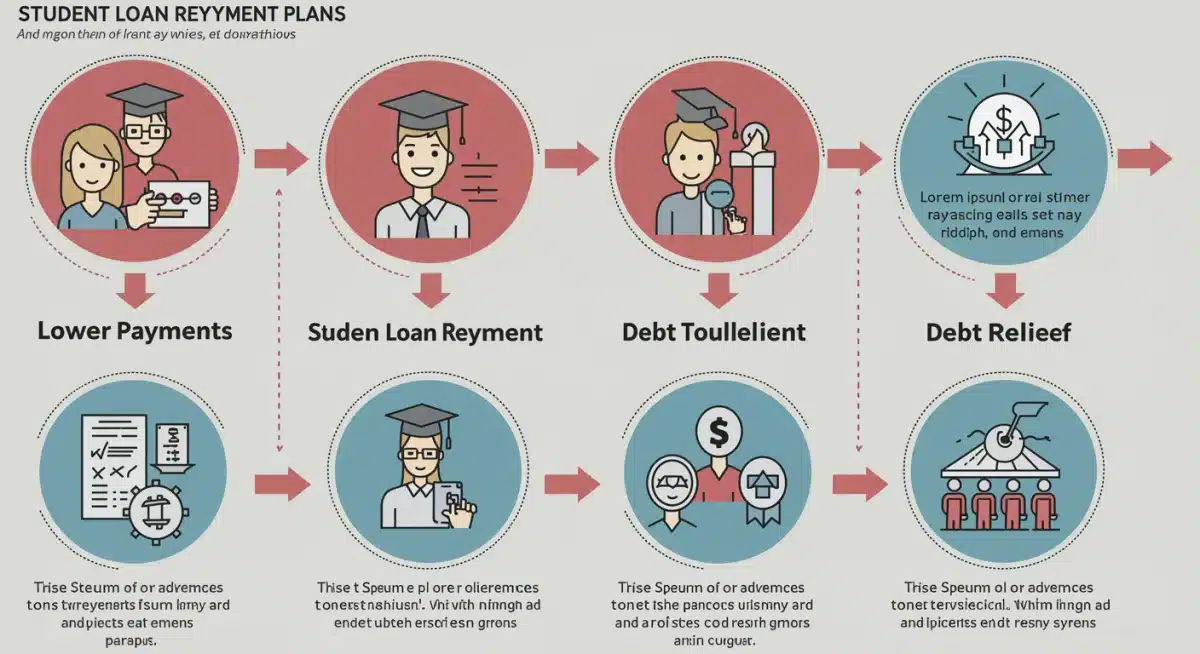
Beyond the SAVE Plan, other repayment options are also receiving updates and greater promotion. These include expanded access to graduated repayment plans and revised standard repayment options that offer clearer pathways to debt resolution. The overarching goal is to provide a menu of choices that cater to diverse financial needs and career trajectories, empowering borrowers to select the most advantageous path.
Potential Forgiveness Programs and Eligibility in 2026
The prospect of student loan forgiveness continues to be a major topic for millions of borrowers in 2026. While widespread, blanket forgiveness remains a subject of ongoing debate, several targeted forgiveness programs have been expanded or refined to provide relief to specific groups. Navigating the eligibility criteria for these programs is crucial for those hoping to reduce or eliminate their debt.
These programs often focus on professions deemed essential or those serving underserved communities, recognizing the public service aspect of many indebted individuals. The government’s strategy appears to be a combination of broad-based income-driven relief and specific programs that reward certain career paths, aligning with national priorities.
Public Service Loan Forgiveness (PSLF) Updates
The Public Service Loan Forgiveness (PSLF) program, which forgives the remaining balance on Direct Loans after 120 qualifying payments for those working in public service, has undergone further streamlining in 2026. These updates aim to simplify the application process and clarify eligibility requirements, addressing past frustrations experienced by applicants.
- Simplified Employer Certification: A more user-friendly process for employers to certify qualifying employment.
- Expanded Definition of Public Service: Certain roles previously excluded may now qualify, broadening the reach of the program.
- Automatic Review Processes: Efforts to automate the review of payment history for eligible borrowers to ensure accuracy.
These PSLF enhancements are particularly impactful for the dedicated individuals who have committed their careers to public service. The goal is to ensure that those who meet the criteria can access the forgiveness they have earned without unnecessary bureaucratic hurdles.
Targeted Forgiveness Initiatives
Beyond PSLF, 2026 has seen the continuation and, in some cases, expansion of other targeted forgiveness programs. These often address specific circumstances, such as borrowers defrauded by institutions or those with permanent disabilities. Keeping abreast of these niche programs can be vital for eligible individuals.
For example, programs addressing borrower defense to repayment have become more robust, offering clearer pathways for relief to students who were misled by their schools. Similarly, disability discharge processes have been simplified, aiming to prevent unnecessary financial stress for individuals facing significant health challenges. Eligibility for these programs often requires detailed documentation and adherence to specific application timelines, making proactive engagement essential for borrowers.
The array of forgiveness programs in 2026, while not universal, offers substantial relief to millions. Understanding the nuances of each program and diligently pursuing eligibility are crucial steps for borrowers seeking to reduce their student loan burden.
Impact on 40 Million Borrowers: Who Benefits Most?
The new repayment options and potential forgiveness programs in 2026 are designed to cast a wide net, but their impact will not be uniform across all 40 million borrowers. Certain demographics and financial situations are poised to benefit more significantly from these changes, while others may see more modest adjustments to their debt management strategies. Identifying who stands to gain the most is key to understanding the broader implications.
Generally, borrowers with lower incomes, larger loan balances relative to their earnings, and those committed to public service careers are expected to experience the most substantial relief. The emphasis on income-driven repayment and targeted forgiveness naturally prioritizes individuals who are struggling the most or contributing to essential public sectors.
Low-Income Borrowers and the SAVE Plan
The enhancements to the SAVE Plan are particularly transformative for low-income borrowers. By significantly reducing the percentage of discretionary income used for payment calculations and preventing interest accrual, many will find their monthly payments dramatically lowered, or even reduced to zero. This change can free up critical funds for other necessities.
- Zero-Dollar Payments: A substantial number of low-income borrowers may qualify for $0 monthly payments.
- Financial Stability: Reduced payments can significantly improve household budgets and reduce stress.
- Faster Path to Forgiveness: Forgiveness timelines are accelerated for those with smaller original loan balances.
This demographic, often disproportionately affected by economic downturns, will likely see the most immediate and tangible benefits, allowing them to redirect funds towards savings, housing, or other essential expenditures. The long-term implications include improved credit scores and greater financial mobility.
Public Service Professionals
Public service professionals, including teachers, nurses, and government employees, will continue to be primary beneficiaries of the refined PSLF program. The simplified application and broader eligibility criteria mean that more dedicated individuals will be able to access the forgiveness they were promised. This not only rewards their service but also incentivizes future generations to enter these vital fields.
Additionally, borrowers who were victims of predatory practices by educational institutions or those with severe disabilities will find more streamlined processes for obtaining relief. These targeted programs ensure that justice is served and that vulnerable populations are not left behind. The overall impact is a more equitable and supportive system for those facing specific challenges.
Navigating the Application Process and Avoiding Pitfalls
While the new repayment options and forgiveness programs offer significant relief, successfully accessing them requires careful navigation of the application process. Even with streamlined procedures, borrowers must remain vigilant to avoid common pitfalls that could delay or even jeopardize their eligibility. Proactive engagement and attention to detail are crucial for securing the benefits available in 2026.
The digital platforms for managing federal student loans have been updated to be more user-friendly, but understanding the specific requirements for each program is still paramount. Borrowers should dedicate time to thoroughly review all guidelines and gather necessary documentation to ensure a smooth application experience.
Key Steps for Application Success
Applying for income-driven repayment plans or forgiveness programs involves several critical steps. Missing any of these can lead to delays or rejection. It is advisable to create a checklist and track progress carefully.
- Identify Your Loan Type: Ensure your federal loans are Direct Loans, as many programs exclude FFEL or Perkins Loans unless consolidated.
- Gather Financial Documentation: Prepare recent tax returns and income statements to verify your financial situation.
- Submit Applications Timely: Pay close attention to deadlines for annual recertification or specific forgiveness program applications.
Furthermore, borrowers should regularly check their loan servicer’s website and the official Federal Student Aid (FSA) website for the most up-to-date information and any changes to policies. The landscape of student loan management can evolve, and staying informed is a borrower’s best defense against missed opportunities.
Common Pitfalls to Avoid
Despite best intentions, many borrowers encounter issues during the application process. Being aware of these common mistakes can help in proactively avoiding them.
One frequent error is failing to recertify income and family size annually for income-driven repayment plans. This can lead to higher monthly payments or even being removed from the plan. Another pitfall is not consolidating older loan types (like FFEL) into Direct Loans, which are often a prerequisite for newer forgiveness programs. Lastly, misinterpreting eligibility requirements for programs like PSLF, particularly regarding qualifying employment, can lead to disappointment. Always double-check with your loan servicer or FSA directly to confirm eligibility before investing time in a potentially unsuccessful application.
By being diligent and informed, borrowers can significantly increase their chances of successfully applying for and benefiting from the new student loan repayment and forgiveness options available in 2026.
Long-Term Outlook: What’s Next for Student Loan Debt?
Looking beyond 2026, the discussion around student loan debt continues to evolve, with ongoing debates about the long-term sustainability of current policies and the potential for future reforms. While immediate relief is a priority, policymakers are also considering more systemic changes to address the root causes of rising student debt. This forward-looking perspective is crucial for understanding the future trajectory of higher education financing.
The conversation includes proposals for tuition reform, increased federal funding for institutions, and alternative models for financing post-secondary education. The aim is to create a system where access to higher education does not automatically translate into a lifetime of crippling debt, fostering both individual opportunity and national economic strength.
Sustainable Solutions and Prevention
While forgiveness and repayment modifications address existing debt, a significant focus for the future is on preventing new borrowers from accumulating excessive debt. This involves a multi-faceted approach, including examining the cost of tuition and the effectiveness of financial aid programs.
- Tuition Cost Control: Discussions around capping tuition increases or providing incentives for universities to lower costs.
- Enhanced Grant Programs: Proposals to increase Pell Grant funding and expand eligibility to reduce reliance on loans.
- Financial Literacy Education: Initiatives to better educate prospective students about the implications of borrowing for college.
These preventative measures are seen as essential for ensuring that future generations can pursue higher education without being immediately saddled with unmanageable debt. The goal is to shift the paradigm from reactive debt relief to proactive debt prevention.
The Role of Technology and Automation
Technology is expected to play an increasingly vital role in student loan management. Automation in payment processing, personalized financial counseling through AI, and blockchain for secure record-keeping are all on the horizon. These advancements aim to make the system more efficient, transparent, and user-friendly for borrowers.
Furthermore, data analytics will likely be used to better understand borrower behavior and economic impacts, allowing for more data-driven policy decisions. This continuous feedback loop could lead to even more tailored and effective programs in the years to come, ensuring the student loan system remains responsive to the needs of borrowers and the economy.
The long-term outlook for student loan debt in the US suggests a continued commitment to reform, with an emphasis on both immediate relief and sustainable, preventative measures for future generations. Borrowers should remain engaged and informed as these discussions progress.
| Key Aspect | Brief Description |
|---|---|
| New Repayment Options | Enhanced income-driven plans like SAVE offer lower monthly payments and interest subsidies for millions. |
| Forgiveness Programs | Streamlined PSLF and targeted relief for specific situations (e.g., disability, borrower defense). |
| Beneficiaries | Low-income borrowers and public service professionals stand to gain the most significant relief. |
| Application Tips | Identify loan types, gather documentation, and adhere to deadlines to avoid common pitfalls. |
Frequently Asked Questions About Student Loan Debt in 2026
The primary new repayment options in 2026 center around enhanced income-driven repayment (IDR) plans, especially the updated Saving on a Valuable Education (SAVE) Plan. This plan offers lower discretionary income calculations and prevents interest accrual as long as scheduled payments are made, often resulting in significantly reduced or even $0 monthly payments for eligible borrowers.
Eligibility for forgiveness in 2026 primarily targets public service professionals through a streamlined PSLF program, and borrowers under specific circumstances like total and permanent disability or those defrauded by their educational institutions. While broad forgiveness is not universal, these targeted programs provide significant relief for millions who meet specific criteria and serve particular sectors.
For current student loan borrowers, the 2026 changes mean access to more flexible and affordable repayment plans, potentially lower monthly payments, and clearer pathways to forgiveness. These updates aim to alleviate financial stress, prevent loan balances from growing due to unpaid interest, and provide a more equitable system for managing federal student debt based on income.
Borrowers should first identify their loan types and consolidate if necessary. Next, they should gather all required financial documentation, such as tax returns and income statements. It is crucial to apply for income-driven plans or forgiveness programs through their loan servicer or the Federal Student Aid website, ensuring all deadlines for annual recertification are met to maintain eligibility.
While the 2026 changes focus on targeted relief and enhanced repayment, widespread student loan forgiveness remains a topic of ongoing political and economic debate. Future policies will likely depend on economic conditions, legislative priorities, and public discourse. Borrowers should stay informed through official government sources for any potential future developments regarding broader forgiveness initiatives.
Conclusion
The landscape of student loan debt in 2026 presents a complex yet hopeful picture for the 40 million borrowers navigating their financial futures. With the introduction of enhanced repayment options and refined forgiveness programs, the federal government continues its efforts to alleviate the burden of educational debt. While these changes offer significant relief, particularly for low-income individuals and public service professionals, successful navigation requires diligence, informed decision-making, and proactive engagement with loan servicers and official resources. As discussions around long-term solutions and preventative measures continue, staying informed will be key for all borrowers seeking to manage their student loans effectively and contribute to a more stable financial future.