2026 EdTech Trends: What US Parents & Students Need to Know
The 2026 education technology trends are fundamentally reshaping US classrooms, offering parents and students new pathways for personalized learning, immersive experiences, and crucial digital skills. Understanding these advancements is key to navigating the evolving educational landscape.
The landscape of learning is constantly evolving, and by 2026, educational technology will have profoundly transformed US classrooms. For parents and students alike, understanding the latest 2026 education technology trends transforming US classrooms: what parents and students need to know is not just beneficial, but essential for navigating the future of education. This article delves into the innovations set to redefine how students learn, interact, and prepare for tomorrow’s world.
The Rise of Personalized AI Tutors and Adaptive Learning Paths
In 2026, artificial intelligence (AI) has moved beyond simple algorithms to become a sophisticated, indispensable tool in US classrooms. Personalized AI tutors are now common, offering students tailored learning experiences that adapt to their individual pace and style. This shift represents a significant departure from the one-size-fits-all model of the past, focusing instead on optimizing each student’s learning journey.
These AI systems analyze student performance in real-time, identifying areas where they excel and where they need additional support. They then curate specific resources, exercises, and explanations, ensuring that every student receives the precise instruction required to master a concept. This level of customization fosters deeper understanding and improved retention, making learning more efficient and effective.
Tailored Instruction and Engagement
The beauty of AI-driven personalized learning lies in its ability to keep students engaged. When content is directly relevant to their needs and presented in a format they understand, motivation naturally increases. This technology isn’t just about remedial work; it also challenges advanced students with more complex material, preventing disengagement due to lack of challenge.
- Dynamic Content Delivery: AI tutors can select from a vast library of educational content, presenting it in various formats like videos, interactive simulations, or text, based on student preference.
- Instant Feedback Loops: Students receive immediate feedback on their work, allowing for rapid correction of misunderstandings and reinforcement of correct concepts.
- Progress Tracking: Parents and teachers gain detailed insights into student progress, identifying patterns and areas for intervention much earlier than traditional methods.
The integration of AI tutors also frees up teachers to focus on higher-level tasks, such as facilitating collaborative projects, providing emotional support, and fostering critical thinking skills, rather than spending excessive time on repetitive instruction or grading. This creates a more dynamic and supportive classroom environment for everyone involved.
Overall, personalized AI tutors and adaptive learning paths are revolutionizing how students interact with educational material. They promise a future where learning is not only more effective but also more equitable, ensuring that every student has the tools they need to succeed, regardless of their starting point or learning preferences.
Immersive Learning with Virtual and Augmented Reality
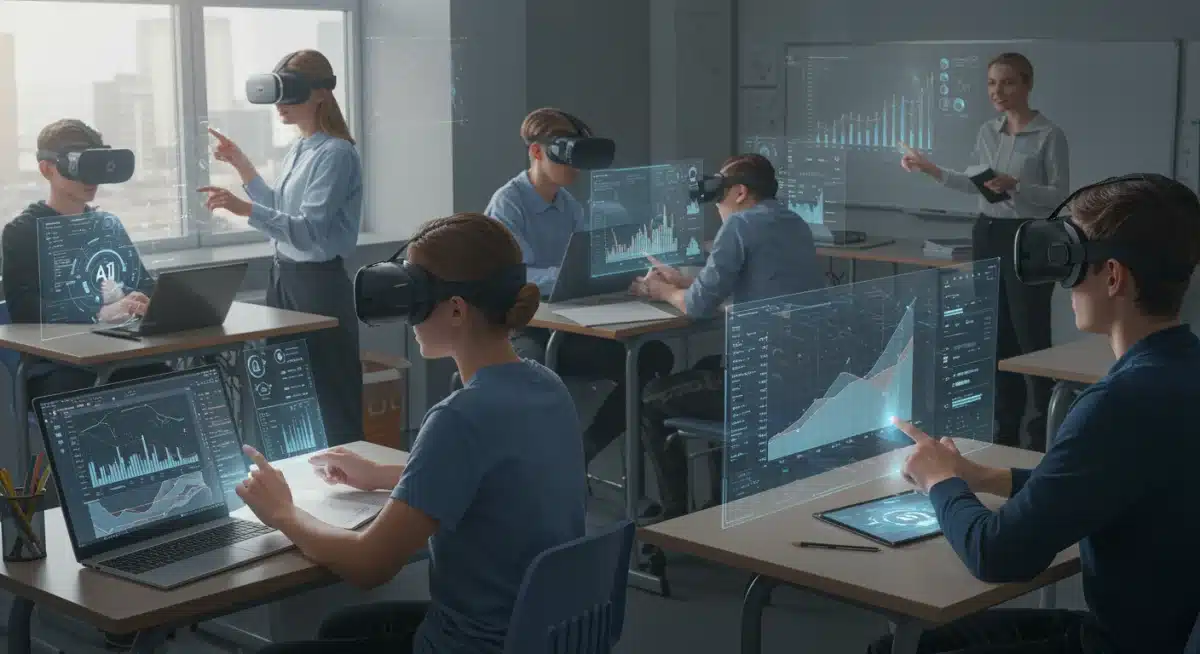
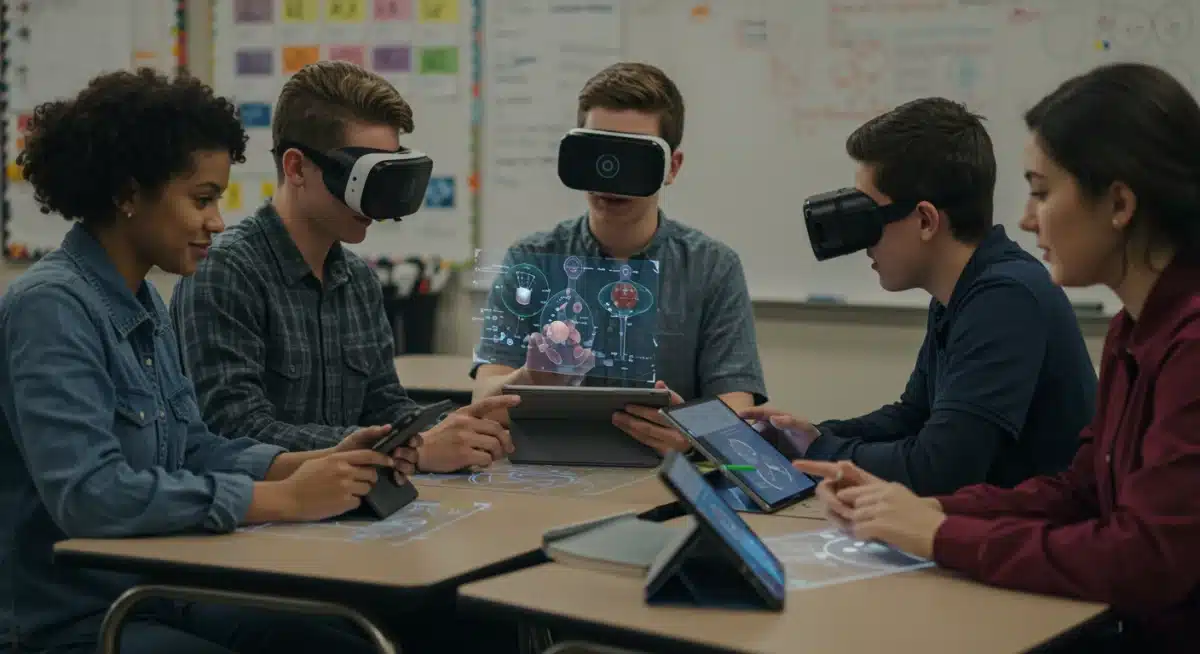
Virtual Reality (VR) and Augmented Reality (AR) are no longer just concepts from science fiction; by 2026, they are integral to the US classroom experience, offering unparalleled immersive learning opportunities. These technologies allow students to step into historical events, explore the human body from within, or conduct complex scientific experiments without ever leaving the classroom.
This shift from passive observation to active participation transforms abstract concepts into tangible, memorable experiences. Imagine dissecting a virtual frog without the ethical concerns, or touring ancient Rome in 3D, interacting with its citizens and architecture. VR and AR make these scenarios a reality, deepening understanding and sparking curiosity in ways traditional textbooks simply cannot.
Enhancing Engagement and Comprehension
The immersive nature of VR and AR significantly boosts student engagement. When learning becomes an adventure, students are more motivated to explore and absorb information. This isn’t just about novelty; research indicates that experiential learning leads to better retention and a more profound grasp of complex subjects.
- Virtual Field Trips: Students can visit remote locations, historical sites, or even other planets, broadening their horizons and cultural understanding.
- Interactive Simulations: Complex scientific and engineering principles can be explored through interactive models, allowing students to manipulate variables and observe outcomes.
- Skill Development: VR can provide safe environments for practicing vocational skills, from medical procedures to mechanical repairs, offering hands-on experience without risk.
For parents, these technologies represent a powerful tool for fostering a love of learning. They provide children with experiences that are both educational and entertaining, bridging the gap between classroom theory and real-world application. Teachers, in turn, can leverage VR and AR to create dynamic lesson plans that cater to diverse learning styles, making subjects come alive for every student.
The integration of VR and AR in US classrooms is fundamentally changing the learning paradigm, moving towards a more interactive, engaging, and deeply memorable educational journey for all students.
The Expansion of Digital Citizenship and Cybersecurity Education
As technology becomes more deeply embedded in daily life and education, the need for robust digital citizenship and cybersecurity education has become paramount in US classrooms by 2026. This isn’t just about preventing cyberbullying; it’s about equipping students with the knowledge and skills to navigate the digital world responsibly, ethically, and safely.
Digital citizenship encompasses understanding one’s rights and responsibilities online, practicing safe and ethical online behavior, and recognizing the impact of digital footprints. Cybersecurity education, on the other hand, focuses on protecting personal information, identifying threats like phishing, and understanding the importance of strong passwords and data privacy.
Building Responsible Digital Natives
Today’s students are digital natives, but being fluent in technology doesn’t automatically equate to being responsible. Education in digital citizenship and cybersecurity helps them develop critical thinking skills necessary to discern credible information from misinformation, understand the nuances of online interactions, and protect themselves from digital harm.
- Online Etiquette: Teaching respectful communication and appropriate behavior in online forums and social media.
- Data Privacy Awareness: Educating students about personal data collection, usage, and how to manage their digital privacy settings.
- Threat Recognition: Training students to identify common cyber threats like phishing scams, malware, and misinformation campaigns.
Parents play a crucial role in reinforcing these lessons at home, fostering open conversations about online safety and responsible internet use. Schools are increasingly integrating these topics across the curriculum, recognizing that digital literacy is as fundamental as traditional literacy in the 21st century. This proactive approach aims to create a generation of informed and secure digital citizens.
The emphasis on digital citizenship and cybersecurity education in 2026 US classrooms ensures that students are not only adept at using technology but also wise and safe in their digital interactions, preparing them for a future where online presence is inevitable.
Collaborative Learning Platforms and Global Connectivity
The year 2026 sees a significant evolution in collaborative learning platforms, transforming US classrooms into hubs of global connectivity. These advanced platforms facilitate seamless interaction among students, not just within their own schools but also with peers across different states and even other countries. This fosters a rich exchange of ideas, diverse perspectives, and the development of essential teamwork skills.
These platforms go beyond simple video conferencing, incorporating features like real-time document co-editing, interactive whiteboards, and project management tools tailored for educational settings. They allow students to work together on complex assignments, share research, and present their findings in a virtual environment, mirroring professional collaboration tools used in the modern workforce.
Breaking Down Geographic Barriers
The primary benefit of these platforms is their ability to dissolve geographic barriers, exposing students to a wider range of cultures and viewpoints. A science project might involve students from California collaborating with students from New York, or even a joint historical research effort with students in Europe or Asia. This global exposure is invaluable for developing a broader understanding of the world.
- Cross-Cultural Projects: Students engage in projects with international partners, learning about different cultures and problem-solving approaches.
- Shared Resource Libraries: Access to a vast array of digital resources and expert knowledge from around the globe.
- Real-time Feedback and Support: Teachers and peers can provide instant feedback on collaborative work, enhancing the learning process.
For parents, these platforms offer a glimpse into the collaborative nature of modern education and the skills their children are acquiring for future careers. They also provide opportunities for parents to engage more directly with school projects, understanding the dynamics of their child’s group work. The emphasis on global connectivity prepares students for an interconnected world, making them more adaptable and globally aware citizens.
In essence, collaborative learning platforms are redefining the boundaries of the classroom, turning it into a globally connected space where students learn from each other and from the world, preparing them for a future that demands collaboration and diverse perspectives.
Gamification and E-Sports in Education
By 2026, gamification and e-sports have firmly established their place within US education, moving beyond mere entertainment to become powerful pedagogical tools. Gamification involves integrating game-like elements into non-game contexts, such as earning points, badges, and leaderboards for academic achievements, while e-sports introduces competitive video gaming as a recognized extracurricular activity, often with academic benefits.
These approaches tap into students’ natural inclination for play and competition, transforming traditional learning into an engaging and motivating experience. The goal is to make learning more enjoyable, leading to increased participation, better retention of information, and the development of valuable transferable skills.
Motivating Through Play and Competition
Gamified learning environments provide immediate rewards and clear progress indicators, which can significantly boost student motivation. The element of competition, whether against oneself or peers, encourages perseverance and a desire for mastery. E-sports, in particular, cultivates strategic thinking, teamwork, communication, and quick decision-making skills under pressure.
- Increased Engagement: Game-like elements make learning activities more appealing and less tedious, especially for challenging subjects.
- Skill Development: E-sports fosters critical thinking, problem-solving, fine motor skills, and effective communication within teams.
- Career Pathways: Participation in e-sports can open doors to scholarships and careers in gaming, technology, and related fields.
For parents, observing their children excel in gamified learning or e-sports can shift perceptions about screen time, recognizing its potential for educational growth and skill development. Schools are increasingly investing in e-sports programs, offering coaching and dedicated facilities, acknowledging the academic and social benefits they provide. These trends are creating a more dynamic and relevant educational experience for students, aligning with their digital lifestyles.
The integration of gamification and e-sports into US classrooms in 2026 signifies a progressive shift towards recognizing diverse forms of intelligence and engagement, making learning more accessible and exciting for a broader range of students.
Data-Driven Insights for Educational Improvement
The year 2026 marks a significant advancement in the use of data-driven insights within US education, moving beyond simple test scores to comprehensive analytics that inform every aspect of the learning process. Educational institutions are leveraging big data and advanced analytics to understand student performance, tailor teaching methodologies, and optimize resource allocation more effectively.
This involves collecting and analyzing vast amounts of data, from student engagement with online materials to performance on diagnostic assessments, attendance patterns, and even social-emotional indicators. The aim is to create a holistic view of each student and the overall educational ecosystem, allowing for proactive interventions and continuous improvement.
Informing Decisions and Enhancing Outcomes
By analyzing this rich dataset, educators can identify trends, predict potential challenges, and develop targeted strategies to support student success. This might include identifying at-risk students early, customizing curriculum content based on collective learning gaps, or even optimizing classroom layouts for better collaboration.
- Early Intervention: Predictive analytics help identify students who might struggle before they fall behind, allowing for timely support.
- Curriculum Optimization: Data insights guide curriculum developers in refining content and teaching strategies to meet evolving student needs.
- Resource Allocation: Schools can make more informed decisions about where to invest resources, from technology tools to specialized support staff.
For parents, data-driven insights offer greater transparency into their child’s educational journey, providing detailed reports that go beyond traditional grades. They can see specific areas of strength and weakness, understand the effectiveness of different learning approaches, and engage in more informed discussions with teachers. This collaborative approach, supported by robust data, ensures that every decision is made with the student’s best interest at heart.
The sophisticated application of data-driven insights in 2026 US classrooms is transforming education into a more responsive, personalized, and continuously improving system, ultimately leading to better outcomes for all students.
Hybrid Learning Models and Flexible Educational Pathways
By 2026, hybrid learning models have become a cornerstone of US education, offering unprecedented flexibility and personalized educational pathways. This model seamlessly integrates in-person instruction with online learning, allowing students to choose or combine elements that best suit their learning styles, schedules, and individual needs. The pandemic significantly accelerated this trend, but its evolution in 2026 is driven by a desire for more adaptable and resilient educational systems.
Hybrid learning environments are designed to maximize the benefits of both synchronous (real-time) and asynchronous (self-paced) learning. This means students might attend some classes physically, participate in others remotely, and complete assignments at their own pace using digital resources. This flexibility extends beyond daily schedules to entire educational pathways, offering diverse routes to graduation and skill acquisition.
Adapting to Diverse Student Needs
The strength of hybrid learning lies in its adaptability. It caters to a wide spectrum of students, from those who thrive in a traditional classroom setting to those who benefit from the autonomy and digital resources of online learning. It also provides solutions for students with unique circumstances, such as those with health issues, aspiring athletes, or those balancing school with part-time jobs.
- Increased Accessibility: Learning becomes more accessible to students in rural areas or those with mobility challenges.
- Personalized Pacing: Students can spend more time on difficult concepts and accelerate through familiar material, reducing stress and boredom.
- Skill Development: Fosters self-discipline, time management, and digital literacy, crucial skills for higher education and the modern workforce.
Parents appreciate the flexibility hybrid models offer, allowing them to better support their children’s educational journey while balancing family and work commitments. It also empowers students to take greater ownership of their learning, making choices that align with their personal goals and interests. This shift towards flexible educational pathways is not just about convenience; it’s about creating a more inclusive and effective learning environment that prepares students for a rapidly changing world.
The widespread adoption of hybrid learning models and flexible educational pathways in 2026 US classrooms ensures that education is no longer a rigid, one-size-fits-all system, but rather a dynamic and responsive ecosystem designed to meet the diverse needs of every learner.
| Key Trend | Brief Description |
|---|---|
| Personalized AI Tutors | AI systems deliver tailored learning paths, adapting to individual student pace and style for optimized understanding. |
| Immersive VR/AR Learning | Virtual and Augmented Reality create engaging, experiential learning environments for deeper comprehension. |
| Digital Citizenship & Cybersecurity | Essential education equipping students to navigate the digital world responsibly, ethically, and safely. |
| Hybrid Learning Models | Flexible integration of in-person and online instruction, offering diverse and adaptable educational pathways. |
Frequently Asked Questions About EdTech in 2026
AI tutors will augment, not replace, teachers. They will handle personalized instruction and repetitive tasks, freeing teachers to focus on complex problem-solving, emotional support, project facilitation, and fostering critical thinking, creating a more dynamic and human-centered learning environment.
Efforts are underway to ensure equitable access. Schools and districts are securing grants and partnerships to provide necessary hardware. Cloud-based AR/VR and mobile-compatible experiences are also increasing, reducing reliance on expensive dedicated equipment and broadening accessibility for diverse student populations.
Parents should focus on understanding data privacy, online safety, and critical media literacy. Discussing cyberbullying, misinformation, and responsible online behavior with their children is crucial. Schools are actively teaching these topics, and parental involvement reinforces these vital lessons at home.
Hybrid models cater to diverse styles by offering flexible options. Visual learners benefit from online multimedia, auditory learners from lectures (live or recorded), and kinesthetic learners from hands-on in-person activities. The blend allows students to choose modalities that best suit their individual preferences and needs.
E-sports are integrated to complement, not distract from, academics. They foster critical thinking, teamwork, and problem-solving, skills transferable to traditional subjects. Many e-sports programs require participants to maintain academic eligibility, ensuring a balance between competitive gaming and scholastic achievement.
Conclusion
The year 2026 presents an exciting and transformative era for US education, driven by groundbreaking technological advancements. From personalized AI tutors and immersive VR/AR experiences to robust digital citizenship programs and flexible hybrid learning models, the landscape is rapidly evolving. For parents and students, embracing these changes means preparing for a future where learning is more engaging, effective, and tailored to individual needs. Understanding these trends empowers families to make informed decisions, advocate for the best educational opportunities, and ensure students are equipped with the skills necessary to thrive in an increasingly digital and interconnected world. The future of education is here, and it promises a richer, more dynamic learning journey for all.