2025 Housing Assistance: Section 8 Vouchers & Federal Rental Aid

Federal housing assistance programs, notably Section 8 vouchers, are critical lifelines in 2025, providing essential rental support to millions of low-income families across the United States, ensuring access to safe and affordable housing.
Navigating the complexities of housing affordability can be a significant challenge for many families across the United States. As we look towards 2025, understanding the landscape of federal housing assistance programs, particularly Section 8 vouchers and other federal rental support, becomes even more crucial. These initiatives are designed to provide a safety net, helping low-income families secure stable and decent housing, which is a fundamental right and a cornerstone of community well-being.
Understanding Section 8 Vouchers in 2025
The Section 8 Housing Choice Voucher program remains the largest federal rental assistance program, offering a vital resource for eligible low-income families, the elderly, and people with disabilities to afford decent, safe, and sanitary housing in the private market. In 2025, the core principles of the program continue, but with ongoing discussions about potential administrative adjustments and funding allocations.
The program works by providing housing assistance on behalf of the family or individual, allowing them to choose any housing that meets the program requirements. This flexibility is a key feature, as it allows participants to find housing that best suits their needs and location preferences, rather than being restricted to specific public housing projects.
Eligibility and Application for Section 8 Vouchers
Eligibility for Section 8 vouchers is primarily determined by household income, which must not exceed 50% of the median income for the county or metropolitan area in which the family chooses to live. However, by law, 75% of new vouchers issued each year must go to families whose incomes do not exceed 30% of the area median income.
- Income limits are set by the Department of Housing and Urban Development (HUD) and vary by location and family size.
- Applicants must meet certain criteria, including citizenship or eligible immigration status.
- Local Public Housing Agencies (PHAs) administer the program and manage waiting lists.
The application process typically involves contacting your local PHA. Due to high demand, waiting lists can be extensive, sometimes spanning several years. It is essential for interested families to apply as soon as possible and maintain updated contact information with their PHA.
How Section 8 Vouchers Work for Tenants and Landlords
Once a family receives a voucher, they are responsible for finding a suitable housing unit where the landlord agrees to participate in the program. The PHA then inspects the unit to ensure it meets HUD’s housing quality standards. If approved, the PHA pays a housing subsidy directly to the landlord on behalf of the participating family.
- The family pays the difference between the actual rent charged by the landlord and the amount subsidized by the program.
- Generally, families pay between 30% and 40% of their adjusted monthly income for rent and utilities.
- Landlords benefit from a reliable source of rent payment and access to a broader pool of potential tenants.
The Section 8 program offers a crucial partnership between federal government, local agencies, tenants, and landlords to address the critical need for affordable housing. Its success hinges on effective administration and sufficient funding to meet the ongoing demand.
Public Housing Programs: Beyond Vouchers
While Section 8 vouchers are a cornerstone of federal housing assistance, public housing programs also play a significant role in providing affordable rental homes for low-income families. These programs involve housing units owned and managed directly by Public Housing Agencies (PHAs) across the country. Unlike vouchers, which provide assistance for private market rentals, public housing offers units within developments specifically designated for low-income residents.
In 2025, public housing continues to evolve, with many agencies focusing on modernization efforts and resident services to improve the quality of life for tenants. These efforts often include renovations, energy efficiency upgrades, and programs aimed at fostering self-sufficiency among residents.
Eligibility and Application for Public Housing
Similar to Section 8, eligibility for public housing is based on income and family size. Families must be considered low-income, with income limits typically set at 80% of the area median income, though PHAs often prioritize those at 30% or less. Other factors, such as family composition, age, and disability status, can also influence eligibility and placement on waiting lists.
Applying for public housing involves contacting your local PHA and completing an application. Just like with Section 8 vouchers, waiting lists for public housing can be extensive due to high demand. Some PHAs may close their waiting lists periodically, so it’s important to check with local agencies regularly for updates on application periods.
Modernization and Resident Services in Public Housing
Many public housing authorities are actively engaged in transforming their properties to offer better living conditions and a wider range of support services. These initiatives aim to move beyond just providing shelter, focusing on holistic community development.
- Capital Fund Program: Provides annual funding to PHAs for development, financing, and modernization of public housing properties.
- Choice Neighborhoods Initiative: Transforms distressed public and assisted housing into viable, mixed-income neighborhoods.
- Resident Services: Many PHAs offer programs such as job training, educational support, financial literacy workshops, and after-school programs for children.
These efforts are vital in ensuring that public housing remains a safe, stable, and supportive environment for its residents. The goal is to not only provide affordable housing but also to create opportunities for residents to improve their economic and social well-being.
Other Federal Rental Support Programs for 2025
Beyond Section 8 and traditional public housing, several other federal programs contribute significantly to rental support for low-income families. These programs often target specific populations or address particular housing needs, forming a comprehensive network of assistance. These initiatives are crucial for filling gaps where mainstream programs might not fully meet the diverse needs of vulnerable populations.
Project-Based Rental Assistance (PBRA)
Project-Based Rental Assistance (PBRA) is another key component of federal rental support. Unlike tenant-based vouchers, PBRA is attached to specific housing units, meaning the subsidy remains with the property even if the tenant moves. This ensures the long-term affordability of designated housing developments.
- PBRA units are often found in apartment complexes built or renovated with federal subsidies.
- Tenants in PBRA units typically pay 30% of their adjusted gross income for rent.
- Eligibility is determined by the property owner, usually based on HUD income limits and other criteria.
PBRA provides a stable and predictable source of affordable housing in communities, helping to preserve existing affordable housing stock and encourage the development of new units.
Supportive Housing Programs
For individuals and families facing unique challenges, such as chronic homelessness, disabilities, or specific health conditions, supportive housing programs offer a combination of affordable housing and supportive services. These programs recognize that housing alone is often not enough to achieve stability.
- Housing Opportunities for Persons With AIDS (HOPWA): Provides housing assistance and supportive services for low-income persons living with HIV/AIDS and their families.
- Section 811 Supportive Housing for Persons with Disabilities: Offers rental assistance to very low-income adults with disabilities, often integrated with services.
- Veterans Affairs Supportive Housing (VASH): A collaborative program between HUD and the VA, combining Section 8 rental assistance with case management and clinical services for homeless veterans.
These specialized programs are essential for addressing the complex needs of vulnerable populations, helping them to not only secure housing but also to access the care and support necessary for long-term stability and well-being.
Challenges and Future Outlook for Housing Assistance
Despite the critical role of federal housing assistance programs, they face ongoing challenges, including funding limitations, long waiting lists, and the ever-increasing cost of housing. In 2025, these issues remain central to discussions about the future of affordable housing in the United States. The demand for assistance consistently outstrips the available resources, creating significant pressure on existing programs.
The future outlook for housing assistance involves a blend of continued advocacy, innovative policy approaches, and sustained investment to meet the growing needs of low-income families. Addressing the root causes of housing insecurity requires a multi-faceted approach.
Funding and Demand Imbalance
One of the most persistent challenges is the significant gap between the number of eligible families and the availability of housing assistance. Millions of low-income households qualify for assistance, but only a fraction receive it due to insufficient federal funding. This leads to:
- Exceedingly long waiting lists for both Section 8 vouchers and public housing.
- Families spending a disproportionate amount of their income on rent, often over 50%.
- Increased risk of homelessness and housing instability for vulnerable populations.
Advocates continue to push for increased appropriations for HUD programs to reduce waiting lists and expand access to assistance.
Policy Innovations and Community Partnerships
Looking ahead, there is a strong emphasis on exploring new policy innovations and strengthening community partnerships to enhance the effectiveness and reach of housing assistance. These approaches aim to make programs more efficient and responsive to local needs.
- Source of Income Protections: Growing trend of state and local laws prohibiting landlords from discriminating against tenants using housing vouchers.
- Housing First Initiatives: Prioritizing immediate housing for homeless individuals, followed by supportive services, proving more effective than traditional approaches.
- Public-Private Partnerships: Collaborations between government agencies, non-profits, and private developers to create and preserve affordable housing units.
These forward-thinking strategies are vital for building a more robust and equitable housing assistance system that can better serve those in need.
Applying for Federal Housing Assistance: A Step-by-Step Guide
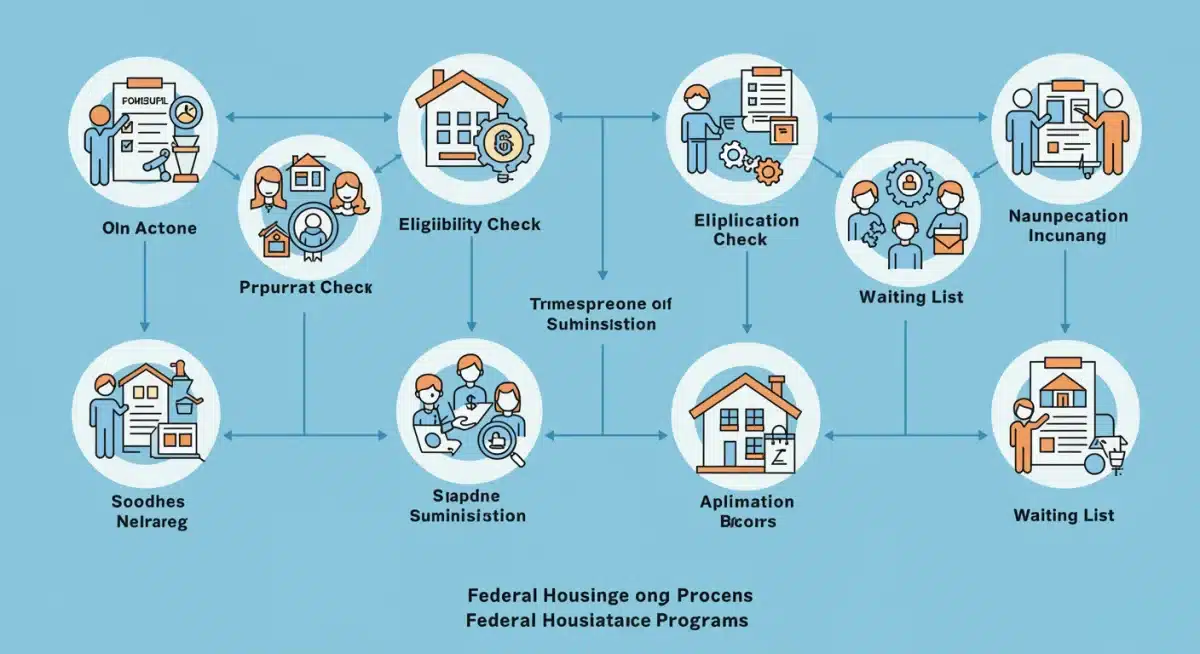
For low-income families seeking federal housing assistance, understanding the application process is the first crucial step toward securing stable housing. While the exact procedures can vary slightly by location and program, a general framework applies to most federal rental support initiatives. Being well-informed and prepared can significantly improve your chances of navigating the system successfully.
The journey often begins with identifying the right program and the relevant local agency responsible for its administration. This foundational understanding helps streamline the initial stages of application.
Identifying the Right Program and Local Agency
Before applying, it’s important to determine which programs you might be eligible for and where to apply. The primary point of contact for most federal housing assistance is your local Public Housing Agency (PHA).
- Visit HUD’s website to find contact information for PHAs in your area.
- Inquire about both Section 8 Housing Choice Vouchers and public housing programs.
- If you have specific needs (e.g., a disability, HIV/AIDS, or veteran status), ask about specialized supportive housing programs.
It is often beneficial to contact multiple PHAs if you are willing to relocate, as waiting lists can vary significantly between different jurisdictions.
The Application Process and Required Documentation
Once you’ve identified the relevant PHA, the application process typically involves submitting a formal application and providing extensive documentation to verify eligibility. This stage requires careful attention to detail to avoid delays.
- Income Verification: Pay stubs, tax returns, benefit statements (Social Security, SSI, TANF, etc.).
- Identity and Citizenship: Birth certificates, Social Security cards, photo IDs, immigration documents.
- Family Composition: Birth certificates for all household members, marriage certificates (if applicable).
- Criminal Background Check: Most programs require a background check for all adult household members.
Be prepared for interviews, and always respond promptly to requests for additional information. Incomplete applications or missed deadlines can lead to your application being denied or removed from the waiting list. Patience is key, as the process can be lengthy.
Resources and Support for Housing Assistance Seekers
Navigating the various federal housing assistance programs can be daunting, but numerous resources and support networks are available to help individuals and families through the process. These resources range from governmental information portals to non-profit organizations dedicated to housing advocacy and direct assistance. Knowing where to turn for help can make a significant difference in successfully securing affordable housing.
Leveraging these support systems can provide clarity, guidance, and sometimes even direct aid, empowering applicants to overcome potential hurdles.
HUD and Local PHA Websites
The Department of Housing and Urban Development (HUD) website is the authoritative source for information on federal housing programs. It offers detailed descriptions of all initiatives, eligibility requirements, and links to local Public Housing Agencies (PHAs).
- HUD.gov: Provides comprehensive guides, FAQs, and a search tool to find local PHAs.
- Local PHA Websites: Offer specific information on local programs, application procedures, waiting list status, and contact details.
- Fair Housing Information: Learn about your rights and protections against housing discrimination.
Regularly checking these official websites ensures you have the most up-to-date and accurate information regarding housing assistance.
Non-Profit Organizations and Housing Counselors
Many non-profit organizations specialize in housing advocacy and providing direct assistance to those in need. These groups can offer invaluable support, from helping with applications to providing legal aid.
- National Low Income Housing Coalition (NLIHC): Advocates for policies to ensure everyone has a safe, affordable place to live.
- Local Housing Counseling Agencies: HUD-approved counselors can provide free or low-cost advice on renting, homeownership, and avoiding foreclosure.
- Legal Aid Societies: Offer legal assistance to low-income individuals facing housing-related issues, such as eviction or discrimination.
Connecting with these organizations can offer personalized guidance and support, which is often crucial for families navigating complex bureaucratic processes. Their expertise can help demystify the application journey and provide a safety net for those encountering difficulties.
| Key Program | Brief Description |
|---|---|
| Section 8 Vouchers | Tenant-based rental assistance allowing low-income families to choose private market housing. |
| Public Housing | Affordable rental units owned and managed by local Public Housing Agencies. |
| Project-Based Rental Assistance | Rental subsidies tied to specific housing units, ensuring long-term affordability. |
| Supportive Housing | Combines affordable housing with services for specific vulnerable populations. |
Frequently Asked Questions About Housing Assistance
Section 8 (Housing Choice Vouchers) provides rental assistance that families can use for qualified private market housing. Public housing, conversely, refers to housing units directly owned and managed by local Public Housing Agencies, where eligible families rent units within these specific developments.
You should contact your local Public Housing Agency (PHA). They administer most federal housing programs and can provide information on eligibility, application procedures, and waiting list status. You can find your local PHA through the HUD website.
Eligibility for Section 8 is primarily based on household income not exceeding 50% of the median income for your area. However, 75% of new vouchers are reserved for families whose incomes are at or below 30% of the area median. These limits vary by location and family size and are set by HUD.
Yes, several programs target specific vulnerable populations. Examples include HUD-VASH for homeless veterans, Section 811 for persons with disabilities, and HOPWA for persons living with HIV/AIDS. These programs combine housing assistance with essential supportive services.
Waiting lists are lengthy primarily due to high demand and limited funding. The number of eligible low-income families seeking assistance far exceeds the available housing vouchers or public housing units, leading to significant wait times, sometimes several years.
Conclusion
As we navigate 2025, federal housing assistance programs, spearheaded by Section 8 vouchers, remain indispensable pillars of support for millions of low-income families across the United States. These initiatives are not merely about providing shelter; they are about fostering stability, promoting well-being, and creating pathways to greater opportunity. While challenges such as funding gaps and extensive waiting lists persist, ongoing policy discussions and community-led innovations offer hope for a more robust and responsive system. Understanding these programs, knowing how to apply, and utilizing available resources are crucial steps for any family seeking to secure safe, affordable housing and build a more stable future.